Yang is an open-source modeling language used for designing data models and APIs. It provides a simple way to model complex data structures using a tree-based hierarchy.
An open-source modeling language for designing data models and APIs, providing a simple way to model complex data structures using a tree-based hierarchy.
What is Yang?
Yang is an open-source modeling language developed by the IETF for defining data models and APIs for network configuration and operations. It is commonly used in networking devices and software to model data structures and interfaces in a standardized way.
Some key features of Yang include:
Tree-based hierarchical data models for complex structures
Reusability through import and include statements
Extensibility through augmentations and deviations
Validation through built-in types and constraints
Code generation for APIs based on the defined models
Yang models abstract low-level details and allow focus on the overall structure and syntax of data. This makes configuration and integration much simpler. The models can be used to generate code for APIs that allow manipulating the data. There are libraries available to easily integrate Yang with programming languages.
As an open standard, Yang enables modeling device configurations across vendors and platforms. This interoperability helps with managing heterogeneity in networking infrastructure. The declarative nature also allows version control and tracking of changes. Overall, Yang is emerging as a key enabler for programmable networks and automation using standardized data models.
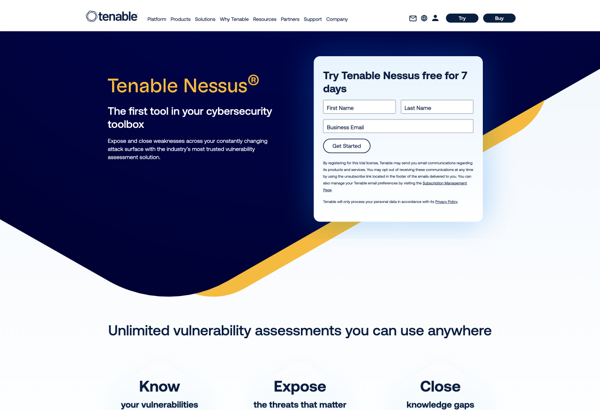
Nessus is a comprehensive vulnerability scanning software developed by Tenable. It is used to scan networks, operating systems, web applications, databases, and other systems for vulnerabilities that could be exploited by attackers.Some key features of Nessus include:Ability to perform high-speed discovery, mapping, and assessment of vulnerabilities across networks, endpoints, web...
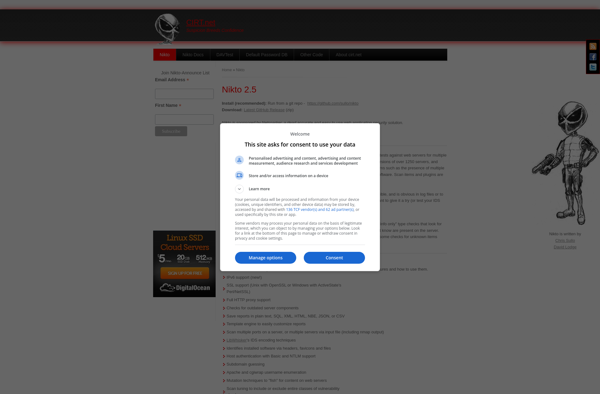
Nikto is an open source web server security scanner that enables security professionals to perform comprehensive tests against web servers to check for insecure server configurations and vulnerabilities. It is designed to be easy to use, while also providing useful information to security experts.Some key features and capabilities of Nikto...
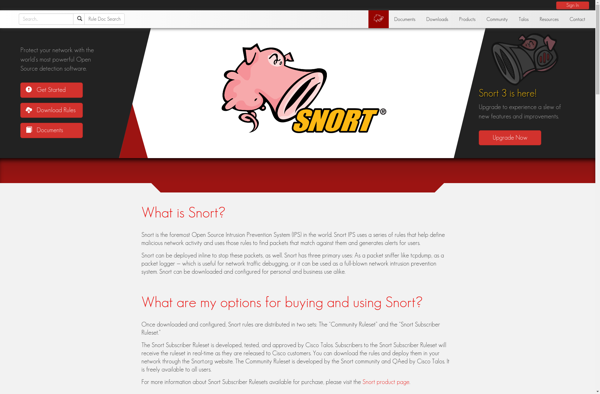
Snort is a free and open-source network intrusion detection system (NIDS) and intrusion prevention system (IPS). It was created in 1998 by Martin Roesch and is now developed by Cisco. Snort analyzes network traffic in real-time and performs protocol analysis, content searching, and matching to detect a variety of attacks...
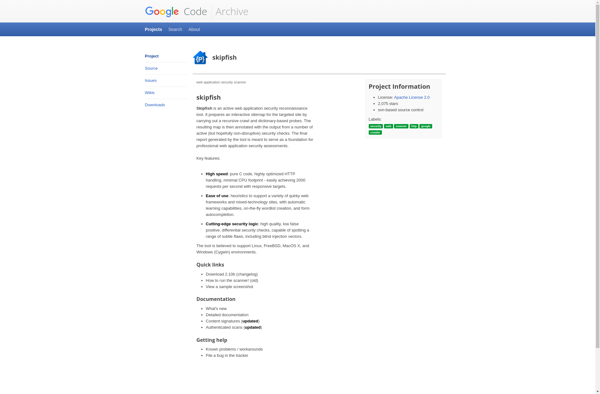
Skipfish is an open source, active web application security reconnaissance tool. It was created by Michal Zalewski for Google as an automated security testing tool.Here are some key features of Skipfish:It carries out recursive crawl and dictionary-based probes on web applications to prepare an interactive sitemap.It has over 3,400 built-in...
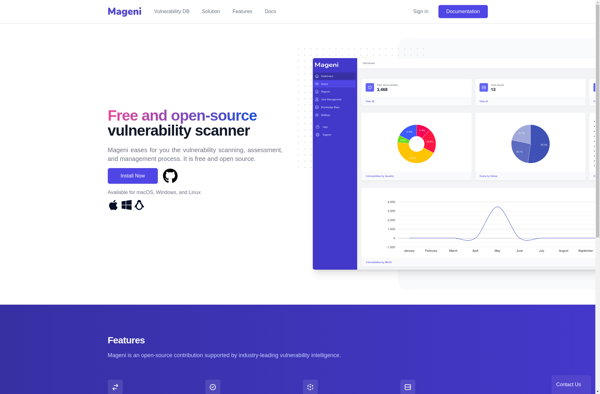
Mageni is an open-source low-code application development platform focused on empowering businesses to build their own internal web applications. It features a visual, drag-and-drop interface that enables staff with no prior coding experience to rapidly develop custom apps that automate workflows, manage data, and streamline business processes.Some key capabilities and...
Intruder is a comprehensive web application security testing tool used to identify vulnerabilities in web apps. It is designed to automate vulnerability scanning and penetration testing to help developers build more secure software.Key features of Intruder include:Automated vulnerability scanning - Intruder can crawl web applications and automatically scan for security...
Network Hotfix Scanner is a Windows-based application designed to help IT administrators and managers scan for and identify missing Windows updates across all computers on their network. The software provides an easy way to perform patch auditing and ensure systems are up-to-date with the latest hotfixes and security patches from...