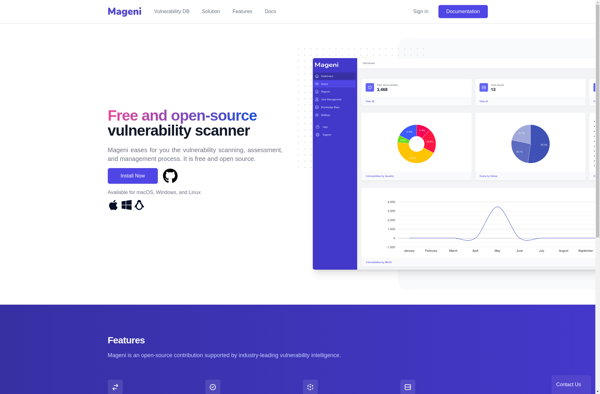
Mageni is an open-source low-code platform for building internal business applications. It allows companies to quickly develop custom web apps for managing workflows, data, and processes without coding.
What is Mageni?
Mageni is an open-source low-code application development platform focused on empowering businesses to build their own internal web applications. It features a visual, drag-and-drop interface that enables staff with no prior coding experience to rapidly develop custom apps that automate workflows, manage data, and streamline business processes.
Some key capabilities and benefits of Mageni include:
Intuitive visual development: Mageni uses a building block approach with prebuilt components, requiring no coding to build full-featured web apps.
Rapid application development: Apps can be built in hours/days rather than weeks/months, accelerating digital transformation.
Improved productivity: Apps built on Mageni can optimize manual tasks, improving staff productivity and efficiency.
Customization: Mageni allows each app to be fully customized to your business needs and workflows.
Security: Role-based access control, data encryption, and other security features keep your data safe.
Scalability: Apps can be accessed by unlimited users and integrate with various data sources.
Open source: Mageni is open source, so there are no vendor lock-in risks. You have full ownership of your apps.
With its focus on empowering citizen developers, Mageni allows companies to harness internal skill sets and rapidly address digital transformation needs without large IT projects or outsourced development expenses.
Mageni Features
Features
Drag-and-drop interface for building apps
Connects to databases and APIs
Has workflow automation capabilities
Includes forms, charts, calendars and other components
Nessus is a comprehensive vulnerability scanning software developed by Tenable. It is used to scan networks, operating systems, web applications, databases, and other systems for vulnerabilities that could be exploited by attackers.Some key features of Nessus include:Ability to perform high-speed discovery, mapping, and assessment of vulnerabilities across networks, endpoints, web...
OpenVAS (Open Vulnerability Assessment System) is a free and open source vulnerability scanner and vulnerability management solution. It can perform network vulnerability tests, system configuration audits and vulnerability detection using the Network Vulnerability Tests (NVT) rules. OpenVAS provides complete tests coverage for IT vulnerabilities with over 50,000 NVTs for vulnerabilities...
Metasploit is an open source penetration testing framework used by cybersecurity professionals to test the security of an organization's networks and applications. It enables ethical hackers and security teams to identify potential weaknesses and vulnerabilities in a system before they are exploited by malicious actors.Some key features of Metasploit include:Database...
Acunetix is a comprehensive web application security testing tool used to detect vulnerabilities and security issues in web applications and services. It features an automated web vulnerability scanner that can crawl and test websites, APIs, and web services to identify SQL injection, cross-site scripting (XSS), misconfigurations, and other security flaws.Key...
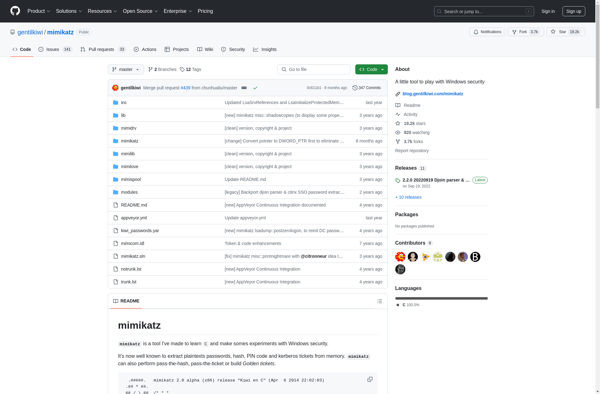
Mimikatz is an open-source utility that enables viewing and saving Windows operating system credentials. Developed by Benjamin Delpy, it is designed to extract plaintext passwords, hash dumps, PIN codes, and kerberos tickets from memory.Mimikatz works by directly accessing the memory of the Windows LSASS (Local Security Authority Subsystem Service) process....
Cobalt Strike is a commercial software platform for Adversary Simulations and Red Team Operations. It provides penetration testers network situational awareness, access to credentials and internal network access, and the ability to mimic the techniques and procedures of advanced threats through its robust scripting engine.Key features of Cobalt Strike include:Beacon...
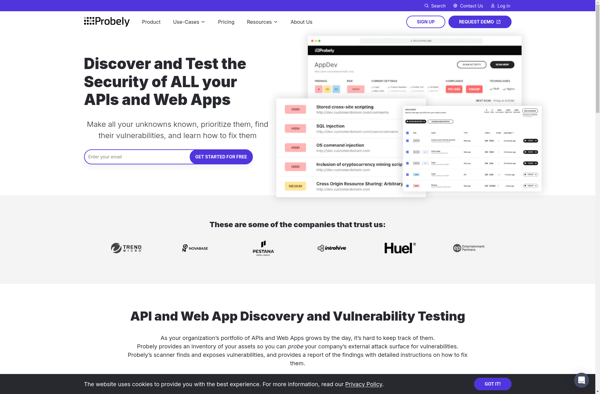
Probely is a powerful web analytics platform designed specifically for observing and understanding user behavior. It utilizes session recordings and advanced form analytics to provide unprecedented visibility into how visitors interact with your digital properties.The core capability of Probely is its ability to record visitors' sessions, allowing you to watch...
Nexpose is a comprehensive vulnerability management and penetration testing software developed and maintained by Rapid7. It enables organizations to identify security weaknesses across their networks, systems, web applications, databases, and endpoints.Key features of Nexpose include:Asset discovery - Automatically discovers devices, ports, services, vulnerabilities, and misconfigurations on the network.Risk-based vulnerability management...
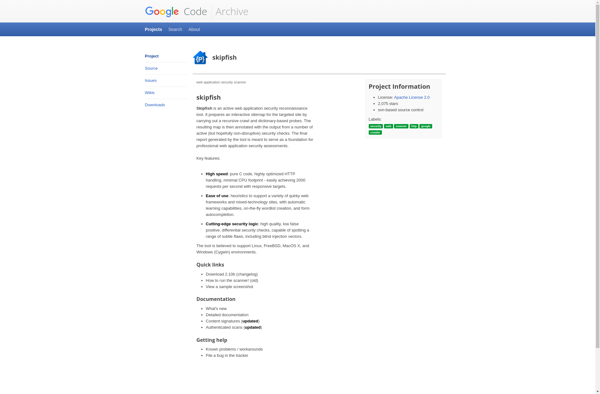
Skipfish is an open source, active web application security reconnaissance tool. It was created by Michal Zalewski for Google as an automated security testing tool.Here are some key features of Skipfish:It carries out recursive crawl and dictionary-based probes on web applications to prepare an interactive sitemap.It has over 3,400 built-in...
Sucuri is a comprehensive website security solution designed to protect websites against a wide range of threats. It offers the following key features:Website firewall and DDoS protection to block attacks and prevent blacklistingContinuous malware scanning to detect infections early and enable fast cleanupRemote malware removal to safely eliminate infections without...
Rapid7 is a leading cybersecurity software company founded in 2000 and headquartered in Boston, Massachusetts. Their solutions focus on managing security risk across cloud, hybrid, and on-premises environments. Their flagship product is InsightVM (formerly Nexpose) which is a vulnerability assessment and management solution that allows organizations to scan their networks,...
The Microsoft Baseline Security Analyzer (MBSA) is a free tool from Microsoft that helps improve computer security by identifying missing security updates and common security misconfigurations. MBSA can scan Windows systems, including clients and servers, and provide a report on the status of system updates, Windows security settings, password policies,...
HTTPCS Security is an open-source web application firewall (WAF) designed to protect websites and web applications from common exploits and vulnerabilities. It works by filtering, monitoring, and blocking potentially malicious HTTP traffic before it reaches the web application.Some key features of HTTPCS Security include:Protection against SQL injection, cross-site scripting (XSS),...
Yang is an open-source modeling language developed by the IETF for defining data models and APIs for network configuration and operations. It is commonly used in networking devices and software to model data structures and interfaces in a standardized way.Some key features of Yang include:Tree-based hierarchical data models for complex...
WoTT (Web of Trust) is a browser extension available for Chrome, Firefox, and Opera that analyzes websites and assigns them a trustworthiness score along with safety ratings in various categories. It aims to help users identify potential risks when browsing the web.When you visit a website, WoTT will display an...