Cloudkick is a cloud server monitoring and management tool that provides visibility into system health, performance, and usage trends. It offers real-time monitoring, alerts, automation, and analytics for servers running on AWS, Rackspace, Linode and more.
A cloud server monitoring and management tool providing real-time visibility into system health, performance, and usage trends, with support for AWS, Rackspace, Linode, and more.
What is Cloudkick?
Cloudkick is a robust cloud server monitoring and management platform designed to give operations and development teams greater visibility and control over their infrastructure. It provides real-time monitoring, alerting, automation and analytics for Linux servers running on major cloud platforms like AWS, Rackspace, Linode and more.
With Cloudkick, users can keep a close eye on system health metrics like CPU, memory, disk space, and network usage. It tracks performance and usage trends over time so you can optimize costs and identify issues before they cause outages. If there are problems, the system can automatically trigger actions like rebooting unresponsive servers.
Key features include:
Intuitive dashboards for tracking health stats, uptime, and usage
Customizable alerts and notifications
Graphing and analytics to spot trends
Automated remediation processes
Patch monitoring and updates
Configuration management integrations
Robust API for building custom solutions
Overall, Cloudkick gives operations and dev teams the visibility, troubleshooting capabilities, and automation tools they need to ensure their cloud environments are healthy, optimized, compliant, and fit for business.
Cloudkick Features
Features
Real-time server monitoring
Alerts and notifications
Log management and analytics
Automated remediation
Cloud cost optimization
Configuration management
Security monitoring
API access
Pricing
Subscription-Based
Pros
Easy to set up and use
Works across multiple cloud providers
Good for monitoring hybrid cloud environments
Flexible alerting and automation capabilities
Helps reduce cloud costs
Good mobile app
Cons
Requires installing an agent on servers
Limited support for non-cloud servers
Analytics and reporting capabilities could be better
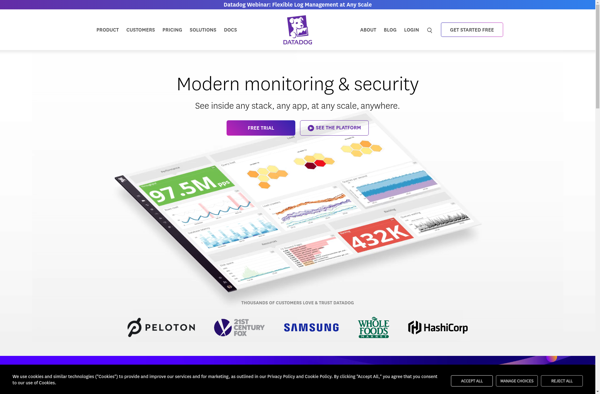
Datadog is a SaaS-based monitoring and analytics platform for cloud applications. It provides complete visibility into dynamic infrastructures by aggregating metrics, events, and logs from servers, containers, databases, tools, and services. This allows Dev and Ops teams to quickly solve performance problems, prove the root cause of software bugs, spot...
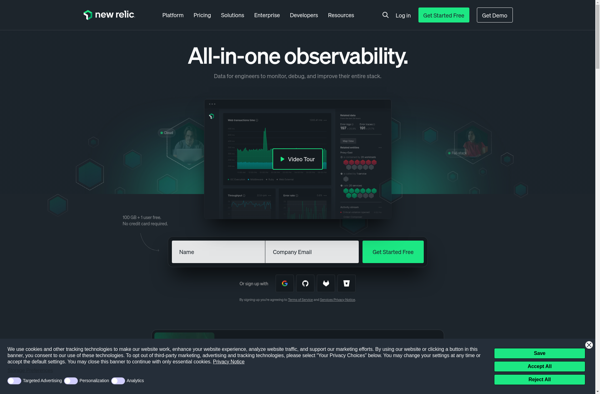
New Relic is a comprehensive application performance monitoring and observability platform used by software engineers to monitor, troubleshoot, and optimize their applications and infrastructure. It provides real-time visibility into the performance, health, and usage of applications running in cloud, hybrid, and on-premises environments.Key features of New Relic include:Application monitoring -...
What Is AppDynamics?AppDynamics is an application performance monitoring (APM) and observability platform owned by Cisco. It provides real-time visibility into application performance, user experience, and business impact across complex distributed systems.Key FeaturesAppDynamics automatically discovers and maps application topology — every service, database, API call, and third-party dependency. It traces individual...
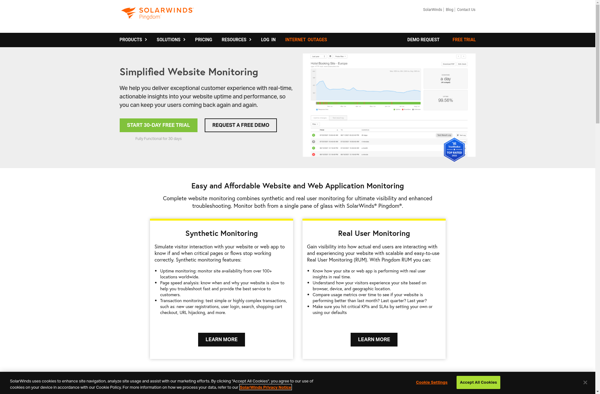
Pingdom is a popular website monitoring service used to track uptime, performance, and speed of websites and web applications. It works by checking websites periodically from locations around the world to test response time and uptime.Key features of Pingdom include:Uptime monitoring - Get alerts if your site goes downPage speed...
Monitis is a cloud-based IT infrastructure monitoring and management platform designed for businesses and IT teams. It provides a single dashboard to monitor the uptime, performance, and health of servers, applications, networks, websites, and other IT infrastructure components.Key features of Monitis include:Uptime and synthetic monitoring to track availability and response...
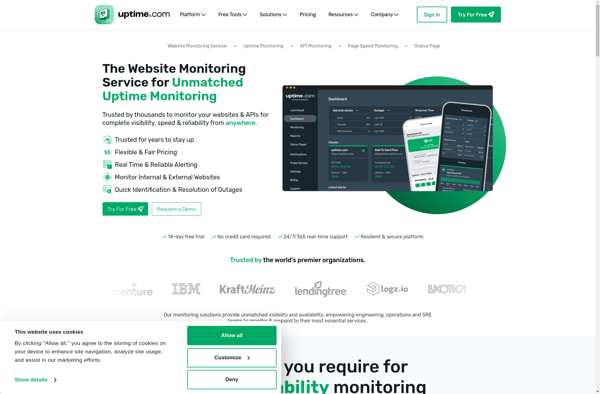
Uptime.com is a comprehensive website and application monitoring service used by businesses to track uptime and performance. It provides a variety of monitoring methods including HTTP, HTTPS, ping, automated transactions, and advanced monitoring to simulate user journeys.Key features of Uptime.com include:Uptime monitoring with 5 minute check intervalsInstant alerts via email,...
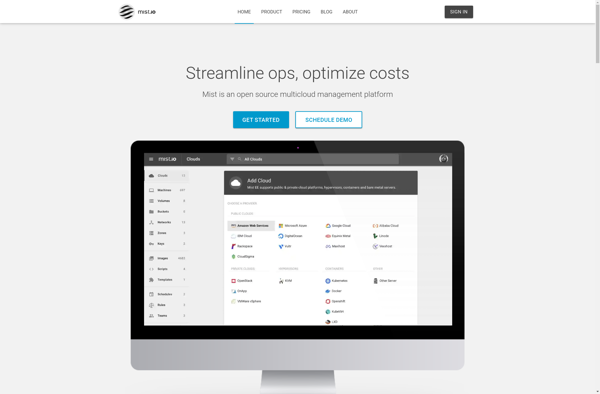
Mist.io is an open source cloud management platform that aims to simplify cloud operations across public, private, and hybrid cloud environments. It provides a single pane of glass to manage infrastructure and services across multiple cloud providers.Some key capabilities and benefits of Mist.io include:Multi-cloud infrastructure management - Mist allows you...
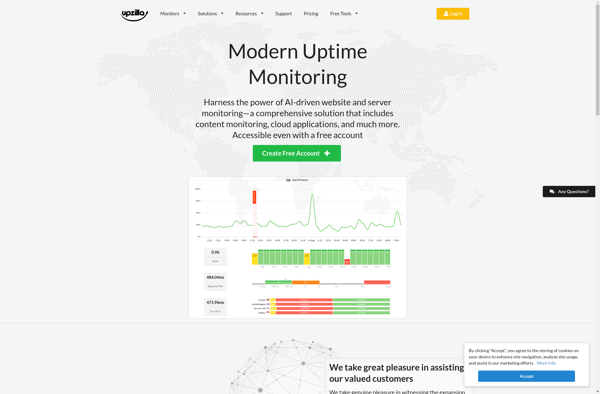
Upzilla is an open-source, web-based defect tracking system that provides an alternative to Bugzilla. It allows development teams to track software bugs, issues, and feature requests throughout the development process.Some key features of Upzilla include:Crowdsourced voting allows users to vote on bug priorityCustomizable fields, views, and workflowsAttach files and screenshots...
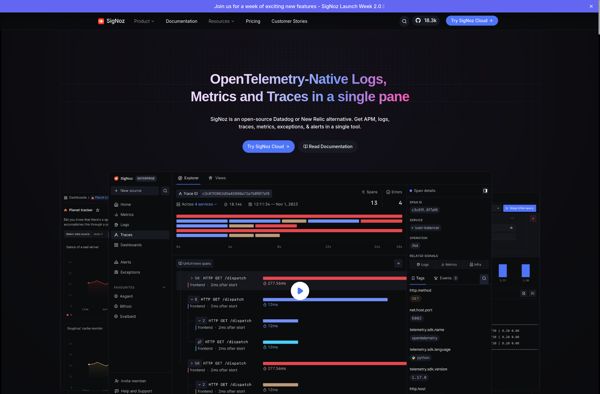
SigNoz is an open-source alternative to commercial Application Performance Monitoring (APM) tools like DataDog, New Relic, and Dynatrace. It is a cloud-native observability platform designed specifically for monitoring modern distributed systems.Some key capabilities and benefits of SigNoz include:Lightweight and optimized for microservices, serverless, and Kubernetes environmentsCollects metrics, traces, and logs...
Nodeping is a cloud-based monitoring solution designed to track the uptime and performance of websites, web services, networks, and infrastructure. It offers a customizable platform to set up monitors and alerts to proactively detect issues before they impact customers and end users.Some key features of Nodeping include:Uptime monitoring - Regular...