DaemonFS is an open-source distributed file system that provides secure file sharing and synchronization capabilities. It uses peer-to-peer networking and cryptography to enable private file transfers without reliance on third-party servers.
An open-source distributed file system providing secure file sharing and synchronization through peer-to-peer networking and cryptography
What is DaemonFS?
DaemonFS is an open-source distributed file system designed for secure file sharing and synchronization. It eliminates the need for third-party cloud storage providers by enabling peer-to-peer file transfers directly between users' devices.
Here are some key features of DaemonFS:
Encrypted file transfers using cryptography to ensure privacy and security of user data
Decentralized architecture based on peer-to-peer networking to remove reliance on centralized servers
Open-source codebase that is transparent and open to community contribution
Automatic file versioning and syncing capabilities across linked devices
Support for mobile and desktop operating systems including Linux, MacOS, Windows, iOS and Android
Overall, DaemonFS offers a secure and decentralized alternative for file storage and sharing compared to traditional cloud services. Its peer-to-peer approach gives users more control over their privacy while eliminating monthly subscription fees.
DaemonFS Features
Features
Secure file sharing and synchronization
Peer-to-peer networking
Cryptography for private file transfers
No reliance on third-party servers
Open-source and distributed file system
Pricing
Open Source
Pros
Enhanced privacy and security for file transfers
Decentralized architecture reduces single points of failure
No third-party server costs or data ownership concerns
Flexibility and customization through open-source nature
Cons
Complexity in setup and configuration for some users
Potentially slower performance compared to centralized solutions
Limited support and documentation compared to commercial products
fseventer is a command-line utility for Mac OS that monitors and logs file system events in real-time. It was created by the Apple Engineer team to help debug issues with applications that rely on file change notifications provided by the operating system.The fseventer tool streams file system events as they...
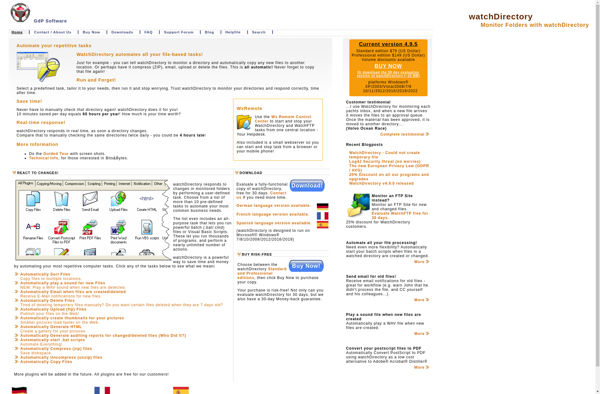
WatchDirectory is an open-source file and directory monitoring software for Windows. It provides real-time monitoring of changes to files, folders, and directory structures on local hard drives.Some key features of WatchDirectory:Monitors changes to files like modifications, additions, deletions.Watches folders and directory structures for changes.Triggers customizable actions when changes are detected...
Watch 4 Folder is a free and lightweight file and folder monitoring utility for Windows. It provides real-time monitoring of specified folders and drives, detecting and alerting users about events like file creation, deletion, renaming, or content changes.Some key features of Watch 4 Folder include:Ability to watch unlimited folders on...
Log Monitor is a software tool designed to help DevOps, IT operations, and engineering teams gain observability into their systems, applications, and infrastructure. It collects log data from various sources like servers, databases, apps, network devices etc. and enables real-time analysis and visualization.Key capabilities include:Centralized logging - Collect and aggregate...
TheFolderSpy is a powerful yet easy-to-use folder and file monitoring software for Windows. It allows you to monitor important folders and files on your computer, external drives, or network shares for suspicious activity.With TheFolderSpy, you can track different types of events like file/folder creation, deletion, renaming, modification, permission changes, and...
HDD Profiler is a specialized utility program designed to monitor the health and performance of hard disk drives (HDDs) on Windows PCs. It provides detailed metrics and analytics to help users track HDD behavior over time and proactively identify potential drive failures before they result in data loss.Key features of...