Google Tag Manager is a tag management system that allows you to quickly and easily implement tracking codes and pixels. It helps manage tags used for tracking and marketing optimization from one UI without editing code.
Google Tag Manager: Manage Tracking Codes & Pixels
A tag management system that simplifies tracking code implementation and management, allowing for easy optimization of marketing efforts.
What is Google Tag Manager?
Google Tag Manager (GTM) is a free tag management system created by Google that allows you to quickly and easily implement tracking codes and pixels used for marketing and analytics purposes. It provides a user interface that helps you organize, manage, and deploy tags on your website or mobile app without having to edit code.
Some key benefits of Google Tag Manager include:
Easily add or update tracking tags and code snippets like Google Analytics, Facebook Pixels, or remarketing pixels without coding
Preview and test tags before public release to ensure proper setup
Organize tags into reusable containers for simple implementation across multiple web properties
Manage tag permissions by user role
Integrate with Google Optimize for A/B testing
Improve page load speed by reducing the number of tags directly embedded in site code
Quickly roll back changes or revert to older container versions
GTM helps streamline implementation and management of marketing, analytics, and advertising tags across web properties. Rather than having to edit site code to deploy every tag, they can be configured via GTM's intuitive UI and deployed instantly. This saves considerable development and testing time, provides more flexibility to add/remove tags, and reduces the risk of site errors from coding changes. For marketing teams and developers managing multiple tags, Google Tag Manager is an invaluable platform.
Google Tag Manager Features
Features
Tag management system to manage marketing and analytics tags
Easy implementation of tracking codes without coding
Built-in tag templates
Real-time tag preview and debugging
A/B testing
Custom triggers and variables
Cross-domain tracking
Data layer management
User permissions and access controls
Integration with Google Analytics, AdWords, etc.
Pricing
Free
Premium
Pros
Simple and intuitive user interface
No need to edit website code
Quick implementation of tags
Centralized tag management
Cross-platform and cross-domain tracking
A/B testing capabilities
Free version available
Cons
Can get complex for advanced implementations
Limited custom JavaScript editing in free version
Requires some technical knowledge
Not ideal for very small or very large implementations
Matomo (formerly Piwik) is a leading open-source web analytics platform focused on privacy. It gives users valuable insights into their website, app, etc. traffic and engagement, while letting them retain full ownership and control of their analytics data.As an on-premises solution, Matomo provides an alternative to sending data to third-party...
Segment is a customer data platform (CDP) that aims to help companies collect, store, analyze and activate their first-party customer data. Some key capabilities and benefits of Segment include:Data collection - Segment seamlessly connects to data sources like websites, mobile apps, CRM platforms, email tools, support tools and more to...
RudderStack is an open-source customer data pipeline platform designed to help companies manage and route customer data from various sources to desired destinations. It provides a flexible and extensible data pipeline to consolidate customer data from websites, mobile apps, cloud apps etc. and route it to data warehouses, lakes, business...
Piwik PRO Tag Manager is a tag management system (TMS) designed to manage tags used for tracking and marketing purposes on websites and mobile applications. It provides an intuitive interface that allows non-technical users to easily create, organize, and deploy tags without having to edit the site's code.Some key features...
Tealium is a customer data platform (CDP) designed to unify customer data across various sources and distribute it across other systems.Some key features and benefits of Tealium include:Collects first-, second-, and third-party customer data from various sources including web, mobile, offline, and IoT.Provides a single unified customer profile across devices...
CustomerLabs CDP is a customer data platform designed to help companies unify customer data from various sources like websites, mobile apps, CRM systems, email platforms etc. to build unified customer profiles with attributes like contact information, transactions, web behavior, and more.Key capabilities and benefits of CustomerLabs CDP include:Collecting and integrating...
Kodeless is a no-code development platform designed to empower anyone to build fully-functional web and mobile apps, without needing to write any code. It features an intuitive drag-and-drop interface that allows users to visually design app layouts, connect to various data sources, add business logic and workflows, integrate with other...
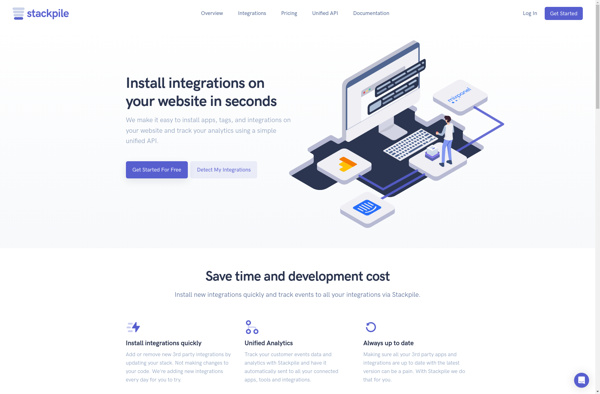
Stackpile is an open-source question and answer platform for programmers to ask coding questions and receive expert answers. It was created as a free alternative to Stack Overflow to provide a simple, ad-free interface focused purely on programming Q&A.;Some key features of Stackpile include:Clean, minimalist interface without ads or distractionsUpvote/downvote...
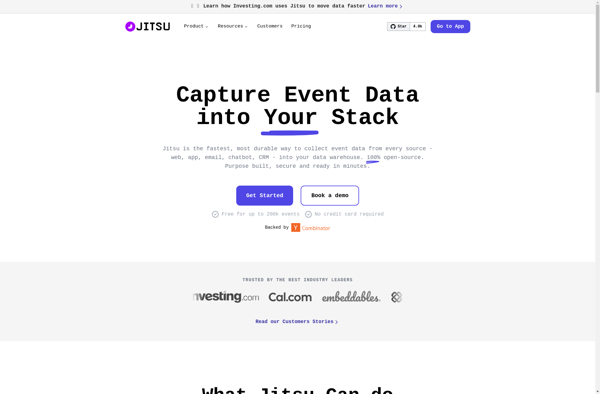
Jitsu is an open-source automation platform designed to help teams and organizations automate repetitive tasks and processes. It provides an intuitive drag-and-drop interface to build automation workflows without the need for coding knowledge.Key features of Jitsu include:Visual workflow designer - Easily build complex workflows by connecting pre-built activities together with...