Infstream is a data analytics platform that helps businesses gain insights from their data. It provides capabilities for data ingestion, processing, analytics, and visualization.
Discover a powerful data analytics platform that streamlines data ingestion, processing, analytics, and visualization for businesses to gain valuable insights.
What is Infstream?
Infstream is a comprehensive data analytics platform designed to help businesses make better decisions through data. It enables users to ingest data from a variety of sources, process and transform the data, build analytics models, and create dashboards and visualizations.
Some key capabilities include:
Flexible data ingestion from databases, cloud apps, APIs, files, and more
Real-time and batch data processing with support for SQL, Python, and other languages
Interactive analytics workspace for ad-hoc analysis
Library of pre-built analytics algorithms and machine learning models
Customizable dashboards and reports with drag-and-drop features
Sharing analytics through apps and integrations with other tools
Infstream can handle structured, semi-structured, and unstructured data across the data lifecyle. The platform is cloud-native and designed to scale to large data volumes. It provides governance capabilities like access controls, encryption, and auditing.
Infstream positions itself as an end-to-end platform empowering users of any technical capability to work with data. Its low-code environment allows non-technical users to prepare, analyze, and share data insights.
Infstream Features
Features
Real-time data streaming and processing
Data ingestion from various sources
Machine learning and predictive analytics
Data visualization and dashboards
Collaboration tools
Pricing
Subscription-Based
Pay-As-You-Go
Pros
Scalable and high-performance
Intuitive drag-and-drop interface
Pre-built connectors for data sources
Cloud-native and serverless architecture
Strong security and governance
Cons
Steep learning curve
Can be expensive for large scale deployments
Limited customization compared to open source options
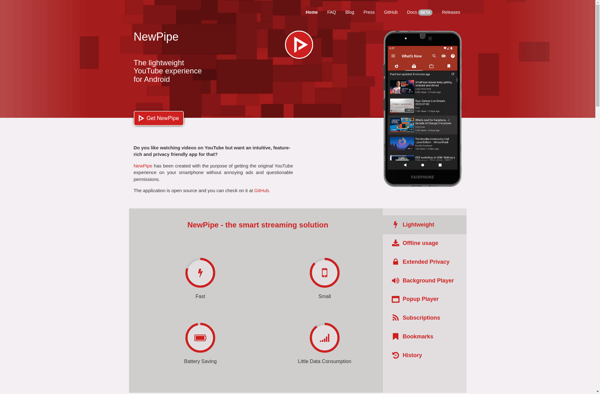
NewPipe is a free and open-source YouTube client app for Android. It provides an alternative front-end to YouTube without needing to use Google services and products.Key features of NewPipe include:Watch YouTube videos without adsListen to YouTube videos in the backgroundDownload videos or extract audioDoes not require a Google account or...
Dailymotion is a video hosting service and sharing platform that enables users to upload, publish, and share videos worldwide. Launched in 2005, it has grown into one of the largest video platforms globally, challenging YouTube's dominance.Some key features that distinguish Dailymotion include:Support for HD-quality video uploads and adaptive bitrate streaming...
PeerTube is a free and open-source, decentralized video platform built on free/libre software. It is designed to be an alternative to video hosting services like YouTube, allowing users to host their own video streaming service.Some key features of PeerTube include:Decentralized architecture - Videos are shared across a federation of servers...
Rumble is an online video platform launched in 2013 that focuses on free speech and giving a voice to independent creators. Some key things to know about Rumble:It is designed as an alternative to more mainstream platforms like YouTube, allowing creators to share videos and build an audience without censorship...
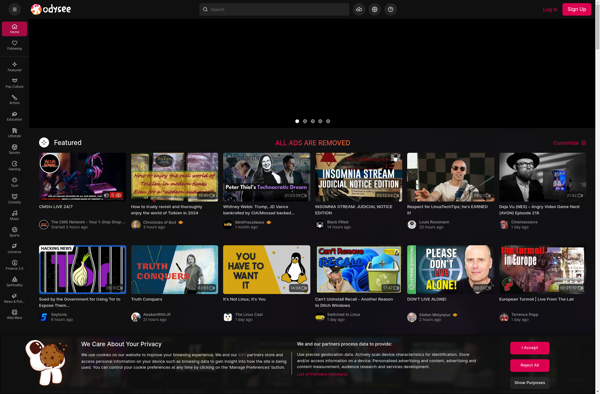
Odysee is a decentralized video platform built on top of the LBRY blockchain protocol. It allows creators to upload, host, and share videos while earning LBC cryptocurrency rewards. Some key features of Odysee include:Decentralized architecture - Videos are hosted on a peer-to-peer network rather than centralized servers. This makes censorship...
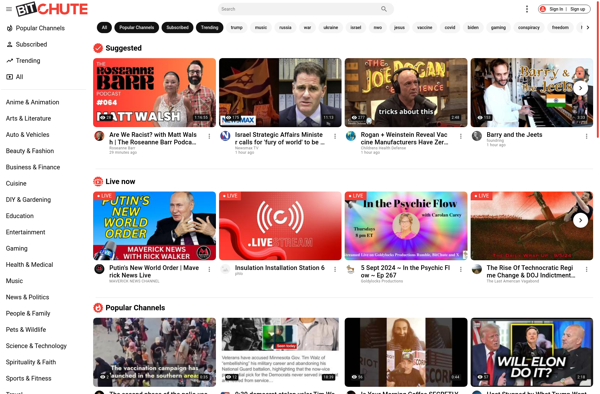
BitChute is a peer-to-peer video sharing platform launched in 2017 as an alternative to YouTube. Unlike YouTube, BitChute is decentralized and built on blockchain technology, meaning videos are distributed across multiple servers instead of a centralized platform.This decentralized nature allows BitChute to avoid censorship and removal of content that may...
DTube is a decentralized video hosting and sharing platform that runs on top of the Steem blockchain. It allows users to upload, view, comment on, and share videos without needing to rely on centralized platforms like YouTube.Some key aspects of DTube include:Videos are hosted in a decentralized manner using the...
LBRY is an open-source, decentralized network and protocol that enables the discovery and distribution of data, especially multimedia content. It is designed to be an alternative to centralized content platforms and services.LBRY enables content creators to publish various types of media, including videos, audio, images, ebooks, and more. Using LBRY,...
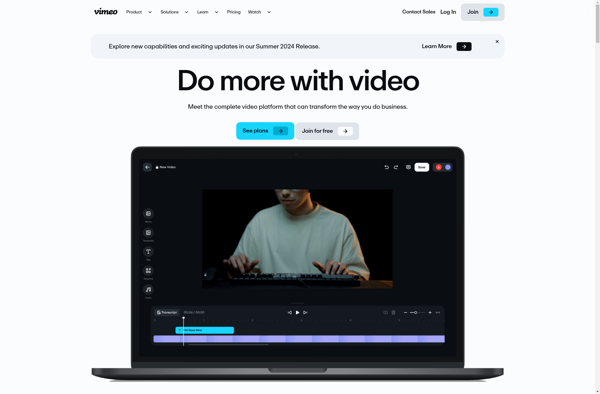
Vimeo is an online video platform and community launched in 2004 that enables users to upload, share, and view high-quality videos. It has a clean, ad-free interface and offers high video quality playback. Vimeo is geared more towards creative professionals compared to platforms like YouTube.Some key features of Vimeo include:High...
StreamingVideoProvider is a subscription-based video streaming platform that gives users access to an extensive library of movies, TV shows, sports, documentaries, and more. It allows viewers to instantly watch video content on an internet-connected device without needing to download files.Some key features of StreamingVideoProvider include:Works across devices like smart TVs,...
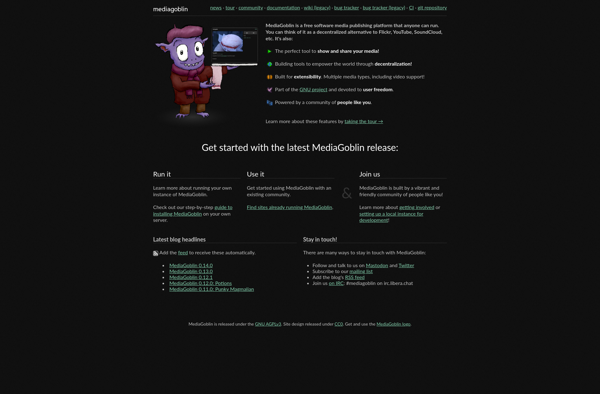
MediaGoblin is a free and open source media publishing platform built on Python and GNU AGPLv3 licensed. It provides users with the ability to host their own servers to publish and share various media types including photos, videos, audio files, and documents.Some key features of MediaGoblin include:Supports common media formats...