JavaQemu is an open-source Java emulator that allows you to run Java bytecode in a virtual machine. It emulates a full software or hardware system and enables running Java programs without installing a Java runtime environment.
Run Java bytecode in a virtual machine with JavaQemu, an open-source emulator that emulates full software or hardware systems, allowing Java program execution without a Java runtime environment.
What is JavaQemu?
JavaQemu is an open-source Java emulator that provides a virtual machine environment to run Java bytecode and Java applications without needing to install a Java runtime. It emulates Java hardware like the processor and memory to execute Java binaries compiled to bytecode format.
Some key features of JavaQemu include:
Full software emulation of a Java stack machine allowing Java class files, JARs, applets etc. to function
Dynamic translation of Java bytecode to optimized machine code for faster performance
Portable - works across Windows, Linux, macOS and other platforms
Compatible with many Java class file versions from 1.1 to 15 for wide compatibility
Extensible through plugin support for custom functionality
Active development community providing updates and fixes
JavaQemu lowers the requirements for running Java applications as it does not need a JRE pre-installed. It can be useful for testing and debugging Java software in a contained environment across different OSes. The dynamic translation can provide better efficiency than interpreters. It makes an good alternative Java platform for developers and users looking for an open-source, liberally licensed JVM implementation.
JavaQemu Features
Features
Emulate Java Virtual Machine to run Java bytecode
Support running Java programs without installing JRE
Open source with MIT license
Cross-platform - runs on Windows, Linux, macOS
Implemented in Java for portability
Modular architecture to emulate different hardware configurations
Pricing
Open Source
Pros
Lightweight and fast Java emulator
Sandboxed environment for running untrusted Java code
Allow Java development without installing JDK
Enable testing Java apps on different platforms
Open source allows customization and community contributions
Cons
Limited compatibility with some Java features
Not a full Java runtime - lacks some standard libraries
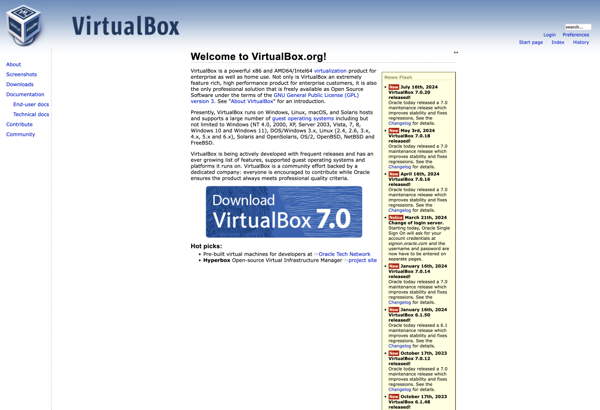
Oracle VM VirtualBox, commonly referred to as VirtualBox, is a powerful and open-source virtualization platform developed by Oracle. It allows users to create and manage virtual machines (VMs) on a host machine, enabling the simultaneous execution of multiple operating systems on a single physical system. Key Features: Cross-Platform Support: VirtualBox...
Windows Sandbox is a virtualized desktop environment included in recent versions of the Windows 10 and Windows 11 operating systems. It allows users to run untrusted or unreliable software applications in an isolated environment without risking damage to the host device or operating system.Sandbox provides a lightweight virtual machine that...
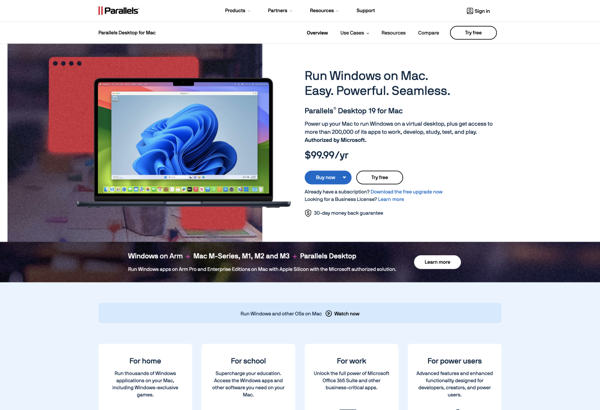
Parallels Desktop is a popular virtualization solution specifically designed for macOS, enabling users to run multiple operating systems on their Mac computers. It is known for its user-friendly interface, performance optimizations, and seamless integration of virtual machines with the macOS environment. Key Features: Cross-Platform Virtualization: Parallels Desktop supports a wide...
VMware Workstation Player is a Type 2 hypervisor developed by VMware for desktop virtualization. It allows users to set up multiple virtual machines (VMs) on a single physical machine and run them simultaneously.Key features of VMware Workstation Player include:Ability to run production environments and test software on different operating systems...
virt-manager is an open-source graphical application for managing virtual machines using the libvirt toolkit and related technologies. It provides a simple way to view, control, and manage guest virtual machines running on the KVM and Xen hypervisors as well as other libvirt-supported technologies such as LXC, QEMU, and VirtualBox.Some key...
Microsoft Hyper-V Server is a free, standalone product from Microsoft that provides a hypervisor-based virtualization platform for running virtual machines on x64 Windows servers. It has a small footprint and requires limited system resources while providing a simple and reliable virtualization solution.As a hypervisor, Hyper-V creates and runs virtual machines...
AQEMU is an open-source machine emulator and virtualizer. It can emulate a variety of guest hardware platforms and allows you to run operating systems and software within virtual machines on your existing host operating system.Some key features of AQEMU include:Processor emulation including x86, ARM, SPARC and PowerPC architecturesVirtualized hardware like...
Multipass is an open source virtual machine manager developed by Canonical for Linux, Windows and macOS operating systems. It allows users to easily create, manage and run Ubuntu virtual machines.Some key features of Multipass include:Simple command line interface to launch, delete and manage Ubuntu VMsLightweight and fast VM launch timesSupport...
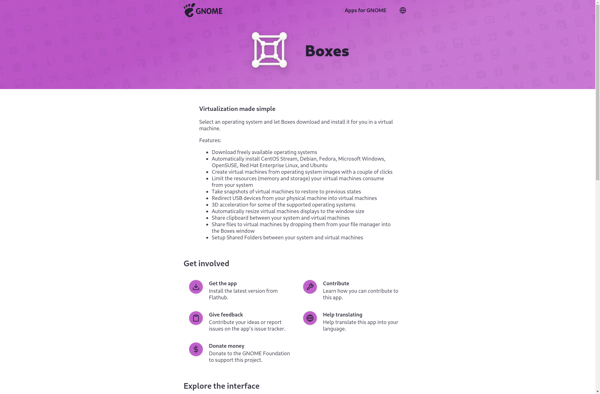
Boxes is an open-source and free virtualization application for Windows, Linux and Mac OS. It allows users to run multiple operating systems simultaneously on a single machine. Boxes creates virtual machines that act like real computers, on which users can install operating systems like Windows, Linux, etc.Some key features of...
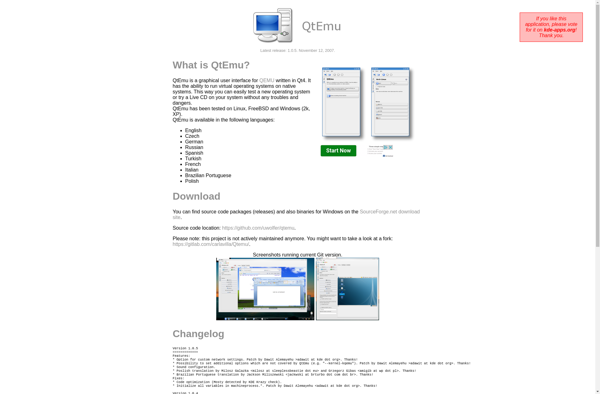
QtEmu is an open-source, cross-platform emulator that can emulate a variety of older computer systems and classic games consoles. It provides a user-friendly graphical interface to emulate systems like DOS, Commodore 64, ZX Spectrum, Nintendo Entertainment System, Super Nintendo, Sega Master System, Sega Genesis, and more.Some key features of QtEmu...