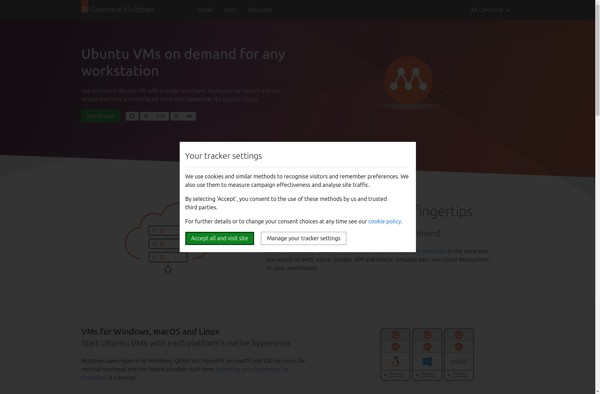
Multipass is a lightweight virtual machine manager for Linux, Windows and macOS. It simplifies setting up virtual Ubuntu instances in just a few clicks, allowing developers to easily create reproducible development environments.
Multipass is a lightweight virtual machine manager for Linux, Windows and macOS. It simplifies setting up virtual Ubuntu instances in just a few clicks, allowing developers to easily create reproducible development environments.
What is Multipass?
Multipass is an open source virtual machine manager developed by Canonical for Linux, Windows and macOS operating systems. It allows users to easily create, manage and run Ubuntu virtual machines.
Some key features of Multipass include:
Simple command line interface to launch, delete and manage Ubuntu VMs
Lightweight and fast VM launch times
Support for the latest Ubuntu LTS releases
Reproducible development environments for testing and collaboration
VM image availability for Linux, macOS and Windows hosts
Open source with an active community behind development
Multipass is targeted at developers and tech enthusiasts who want the simplicity of tools like Docker combined with the benefits of full VM environments. It excels at setting up disposable, reproducible Ubuntu test environments in just a few minutes.
Typical use cases include testing software across multiple Ubuntu versions, simulating complex networked systems, and spinning up compatible Linux dev environments for collaboration. The minimal overhead makes Multipass well suited for use on developer laptops.
Multipass Features
Features
Create Ubuntu VMs with a single command
CLI and GUI available
Built-in SSH access to VMs
Suspend and restart VMs while maintaining state
Share folders between host and VMs
Customizable CPU and memory allocation
VM image caching to speed up launches
Pricing
Free
Open Source
Pros
Simple and easy to use
Lightweight and fast VM launches
Reproducible dev environments
Native clients for Linux, macOS and Windows
Active development and maintenance
Cons
Only supports Ubuntu VMs currently
Limited configuration options compared to other VM managers
QEMU is a free and open source hypervisor and machine emulator. It emulates a complete computer system, including the processor, memory, storage, network interfaces and peripherals. This allows you to run software and operating systems written for one machine on a different machine.Some key features of QEMU include:Full system emulation...
Oracle VM VirtualBox, commonly referred to as VirtualBox, is a powerful and open-source virtualization platform developed by Oracle. It allows users to create and manage virtual machines (VMs) on a host machine, enabling the simultaneous execution of multiple operating systems on a single physical system. Key Features: Cross-Platform Support: VirtualBox...
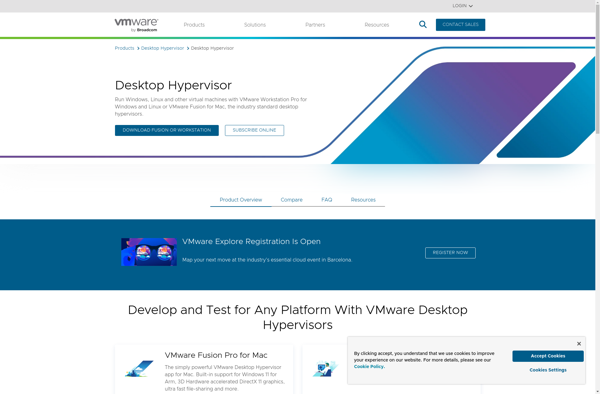
VMware Workstation Pro is a Type 2 hypervisor developed by VMware for desktop virtualization on x64 versions of Windows and Linux. It allows users to set up multiple virtual machines on a single physical machine and run different operating systems and applications in each VM without rebooting.Key features include:Ability to...
Parallels Desktop is a popular virtualization solution specifically designed for macOS, enabling users to run multiple operating systems on their Mac computers. It is known for its user-friendly interface, performance optimizations, and seamless integration of virtual machines with the macOS environment. Key Features: Cross-Platform Virtualization: Parallels Desktop supports a wide...
Proxmox Virtual Environment (Proxmox VE) is an open-source server virtualization management solution based on QEMU/KVM virtualization and LXC containers. It allows you to manage virtual machines and containers using a web-based GUI. Key features include:Hypervisor built on Linux Kernel-based Virtual Machine (KVM) technology for virtualizationLinux Containers (LXC) for container-based virtualizationWeb-based...
VMware Workstation Player is a Type 2 hypervisor developed by VMware for desktop virtualization. It allows users to set up multiple virtual machines (VMs) on a single physical machine and run them simultaneously.Key features of VMware Workstation Player include:Ability to run production environments and test software on different operating systems...
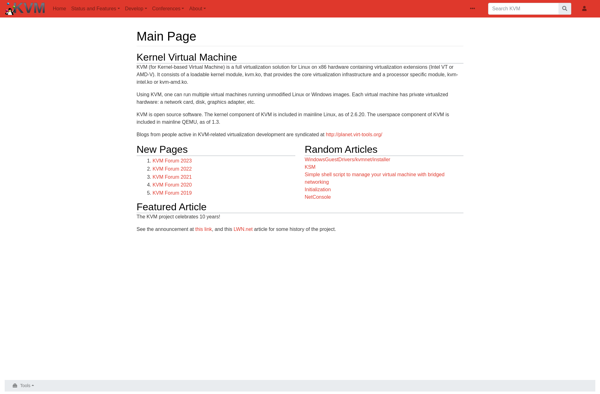
KVM (Kernel-based Virtual Machine) is an open-source virtualization technology built into Linux. It allows you to create and run virtual machines (VMs) on any Linux server or desktop with hardware virtualization capabilities.KVM is implemented as a kernel module that leverages the virtualization extensions of modern CPUs like Intel VT or...
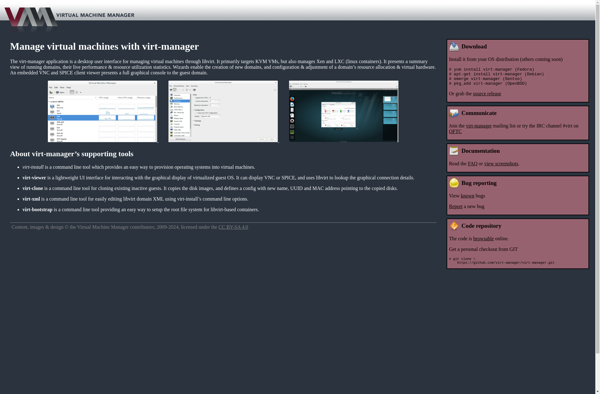
virt-manager is an open-source graphical application for managing virtual machines using the libvirt toolkit and related technologies. It provides a simple way to view, control, and manage guest virtual machines running on the KVM and Xen hypervisors as well as other libvirt-supported technologies such as LXC, QEMU, and VirtualBox.Some key...
VMware Fusion is a Type 2 hypervisor developed by VMware for Mac users. It allows you to create and run virtual machines that emulate other operating systems on your Mac hardware. Fusion provides a simple user interface to set up, manage, and use virtual machines.Some key features and capabilities of...
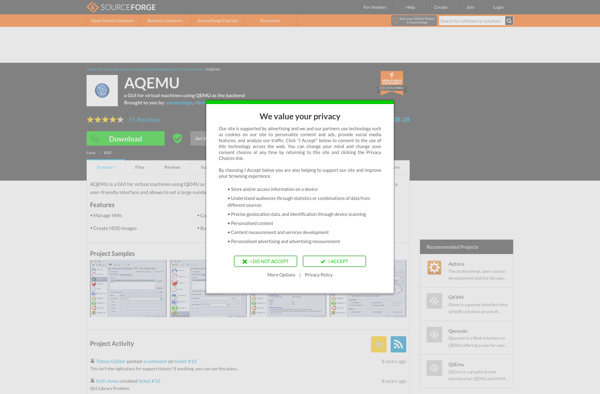
AQEMU is an open-source machine emulator and virtualizer. It can emulate a variety of guest hardware platforms and allows you to run operating systems and software within virtual machines on your existing host operating system.Some key features of AQEMU include:Processor emulation including x86, ARM, SPARC and PowerPC architecturesVirtualized hardware like...
Boxes is an open-source and free virtualization application for Windows, Linux and Mac OS. It allows users to run multiple operating systems simultaneously on a single machine. Boxes creates virtual machines that act like real computers, on which users can install operating systems like Windows, Linux, etc.Some key features of...
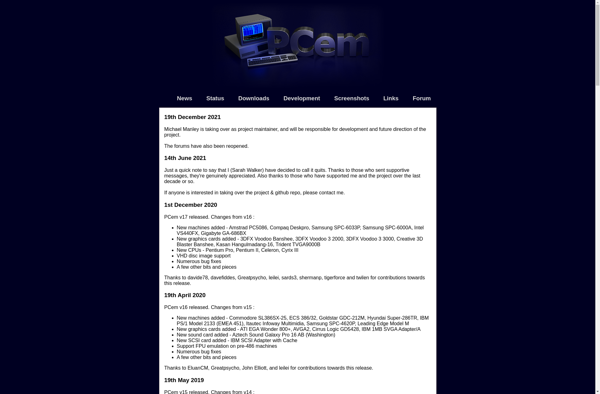
PCem is an open-source emulator for x86-based PCs. It enables you to emulate old PCs with various CPUs, graphics cards, sound cards and other peripherals. The goal of PCem is to be a highly compatible and customizable PC emulator.Some key features of PCem include:Accurate emulation of IA-32 and x86-64 Intel...
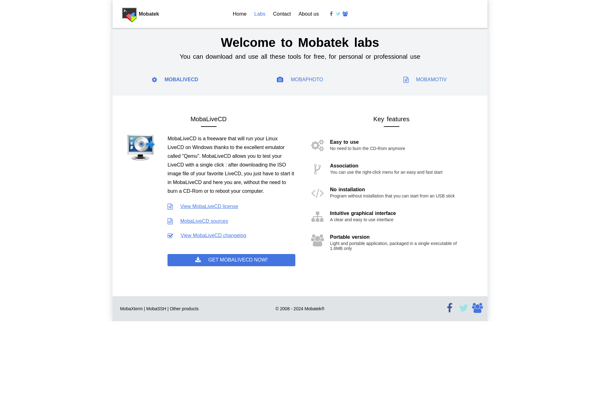
MobaLiveCD is a bootable live Linux distribution that is tailored for mobile broadband usage and troubleshooting. It can be run directly from a CD or USB drive without needing to install anything on the computer's hard drive.Some key features of MobaLiveCD include:Comes preloaded with various applications like speedtest-cli, iperf3, ping,...
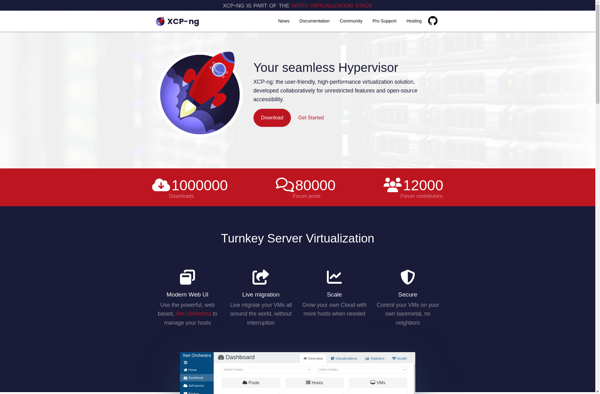
XCP-ng is an open-source hypervisor platform based on the Xen Project Hypervisor. It originated as a community-driven fork of Citrix XenServer and allows users to manage virtual machines and storage resources for compute provisioning.Some key features of XCP-ng include:Provides an enterprise-grade hypervisor and tools for virtual machine management and automationEnabled...
JavaQemu is an open-source Java emulator that provides a virtual machine environment to run Java bytecode and Java applications without needing to install a Java runtime. It emulates Java hardware like the processor and memory to execute Java binaries compiled to bytecode format.Some key features of JavaQemu include:Full software emulation...
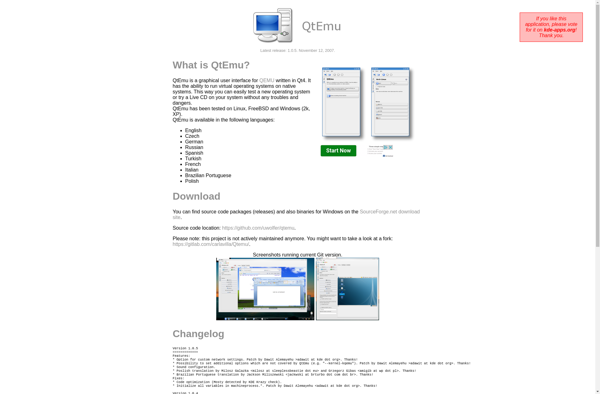
QtEmu is an open-source, cross-platform emulator that can emulate a variety of older computer systems and classic games consoles. It provides a user-friendly graphical interface to emulate systems like DOS, Commodore 64, ZX Spectrum, Nintendo Entertainment System, Super Nintendo, Sega Master System, Sega Genesis, and more.Some key features of QtEmu...
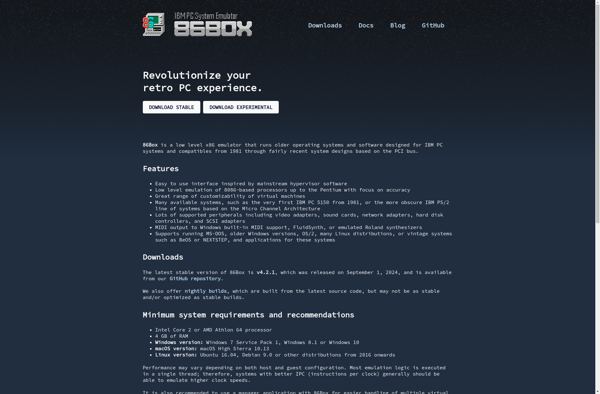
86Box is an open-source emulator specifically designed for recreating the software and hardware environment of PCs from the 80s and early 90s, the era dominated by DOS and early versions of Windows such as Windows 3.x.As an emulator focused on DOS and early Windows versions, 86Box provides highly accurate simulations...
JPCSIM is an open-source, Java-based, discrete event simulation software designed specifically for modeling manufacturing systems like production lines, assembly operations, supply chains, and more. It provides a graphical modeling interface that allows users to quickly build simulations by adding and connecting functional blocks that represent individual processes or operations.Some key...
VMLite Workstation is a powerful, free system virtualization platform for desktop computers. It allows you to simultaneously run multiple operating systems as virtual machines on a single physical host system. VMLite Workstation works on Windows, Linux, and Mac OS X host operating systems.Some key features of VMLite Workstation include:Ability to...
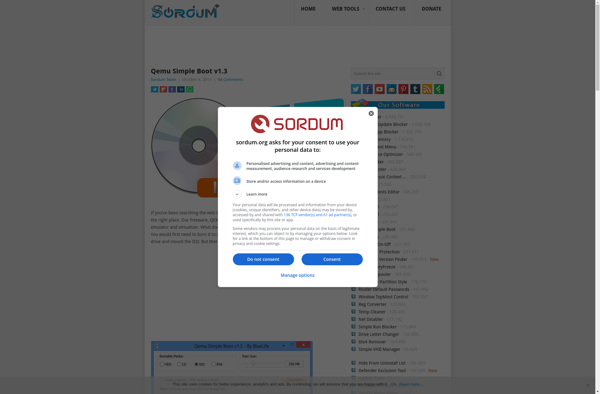
Qemu Simple Boot is an open-source emulator that allows you to create and run virtual machines on your computer without going through a lengthy boot process. It is part of the Qemu project for machine virtualization.Some key features of Qemu Simple Boot:Allows you to quickly test operating systems or programs...
VMLite VBoot is a fast and lightweight virtual machine manager for Windows designed for simplicity and ease-of-use. It allows you to easily create, run, and manage virtual machines on your Windows desktop or laptop without slowdowns or bloat.Some key features of VMLite VBoot include:Intuitive and straightforward user interface to create,...
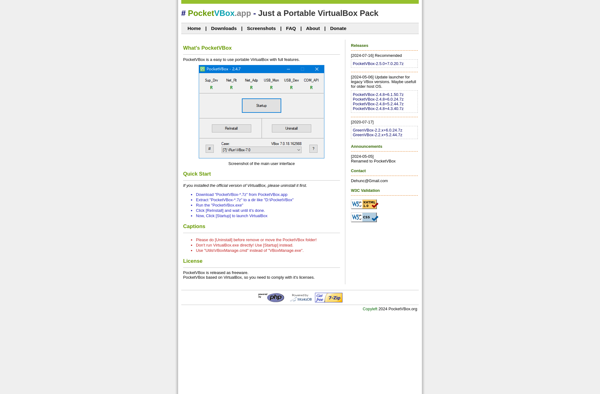
GreenVBox is an open-source and free virtualization software that allows users to run multiple guest operating systems on a single host machine. It utilizes hypervisor technology to create isolated virtual machines that share hardware resources from the host.Some key features of GreenVBox include:Lightweight and fast performance - It has a...
Veertu is a virtualization software developed specifically for Mac computers. It allows Mac users to virtually run Windows operating system on their Macs without having to reboot or partition the hard drive.Some key features of Veertu include:Seamless Windows experience - Users can run Windows software, play Windows games, and use...
pcemu is an open-source emulator for classic x86-based PCs. It allows you to play old PC games and run legacy applications on modern computers and operating systems.Some key features of pcemu include:Accuracy - pcemu aims to faithfully reproduce the functionality of older PCs in order to maintain compatibility with older...
GNURoot Debian is an application for Android that provides a chrooted Debian GNU/Linux environment that runs directly on top of the Android kernel, without the need for device root access or installation of a custom ROM.It sets up a minimal Debian filesystem with access to most Android hardware like the...
VMLite XP Mode is a free virtualization software that allows users to run Windows XP as a virtual machine on modern Windows operating systems. It utilizes lightweight virtualization technology to provide an integrated XP virtual machine without slowing down the host system.Some key features of VMLite XP Mode include:Allows running...
VMLite MyOldPCs is a user-friendly virtual machine program designed to emulate older Windows operating systems on modern computers. It allows you to easily install and run Windows 98, Windows 2000, Windows XP, and other legacy OSes in a virtual environment within your current system.MyOldPCs creates a separate, sandboxed virtual machine...
PetiteCloud is an open source platform-as-a-service (PaaS) designed for hosting web applications and services. It provides developers with on-demand infrastructure to deploy, scale, and manage their apps without managing servers.Key features of PetiteCloud include:Supports popular languages like Node.js, Python, PHP, Ruby, JavaBuilt-in support for databases like MySQL, PostgreSQL, MongoDBAuto-scaling of...