VMLite XP Mode is a virtual machine software that allows users to run Windows XP as a virtual machine within modern versions of Windows. It provides a lightweight virtualization solution for using older XP applications and games on newer systems.
What is VMLite XP Mode?
VMLite XP Mode is a free virtualization software that allows users to run Windows XP as a virtual machine on modern Windows operating systems. It utilizes lightweight virtualization technology to provide an integrated XP virtual machine without slowing down the host system.
Some key features of VMLite XP Mode include:
Allows running Windows XP software and games on Windows 7, 8, 10 and 11 systems
Small resource footprint, uses less RAM and disk space than traditional virtualization solutions
Seamless integration of XP VM with the host Windows system
Shared clipboard and drag-and-drop support between host and guest OS
Virtual networking and shared folders for easy file transfer
Supports modern hardware like USB 3.0 devices in the virtual XP machine
VMLite XP Mode targets users looking for an easy way to access older XP-compatible software or games on their modern PCs, without wanting to partition their drive or use a hardware VM solution. Its lightweight approach and tight host-VM integration provides a streamlined user experience.
VMLite XP Mode Features
Features
Runs Windows XP in a virtual machine on modern Windows versions
Provides an isolated environment for older XP apps and games
Uses VirtualBox as the virtualization engine
Supports DirectX 8/9 for 3D accelerated graphics
Easy to install and configure
Lightweight and fast virtual machine performance
Ability to adjust VM settings like RAM, CPU cores, etc
Seamless window mode for integrating XP apps into host desktop
Shared folders for easy file transfer between host and guest
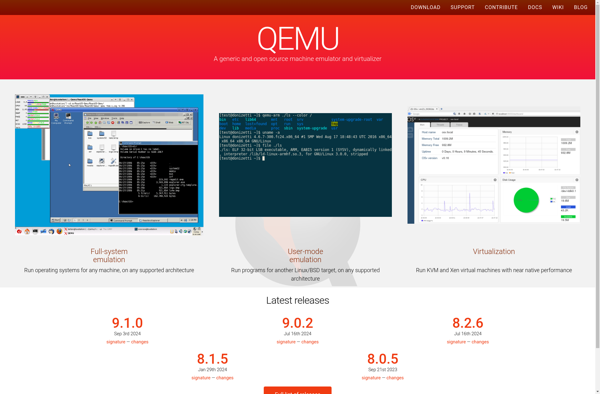
QEMU is a free and open source hypervisor and machine emulator. It emulates a complete computer system, including the processor, memory, storage, network interfaces and peripherals. This allows you to run software and operating systems written for one machine on a different machine.Some key features of QEMU include:Full system emulation...
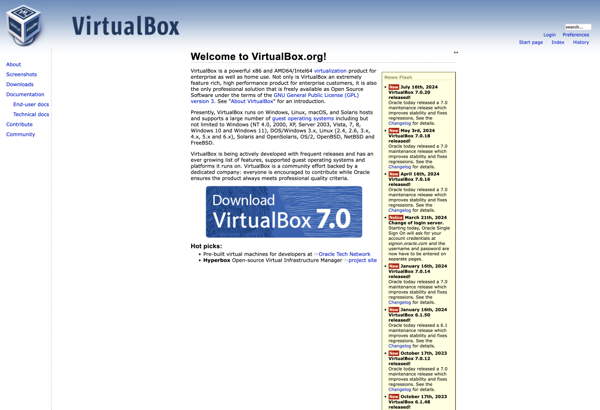
Oracle VM VirtualBox, commonly referred to as VirtualBox, is a powerful and open-source virtualization platform developed by Oracle. It allows users to create and manage virtual machines (VMs) on a host machine, enabling the simultaneous execution of multiple operating systems on a single physical system. Key Features: Cross-Platform Support: VirtualBox...
VMware Workstation Pro is a Type 2 hypervisor developed by VMware for desktop virtualization on x64 versions of Windows and Linux. It allows users to set up multiple virtual machines on a single physical machine and run different operating systems and applications in each VM without rebooting.Key features include:Ability to...
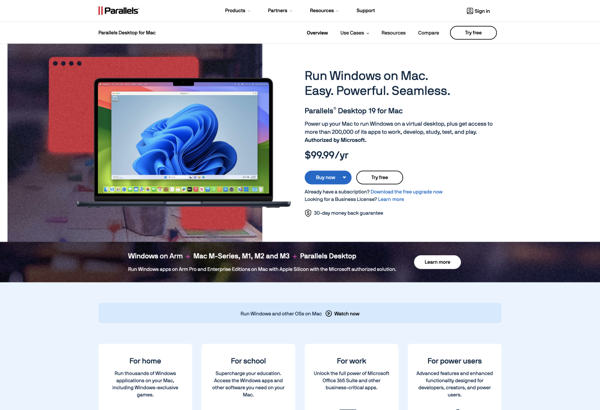
Parallels Desktop is a popular virtualization solution specifically designed for macOS, enabling users to run multiple operating systems on their Mac computers. It is known for its user-friendly interface, performance optimizations, and seamless integration of virtual machines with the macOS environment. Key Features: Cross-Platform Virtualization: Parallels Desktop supports a wide...
Windows Sandbox is a virtualized desktop environment included in recent versions of the Windows 10 and Windows 11 operating systems. It allows users to run untrusted or unreliable software applications in an isolated environment without risking damage to the host device or operating system.Sandbox provides a lightweight virtual machine that...
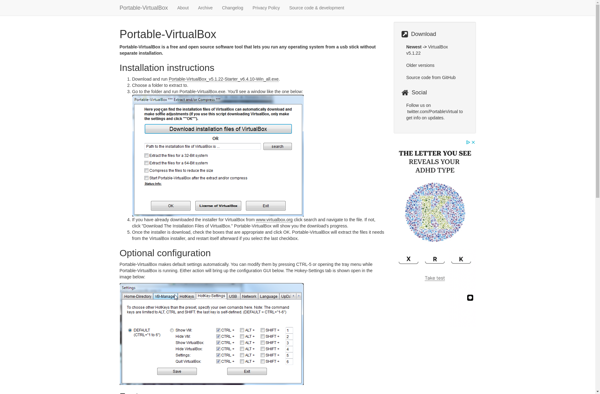
Portable Virtualbox is a free, open-source virtualization software that allows you to run multiple guest operating systems on your Windows host computer without needing to go through a lengthy install process. It runs directly off a USB thumb drive, making it easy to take your virtual machines with you wherever...
VMware Workstation Player is a Type 2 hypervisor developed by VMware for desktop virtualization. It allows users to set up multiple virtual machines (VMs) on a single physical machine and run them simultaneously.Key features of VMware Workstation Player include:Ability to run production environments and test software on different operating systems...
KVM (Kernel-based Virtual Machine) is an open-source virtualization technology built into Linux. It allows you to create and run virtual machines (VMs) on any Linux server or desktop with hardware virtualization capabilities.KVM is implemented as a kernel module that leverages the virtualization extensions of modern CPUs like Intel VT or...
VMware Fusion is a Type 2 hypervisor developed by VMware for Mac users. It allows you to create and run virtual machines that emulate other operating systems on your Mac hardware. Fusion provides a simple user interface to set up, manage, and use virtual machines.Some key features and capabilities of...
Multipass is an open source virtual machine manager developed by Canonical for Linux, Windows and macOS operating systems. It allows users to easily create, manage and run Ubuntu virtual machines.Some key features of Multipass include:Simple command line interface to launch, delete and manage Ubuntu VMsLightweight and fast VM launch timesSupport...