Qemu Simple Boot is an open-source machine emulator and virtualizer that can run operating systems and programs for different computer architectures without initialization. It allows quick and easy virtual machine creation and testing.
What is Qemu Simple Boot?
Qemu Simple Boot is an open-source emulator that allows you to create and run virtual machines on your computer without going through a lengthy boot process. It is part of the Qemu project for machine virtualization.
Some key features of Qemu Simple Boot:
Allows you to quickly test operating systems or programs for different architectures like x86, ARM, SPARC, PowerPC etc.
Useful for testing bootloaders, kernels or bootable ISOs without rebooting your main operating system.
Avoids the initialization and boot process of a virtual machine, loading directly into the OS.
Lightweight and fast compared to fully virtualizing hypervisor solutions.
Completely free and open-source software supported on Linux, Windows and Mac OS.
Advanced networking and storage options available to connect devices and share folders.
Qemu Simple Boot gives developers, testers and enthusiasts an easy way to set up a quick throwaway VM to test concepts or try out new systems, without going through a lengthy setup and boot process each time. It builds on Qemu's versatile virtualization capabilities.
Qemu Simple Boot Features
Features
Emulates a complete system, including a processor and various peripherals
Can emulate multiple CPU architectures, including x86, ARM, SPARC, PowerPC, and MIPS
Supports a range of guest operating systems including Linux, Windows, BSD, Solaris, and more
Provides a simple and fast way to boot Linux and other OS images in a virtual environment
Allows testing software stacks without booting a physical system or dual-booting
Has a command line interface and configuration files for automation
Open source software available free of cost
Pricing
Open Source
Pros
Easy to set up and use
Very fast boot times compared to full virtualization
Requires fewer system resources than full virtualization
Supports many hardware architectures and operating systems
Active development community
Completely free and open source
Cons
Does not provide complete virtualization, limited to emulating hardware
Limited peripheral support compared to full virtualization
No built-in snapshot or suspend features
Limited configuration options compared to full virtualizers like KVM
Requires manual configuration for networking, USB, etc
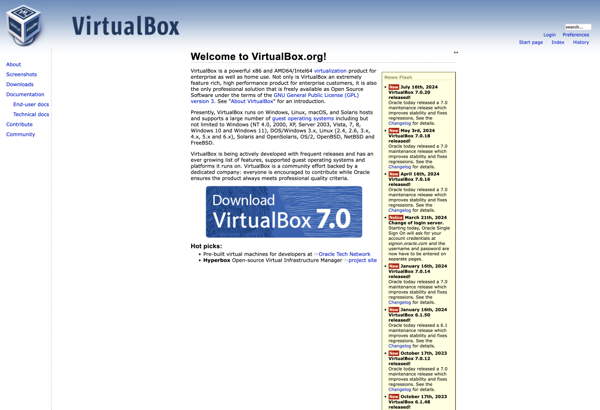
Oracle VM VirtualBox, commonly referred to as VirtualBox, is a powerful and open-source virtualization platform developed by Oracle. It allows users to create and manage virtual machines (VMs) on a host machine, enabling the simultaneous execution of multiple operating systems on a single physical system. Key Features: Cross-Platform Support: VirtualBox...
VMware Workstation Pro is a Type 2 hypervisor developed by VMware for desktop virtualization on x64 versions of Windows and Linux. It allows users to set up multiple virtual machines on a single physical machine and run different operating systems and applications in each VM without rebooting.Key features include:Ability to...
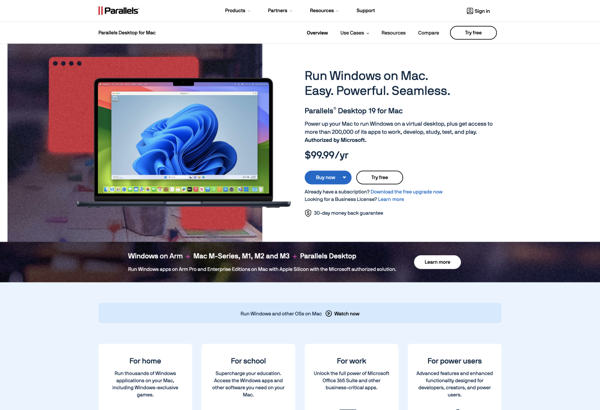
Parallels Desktop is a popular virtualization solution specifically designed for macOS, enabling users to run multiple operating systems on their Mac computers. It is known for its user-friendly interface, performance optimizations, and seamless integration of virtual machines with the macOS environment. Key Features: Cross-Platform Virtualization: Parallels Desktop supports a wide...
Windows Sandbox is a virtualized desktop environment included in recent versions of the Windows 10 and Windows 11 operating systems. It allows users to run untrusted or unreliable software applications in an isolated environment without risking damage to the host device or operating system.Sandbox provides a lightweight virtual machine that...
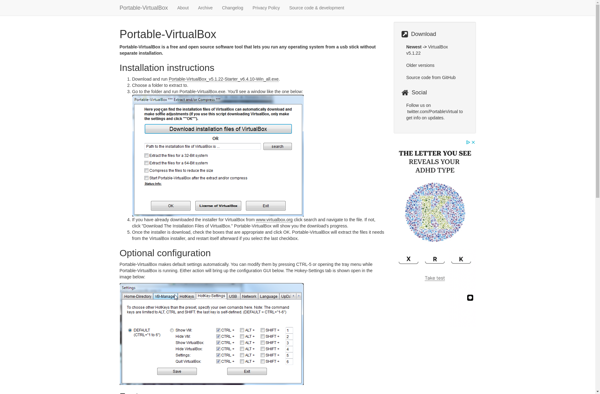
Portable Virtualbox is a free, open-source virtualization software that allows you to run multiple guest operating systems on your Windows host computer without needing to go through a lengthy install process. It runs directly off a USB thumb drive, making it easy to take your virtual machines with you wherever...
VMware Workstation Player is a Type 2 hypervisor developed by VMware for desktop virtualization. It allows users to set up multiple virtual machines (VMs) on a single physical machine and run them simultaneously.Key features of VMware Workstation Player include:Ability to run production environments and test software on different operating systems...
VMware Fusion is a Type 2 hypervisor developed by VMware for Mac users. It allows you to create and run virtual machines that emulate other operating systems on your Mac hardware. Fusion provides a simple user interface to set up, manage, and use virtual machines.Some key features and capabilities of...
Knoppix is an operating system based on Debian GNU/Linux and optimized to run directly from CDs or DVDs. Unlike other Linux distributions, Knoppix does not need to be installed on a hard disk drive and can be used to test hardware, rescue data from failed systems, and more.Some key features...
Multipass is an open source virtual machine manager developed by Canonical for Linux, Windows and macOS operating systems. It allows users to easily create, manage and run Ubuntu virtual machines.Some key features of Multipass include:Simple command line interface to launch, delete and manage Ubuntu VMsLightweight and fast VM launch timesSupport...
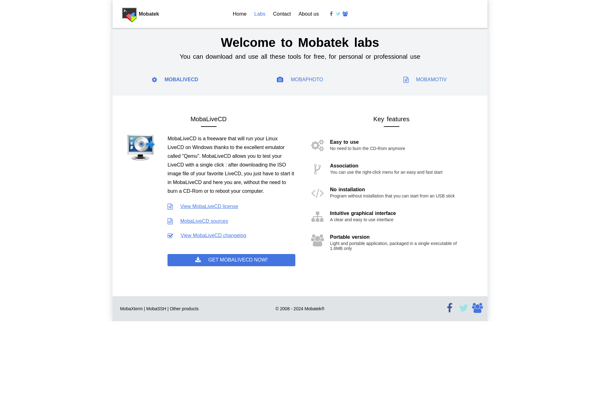
MobaLiveCD is a bootable live Linux distribution that is tailored for mobile broadband usage and troubleshooting. It can be run directly from a CD or USB drive without needing to install anything on the computer's hard drive.Some key features of MobaLiveCD include:Comes preloaded with various applications like speedtest-cli, iperf3, ping,...
BootMed is a bootable CD that allows users to run computer diagnostics, check system health, back up important files, and repair issues without needing to load the installed operating system. It contains various utilities and tools that run independently from the main OS once booted from the CD.Features of BootMed...
Parallels Workstation is a desktop virtualization software that enables users to run multiple operating systems on a single physical computer. It utilizes hypervisor technology to create isolated virtual machines where different operating systems can be installed and used simultaneously.Some key features of Parallels Workstation include:Ability to run Windows, Linux, macOS,...