VMLite VBoot is a fast, lightweight virtual machine manager for Windows. It allows you to easily create, run, and manage virtual machines on your Windows PC without slowdowns or bloat.
VMLite VBoot: Fast & Lightweight Virtual Machine Manager for Windowss
A powerful tool for creating, running, and managing virtual machines on your Windows PC, without compromising performance or space.
What is VMLite VBoot?
VMLite VBoot is a fast and lightweight virtual machine manager for Windows designed for simplicity and ease-of-use. It allows you to easily create, run, and manage virtual machines on your Windows desktop or laptop without slowdowns or bloat.
Some key features of VMLite VBoot include:
Intuitive and straightforward user interface to create, configure and manage virtual machines
Supports common virtual disk formats like VHD, VMDK, VDI for virtual machine storage
Built-in ISO mounting to install operating systems from ISO disk image files
Seamless mouse integration between host and guest OS for easy navigation
Shared folders to easily transfer files between host and virtual machines
Snapshot support to save and restore VM states
Virtual networking and NAT configuration for internet access
As a lightweight VM manager focused on simplicity, VMLite VBoot consumes less system resources than solutions like VirtualBox or VMware. This allows it to run fast while putting less strain on your base Windows system. If you need a no-fuss VM manager for personal or small business use, VMLite VBoot is a good option to consider.
VMLite VBoot Features
Features
Lightweight and fast virtual machine manager
Easy to create, run and manage VMs
Supports multiple virtualization platforms like VirtualBox, VMware, Hyper-V
Boot VMs directly from ISO image files
VM snapshotting and cloning
VM automation and unattended installation
Portable VMs - move VMs between hosts
Shared folder support between host and VMs
VM remote access via RDP
Command line interface
Pricing
Open Source
Pros
Very lightweight and fast compared to other VM managers
Intuitive and easy to use interface
Good performance even on lower spec machines
Supports major virtualization platforms
Easy VM automation and unattended installs
Portable VMs allow easy migration
Free and open source
Cons
Limited features compared to full virtualization suites
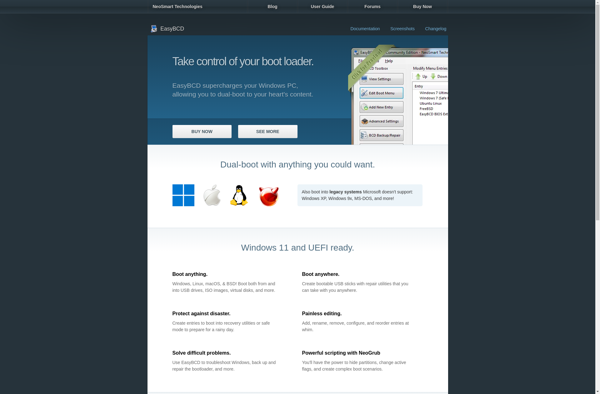
EasyBCD is a powerful bootloader configuration utility for Windows that gives you complete control over the boot process. It allows you to easily add, remove, edit, and configure operating systems and boot menus.Some of the key features of EasyBCD include:Add and configure multiple operating systems - You can add entries...
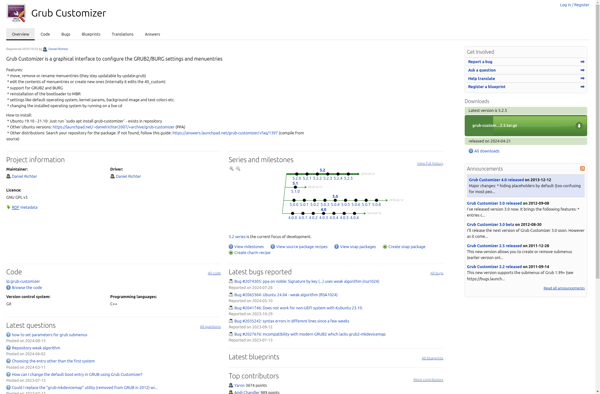
Grub Customizer is a graphical application for configuring settings related to the GRUB boot loader in Linux. It provides an intuitive interface that allows you to easily customize various GRUB options without having to manually edit configuration files.Some of the key features of Grub Customizer include:Editing the GRUB menu entries...
Windows Sandbox is a virtualized desktop environment included in recent versions of the Windows 10 and Windows 11 operating systems. It allows users to run untrusted or unreliable software applications in an isolated environment without risking damage to the host device or operating system.Sandbox provides a lightweight virtual machine that...
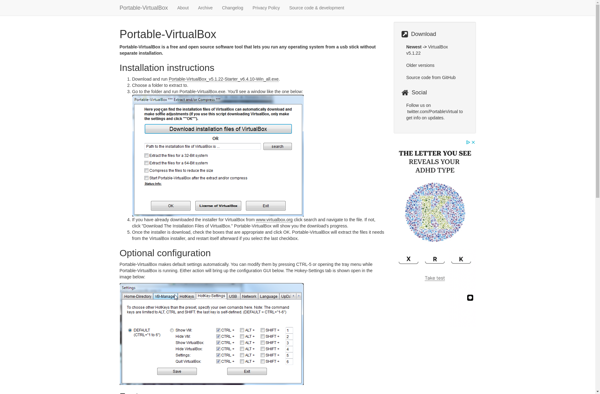
Portable Virtualbox is a free, open-source virtualization software that allows you to run multiple guest operating systems on your Windows host computer without needing to go through a lengthy install process. It runs directly off a USB thumb drive, making it easy to take your virtual machines with you wherever...
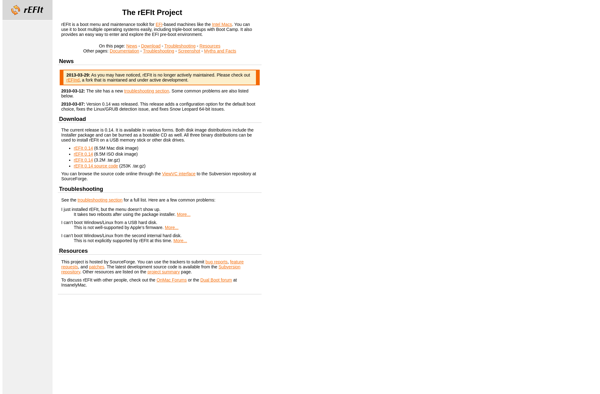
rEFIt (rEFInd Boot Manager) is an open source boot menu and system maintenance toolkit for computers that use the Extensible Firmware Interface (EFI) or Unified EFI (UEFI). It provides an alternative graphical boot menu to select operating systems or bootable tools.Some key features of rEFIt include:Graphical boot menu for EFI/UEFI...
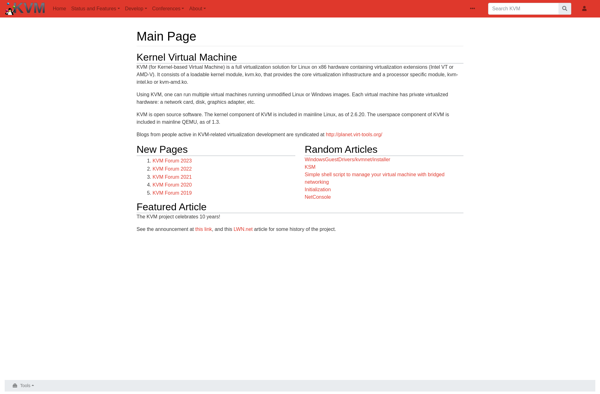
KVM (Kernel-based Virtual Machine) is an open-source virtualization technology built into Linux. It allows you to create and run virtual machines (VMs) on any Linux server or desktop with hardware virtualization capabilities.KVM is implemented as a kernel module that leverages the virtualization extensions of modern CPUs like Intel VT or...
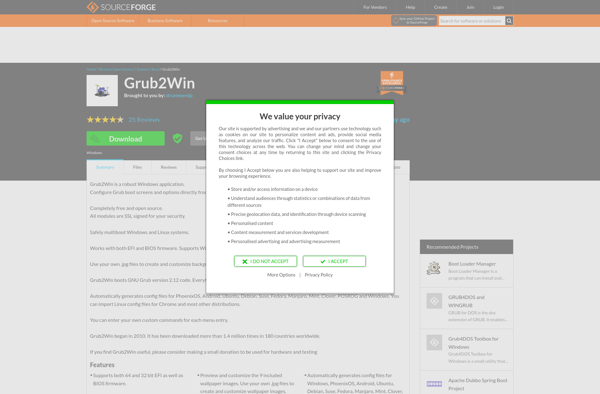
Grub2Win is a boot loader program that enables dual booting of Linux and Windows operating systems on a personal computer. It is based on the GRUB (GRand Unified Bootloader) boot loader commonly used in Linux.Grub2Win allows users to install multiple operating systems on the same computer and provides an interface...
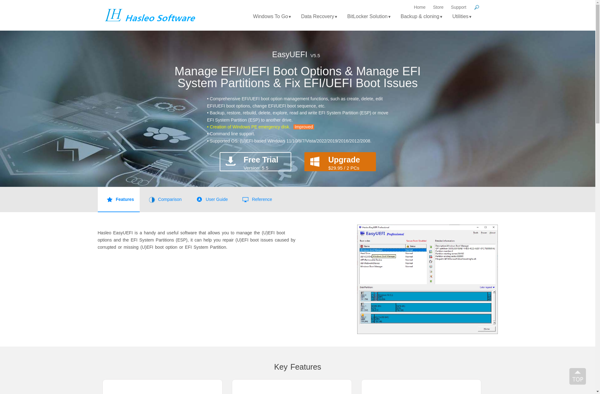
EasyUEFI is a free, lightweight utility for Windows that allows you to manage your computer's UEFI/BIOS settings through an easy-to-use graphical user interface. It provides an alternative to entering your computer's BIOS setup utility directly, giving you the ability to view and configure BIOS settings in Windows without restarting your...
PLoP Boot Manager is a lightweight boot loader that enables booting operating systems from CDs, DVDs, or USB drives on legacy computers that lack support for booting from such devices. It works by booting itself first rather than relying on the computer's built-in BIOS boot loader.When started, PLoP presents a...
Multipass is an open source virtual machine manager developed by Canonical for Linux, Windows and macOS operating systems. It allows users to easily create, manage and run Ubuntu virtual machines.Some key features of Multipass include:Simple command line interface to launch, delete and manage Ubuntu VMsLightweight and fast VM launch timesSupport...
Bochs is an open source emulator for the x86 architecture, allowing you to run operating systems like Windows, Linux, BSD and others on your computer without needing virtualization support from the CPU. It emulates common x86 hardware, including the CPU, memory, disks, network cards, graphics and more.Some key features of...
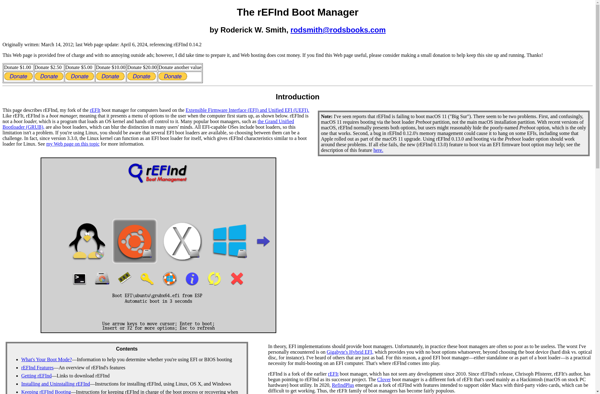
rEFInd is an open source boot manager for computers that use the Extensible Firmware Interface (EFI). It provides an alternative to the boot process used by default with EFI systems.Some of the key features of rEFInd include:Automatic detection of EFI-capable operating systems that are installed on the computerA clean graphical...
OSL2000 Boot Manager is an open-source boot loader and boot management utility for x86-based computers. It enables booting multiple operating systems installed on the same computer and allows switching between them at boot time.Some key features of OSL2000 Boot Manager include:Supports booting various operating systems like Windows, Linux, BSD, etc.Provides...
GRUB4DOS and WINGRUB are open source bootloaders based on GNU GRUB, the standard bootloader for Linux systems. They allow booting into multiple operating systems from a USB drive or CD instead of having to install the bootloader onto a hard drive partition.Some key features include:Ability to boot Windows, Linux, and...
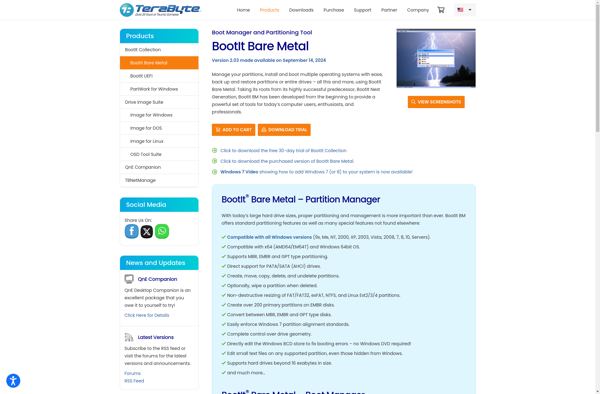
BootIt Bare Metal is a powerful boot manager and partitioning utility for hard drives. It allows you to easily install, configure and dual boot multiple operating systems on a single computer.Some key features of BootIt Bare Metal:Supports partitioning and imaging of hard drives, allowing you to resize, copy, split, format...
BootIt Next Generation (BING) is a powerful boot manager and hard drive partitioning utility for Windows and DOS. It provides the ability to easily install, configure, and boot multiple operating systems on a single computer.Some key features of BootIt BING include:Intuitive graphical user interface for managing partitions, volumes and boot...
StarWind V2V Converter is a free standalone application designed to simplify migrations from one hypervisor to another. It converts virtual machines in order to adapt them for a new environment.The tool supports converting VMs between the most popular hypervisors including VMware vSphere, Microsoft Hyper-V, Oracle VM VirtualBox, Red Hat KVM,...
Linux Loader, also known as LILO, is an open-source boot loader for Linux operating systems. It is used to load the Linux kernel into memory during the boot process so that the operating system can initialize and start running.As one of the first Linux bootloaders, LILO has a long history...
bootcfg is an open source tool created by CoreOS for managing networks of machines that boot using the iPXE firmware. It is designed to work at scale across large clusters of machines by providing a simple yet powerful HTTP and gRPC API for managing iPXE boot configurations.Some key features of...
Partita 2000 is a specialized software application designed to create and edit sheet music. It offers a user-friendly graphical interface that allows users to compose, arrange, transcribe, and publish musical scores quickly and easily.Some of the key features of Partita 2000 include:Intuitive drag-and-drop interface to add, delete, copy, and transpose...
DualBootPRO is a system utility program designed to simplify the process of setting up a dual boot or multi boot environment on a Windows computer. It allows you to install additional operating systems such as Linux distributions or other versions of Windows, and boot between them from the same hardware.Some...