mbed TLS is an open source cryptographic library that provides TLS and SSL capabilities for embedded devices. It is designed to be compact, fast, and flexible enough for both small and large embedded systems.
mbed TLS: Compact, Fast, and Flexible Open Source Cryptographic Library
mbed TLS is an open source cryptographic library that provides TLS and SSL capabilities for embedded devices. It is designed to be compact, fast, and flexible enough for both small and large embedded systems.
What is Mbed TLS?
mbed TLS, formerly known as PolarSSL, is an open source cryptographic and TLS/SSL library designed specifically for small, resource-constrained devices. It aims to make it easy for developers to deploy and use robust security features in embedded products such as smart meters, wearables, IoT devices, routers, and more.
Some key features of mbed TLS include:
Support for SSLv3, TLS1.0, TLS1.1, and TLS1.2 communication protocols
Variety of cryptographic algorithms including symmetric ciphers, public key cryptography, hashes, message authentication codes, and key derivation functions
Lightweight and modular architecture making it suitable for devices with very limited CPU and memory resources
Extensive OS and platform support including ThreadX, FreeRTOS, Windows, Linux, etc.
APIs in C designed for easy integration and optimum performance
Permissive Apache 2.0 and GPL 2.0 licensing
Overall, mbed TLS aims to give embedded developers an easy way to build security, cryptography, and TLS capabilities into their resource-constrained devices and applications.
Mbed TLS Features
Features
TLS/SSL protocol implementation
Cryptographic algorithms and ciphers
X.509 certificate handling
Authentication and encryption
Hardware acceleration support
Lightweight and modular codebase
Pricing
Open Source
Pros
Free and open source
Compact code and small memory footprint
Highly configurable and customizable
Permissive Apache 2.0 license
Support for a wide range of platforms and architectures
Active development and maintenance
Cons
Limited native HTTPS server implementation
Lacks some advanced TLS features
Not as widely used as OpenSSL
Requires cryptographic expertise to configure securely
OpenSSL is an open-source encryption toolkit for securing communications over computer networks. It implements Secure Sockets Layer (SSL) and Transport Layer Security (TLS) protocols as well as general-purpose cryptography functions.OpenSSL provides tools for data encryption, certificates management, and authentication that allows applications to communicate privately and securely over the Internet....
LibreSSL is a free and open-source cryptographic software library that was forked from OpenSSL in 2014 by OpenBSD developers after the Heartbleed bug was publicly disclosed in OpenSSL. The goal of LibreSSL is to provide a modern, efficient, and secure replacement for OpenSSL.Some key facts about LibreSSL:Developed by OpenBSD developers...
GnuTLS is an open source software library that implements the Transport Layer Security (TLS) and Secure Sockets Layer (SSL) cryptographic protocols. It offers a complete application programming interface (API) to work with X.509 certificates, cipher suites, encryption algorithms, and authentication mechanisms as needed to set up secure communication over networks.GnuTLS...
wolfSSL (formerly CyaSSL) is an open source SSL/TLS library targeted at embedded and RTOS environments, focusing on being lightweight, portable, and resource-efficient. Some key features of wolfSSL include:Supports TLS 1.3, TLS 1.2, SSL 3.0, and SSL 2 compatibility modesImplements cipher suites including AES, SHA2, ECC, RSA, and moreSmall footprint, configurable...
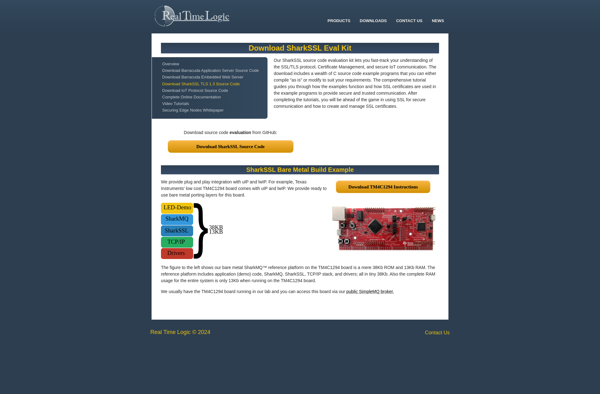
SharkSSL is an open source SSL/TLS toolkit designed to simplify secure socket programming. It offers a clean and easy-to-use API that abstracts away many of the complexities associated with correctly and securely implementing SSL. Some of the key capabilities and benefits of SharkSSL include:- Support for TLS 1.3 and earlier...
Network Security Services (NSS) is an open-source set of libraries designed to support cross-platform development of security-enabled client and server applications. Developed by Mozilla and backed by a large community of open source developers, NSS provides a complete open-source implementation of crypto libraries supporting SSL, S/MIME, PKI, PKCS#11, PKCS#12, X.509...