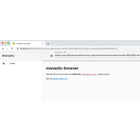

Monastic Browser is an open-source web browser focused on privacy and minimalism. It has a clean, distraction-free interface, blocks ads and trackers by default, and doesn't collect any personal data from users.
What is Monastic-browser?
Monastic Browser is an open-source, privacy-focused web browser developed by a small team of engineers and designers. It is built on top of Chromium, so it has similar performance and compatibility with websites, but aims to provide an improved user experience focused on simplicity, efficiency, and protecting user privacy.
Some key features of Monastic Browser include:
Minimalist interface to reduce distractions - It omits unnecessary UI elements and menus to allow users to focus on web content.
Blocks ads, trackers, and malware by default - It leverages filter lists and heuristic protection to improve security and prevent unwanted content.
No data collection from users - It does not collect or share any personal usage data back to the development team or third parties.
Open source development - As an open-source project, its code is transparent and community contributions are welcomed to shape future improvements.
Cross-platform availability - Monastic Browser is available on Windows, Mac, Linux, iOS and Android.
Overall, Monastic Browser aims to provide an ethical, user-respecting web browsing experience through its focus on privacy and minimalism. Its easy-to-use interface cuts out digital clutter to facilitate productivity and well-being.
Monastic-browser Features
Features
Minimalist interface
Built-in ad blocking
Tracking protection
Keyboard shortcuts
Tab grouping
Dark mode
Customizable start page
Syncs bookmarks across devices
Open source
Cross-platform
Pricing
Open Source
Pros
Enhanced privacy
Fast and lightweight
Open source code can be audited
Minimal distractions
Highly customizable
Blocks ads and trackers by default
No data collection from users
Free and no ads
Cons
Limited extension support
Less name recognition than major browsers
Some sites may not display properly with default blocking enabled
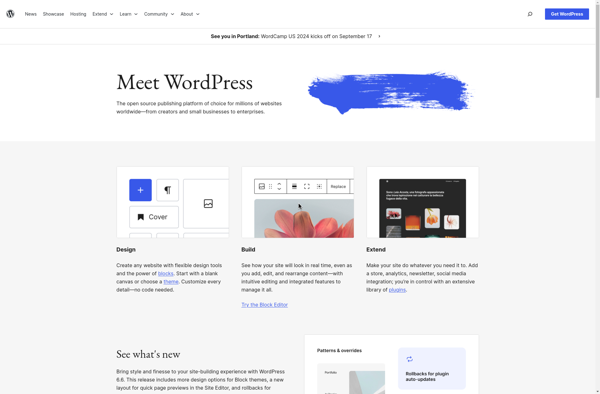
What Is WordPress?WordPress is the world's most popular content management system, powering over 40 percent of all websites on the internet. Originally created as a blogging platform in 2003, it has evolved into a full website builder and application framework used for everything from personal blogs to enterprise websites and...
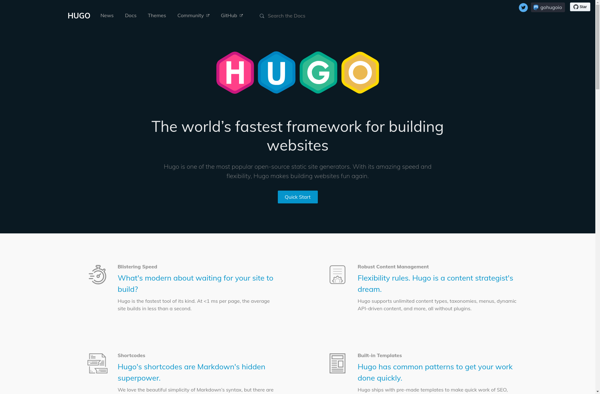
Hugo is an open-source static site generator created by Steve Francia in 2013. It is written in Go programming language and optimized for speed, ease of use, and configurability.Some key features of Hugo include:Extremely fast build times as it generates static HTML contentSupports Markdown as well as JSON, YAML and...
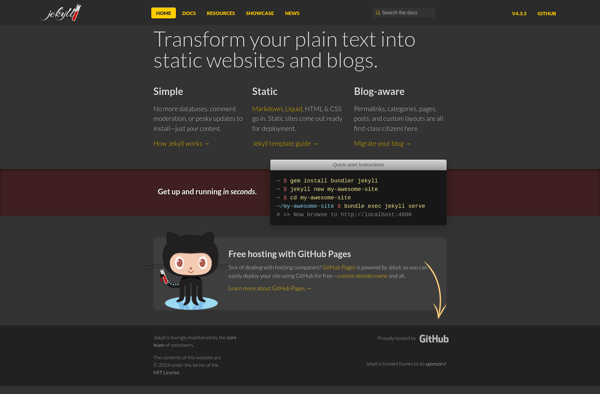
Jekyll is an open-source static site generator that allows you to build fast, secure websites and blogs using plain text Markdown files instead of traditional databases. It takes your content, renders Markdown and Liquid templates, and produces a complete, static website that can easily be hosted on GitHub Pages, Amazon...
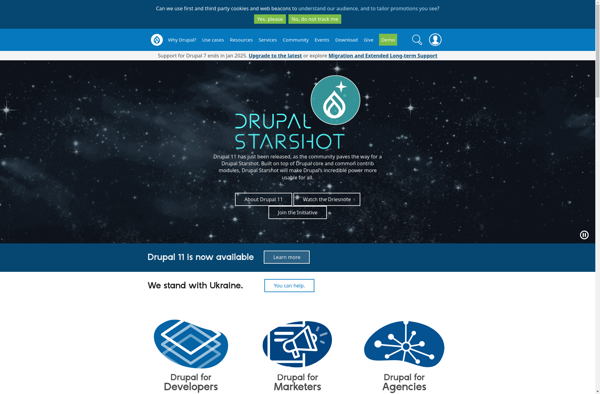
Drupal is a free and open-source content management system (CMS) written in PHP. It allows users to easily create, manage, and publish content on websites. Some of the key features of Drupal include:Intuitive interface and workflow allows content editors to quickly create, review, edit, publish, and archive webpages with no...
Gatsby is an open source framework based on React that helps developers build blazing fast websites and apps. Some key things to know about Gatsby:It builds extremely fast static websites and apps by pre-rendering into static HTML and JavaScriptUses the latest web technologies like React, GraphQL, and Webpack under the...
Pandoc is a versatile document conversion software tool that allows users to convert files from one markup format into another. Some key features and details about Pandoc:Free and open source software written in HaskellCan read and write several markup formats like Markdown, HTML, LaTeX, Word docx, EPUB, and moreExcellent support...
DEV Community is a free and open source software development community platform launched in 2019. It allows software developers and programmers to publish technical articles, take part in discussions, ask questions, and generally connect with other developers.Some key features of DEV Community include:Article publishing - Developers can publish articles on...
Sculpin is a static site generator written in PHP that converts Markdown files and Twig templates into static HTML pages. It is designed for building high performance websites and blogs.Some key features of Sculpin include:Simple and clean content format using MarkdownPowerful Twig templating engine for complete customization over the generated...
Postach.io is a user-friendly blog publishing and content management platform ideal for individuals and small teams looking to easily create an engaging online presence. With an intuitive drag-and-drop interface, Postach.io makes it simple to customize the design, layout, and functionality of your blog without needing to know any code.Some of...
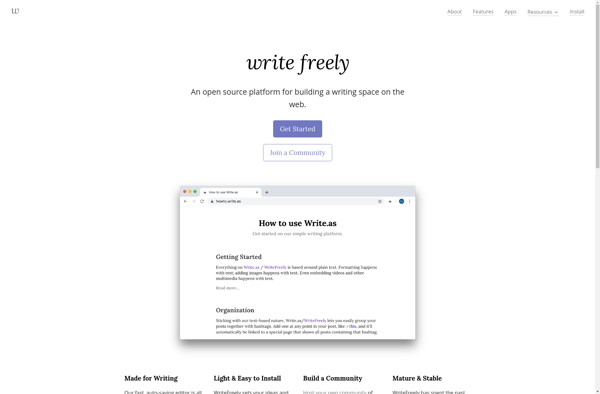
WriteFreely is an open source software for writing and publishing blogs and websites. It is designed for creative writers and bloggers who want to focus on their writing without getting distracted by complex settings or giving up control of their content.Some key features of WriteFreely include:Simple, distraction-free editor to write...
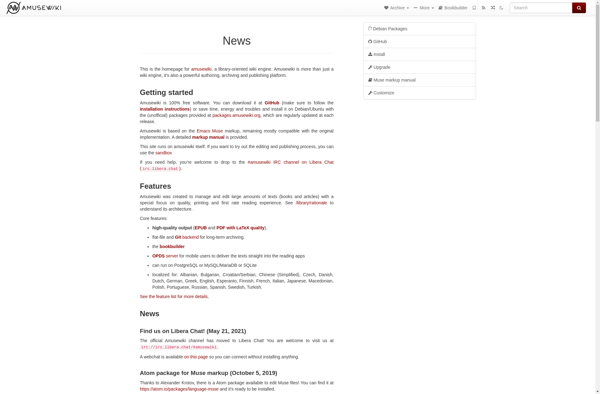
AMuseWiki is an open-source music notation software application for Windows, Mac, and Linux. It is designed for use by musicians, composers, arrangers, teachers, students, choirs, bands, orchestras, publishers, and more.Some of the key features of AMuseWiki include:Clean and intuitive graphical user interfaceSupport for standard Western musical notation, including multi-staff scoringMIDI...
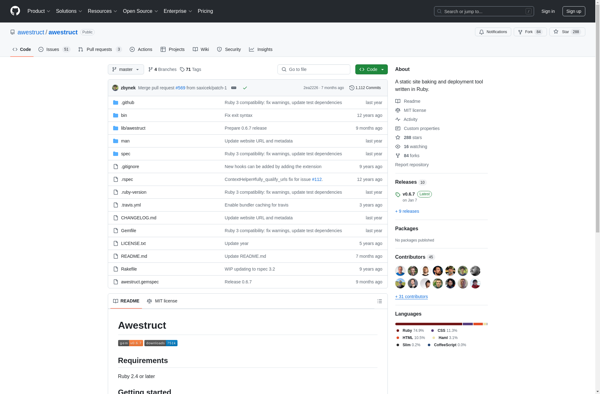
Awestruct is an open source static site generator and framework written in Ruby. It allows developers to quickly build blogs, websites, and documentation sites that output completely static HTML files.Some key features of Awestruct include:Modular design based on LEGO blocks and pipelinesUses components, layouts, pages, posts, and partial templatesSupports Markdown,...
Jas CMS is an open source content management system written in PHP. It was first released in 2008 and is developed by a small team of core developers. The focus is on speed, flexibility, and ease of use.Some key features of Jas CMS include:Template system based on PHP itself, so...
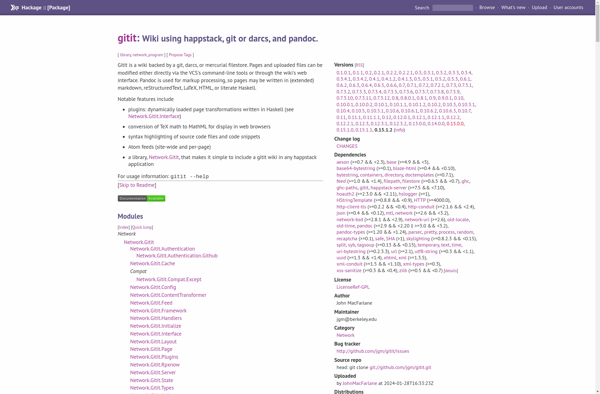
Gitit is a free and open source wiki software written in the Haskell programming language. It stores wiki pages in a Git repository, allowing you to version, edit, and distribute your documentation project just like other code. Unlike other wiki engines, Gitit is not built around a database server, so...
Glyph is an open source static site generator written in Python. It is designed to be simple, lightweight, and extensible. Glyph takes markdown, reStructuredText, or other types of content as input, runs it through Jinja templates to transform it into HTML pages, and outputs a complete static website that can...