Puppet
Puppet: Open Source Configuration Management & Automation Tool
Puppet is an open source configuration management and automation tool. It helps system administrators manage IT infrastructure by automating repetitive tasks, enforcing desired state configuration, and increasing efficiency.
What is Puppet?
Puppet is an open source configuration management and automation tool used to manage IT infrastructure. It helps system administrators automate repetitive tasks, enforce desired state configuration, increase efficiency, and adopt infrastructure as code practices.
Key features and benefits of Puppet include:
- Powerful domain specific language to model infrastructure as code
- Modular design to create reusable and shareable modules/manifests
- Agent/master architecture to enforce configuration across thousands of nodes
- Reporting and analytics for insight into infrastructure changes
- Integrations with major cloud platforms like AWS, Azure, and Google Cloud
- Robust community providing thousands of pre-built modules
Overall, Puppet is a versatile tool enabling faster deployment, improved consistency, and enhanced infrastructure visibility through automation. It has become a standard in DevOps toolchains for provisioning and managing any infrastructure at scale.
Puppet Features
Features
- Configuration Management
- Infrastructure Automation
- Continuous Delivery
Pricing
- Open Source
- Commercial License
Pros
Cons
Reviews & Ratings
Login to Review41 reviews
Rating Breakdown
Recent Reviews
Alex Taylor
Apr 16, 2026Powerful but Painfully Complex
While Puppet is undeniably powerful for enforcing configuration, its steep learning curve made it more of a burden than a solution for our small team. The DSL is unintuitive, and debugging failed catalogs often felt like deciphering cryptic error messages. …
Morgan Harris
Apr 14, 2026Puppet Transformed Our Server Management
We manage hundreds of servers across multiple data centers, and Puppet has been a game-changer. The ability to define infrastructure as code means our configurations are consistent, version-controlled, and easily deployed. While there's a learning curve with the DSL, the …
Michael Jackson
Apr 13, 2026A Frustratingly Complex Beast
While the core idea of Puppet is sound, the learning curve is astronomically steep. The DSL (Domain Specific Language) feels clunky and unintuitive compared to more modern, code-like alternatives. We spent more time debugging cryptic dependency cycles and module conflicts …
Cameron Anderson
Apr 11, 2026A Lifesaver for Managing Complex Infrastructure
As a long-time sysadmin, Puppet has transformed how we handle our diverse server environments. Its declarative language makes it easy to define the desired state for our systems, and the automation has drastically cut down on manual configuration errors and …
Sage Chen
Apr 11, 2026Powerful but Demanding, with a Steep Onboarding Curve
Puppet is incredibly powerful for enforcing configuration across thousands of nodes and its declarative model ensures consistency. However, the learning curve is very steep; mastering its domain-specific language (DSL) and module structure takes significant time and effort. The community is …
Rating Distribution
The Best Puppet Alternatives
View all Puppet alternatives with detailed comparison →
Top Network & Admin and It Automation and other similar apps like Puppet
Here are some alternatives to Puppet:
Suggest an alternative ❐
Terraform

Ansible

Foreman

DCImanager

CTO.ai

EIP SAM

Cfengine

Cobbler

Landscape

SlickStack

Munki

Pyinfra

Mgmt

PowerShell DSC

Cdist

Bcfg2

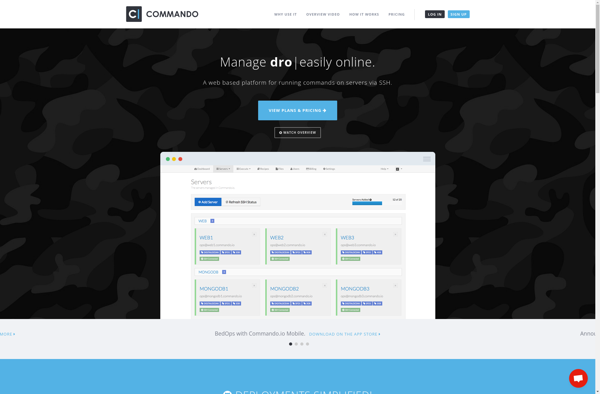
Commando.io

Crowbar

Zenworks


(R)?ex

Sprinkle


Orcaconfig

Deploy4Me

Distelli

AggreGate Data Center Supervisor

Nlyte Software


Starsheep

Rdist

Tstconfig

PontusVision

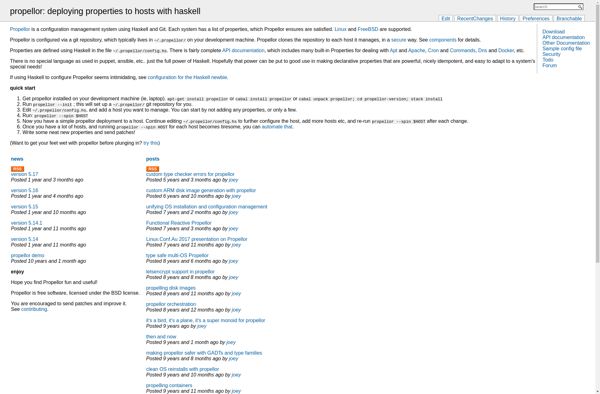
Propellor

Release Management for Visual Studio


Apstra