React Desktop is an open source project that allows developers to build cross-platform desktop apps using React and JavaScript. It provides native UI components and seamlessly integrates with Electron.
React Desktop: Open Source Cross-Platform Desktop App Builder
Build Native UI Components with React and JavaScript, Seamlessly Integrating with Electron for a Cutting-Edge Desktop Experience on Multiple Platforms.
What is React Desktop?
React Desktop is an open source library that enables developers to build cross-platform desktop applications using React and JavaScript. It is designed to work with Electron, a framework for building desktop apps using web technologies.
Some key highlights of React Desktop:
Provides native UI components like windows, menus, trays, notifications out of the box
Full integration with Electron - access native APIs, create installers etc.
Cross-platform - build for Mac, Windows and Linux
Reuse existing React knowledge and components
Lightweight and modular architecture
Declarative react style to build UI layouts
Supports hot reloading to instantly view UI changes
With React Desktop, developers can avoid platform-specific UI code and use their existing React skills to build highly responsive desktop apps. The project is open source on GitHub and maintained by a community of contributors.
React Desktop Features
Features
Lets you build desktop apps using React
Provides native UI components for desktop
Integrates with Electron for building cross-platform desktop apps
Reuses knowledge of React, JavaScript and Node.js
Hot reloading to view changes instantly during development
Easy distribution of apps using Electron Packager
Pricing
Open Source
Pros
Leverages React skills for building desktop apps
Cross-platform support
Active community and ecosystem
Open source and free
Cons
Still in beta so may have bugs and limitations
Not as fully-featured as native desktop frameworks
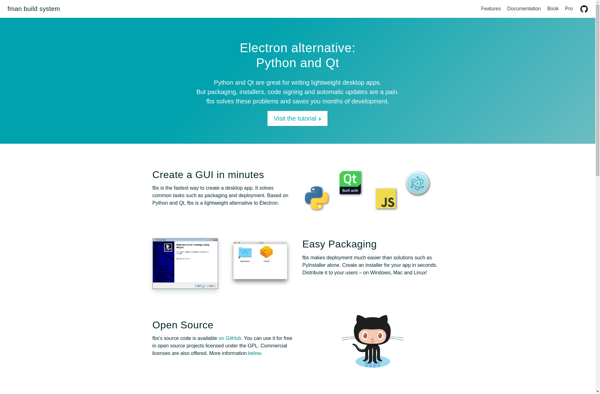
The fman build system is an open-source build system focused on providing a fast and lightweight way to build C and C++ projects. Some key features of fman include:Minimal configuration required - fman uses sensible defaults so you can get started quicklyBuilt-in support for compiling C and C++ code with...
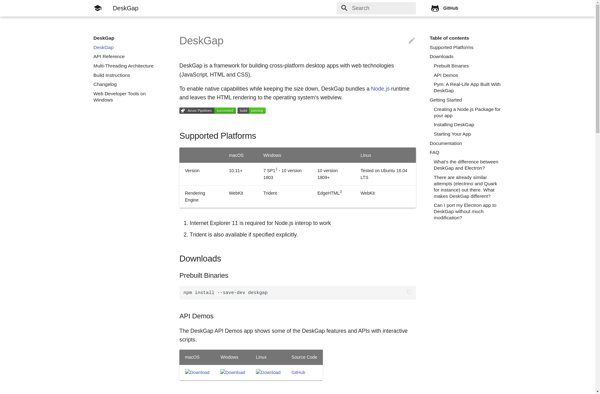
DeskGap is an open-source desktop application that allows you to run web applications, websites, and web tools natively on your computer. It brings the functionality of cloud-based software and services to your local desktop environment.With DeskGap, you can use apps like Google Docs, Trello, Notion, etc. directly on your desktop...
NW.js (formerly node-webkit) is an open source framework for creating desktop applications using web technologies. It lets developers build desktop applications using HTML, CSS and JavaScript. The framework bundles Chromium and Node.js into a single runtime so you can call Node.js modules directly from the DOM and enable native desktop...
Vuido is an open-source framework for building native desktop applications using Vue.js components and JavaScript. It allows developers to reuse their knowledge of Vue for building cross-platform desktop apps that run on Windows, Mac and Linux.Some key features of Vuido:Use Vue.js single file components to build the UIAccess native OS...
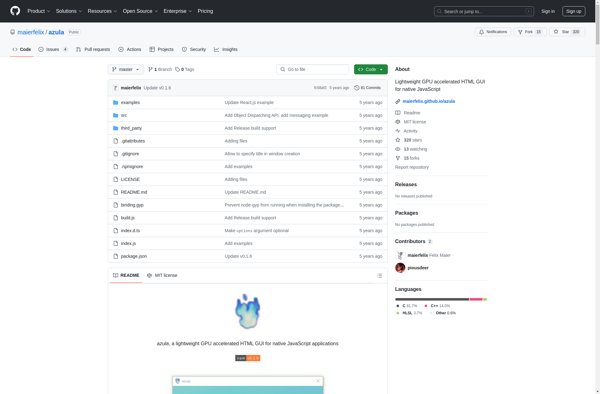
Azula is an open-source project management and bug tracking software that can be used as an alternative to Atlassian's Jira. It has a wide range of features that help streamline agile development workflows, including:User stories, epics, tasks and subtasks to break down workCustomizable workflows for different team processesReal-time collaboration with...
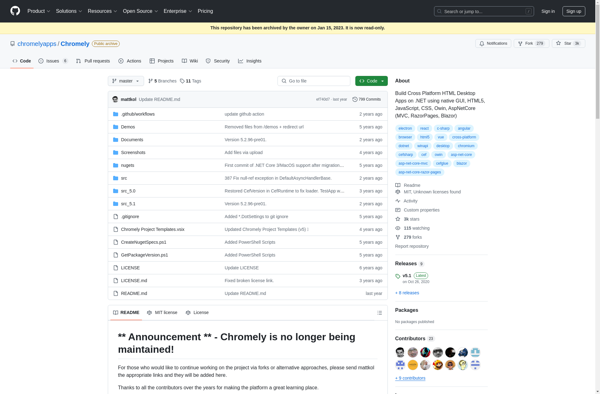
Chromely is an open-source .NET framework that allows developers to create desktop applications using web technologies. It is built on top of the Chromium Embedded Framework (CEF) and allows .NET developers to leverage Chromium, HTML5, CSS3, and JavaScript to build cross-platform desktop apps that can run on Windows, Mac, and...
WebDGap is an open-source web application firewall (WAF) designed to protect web applications by filtering, monitoring, and blocking malicious HTTP traffic. It sits between a web application and the Internet, analyzing all incoming and outgoing HTTP/HTTPS requests to identify and block threats like cross-site scripting (XSS), SQL injection, remote file...
Proton Native is an open-source framework built on top of React, Electron, and Node.js for creating cross-platform desktop applications using JavaScript, HTML and CSS.Some key capabilities and benefits of Proton Native include:Write code once and deploy to Windows, macOS and LinuxUse existing knowledge of web development (React, CSS, etc.)Access native...
Revery is an open source GUI library created by the ReasonML language team. It allows developers to build high quality, customizable user interfaces that run on multiple platforms including Windows, macOS, Linux, and mobile.Some of the key capabilities and benefits of Revery include:Fast and smooth rendering using OpenGLGood developer experience...