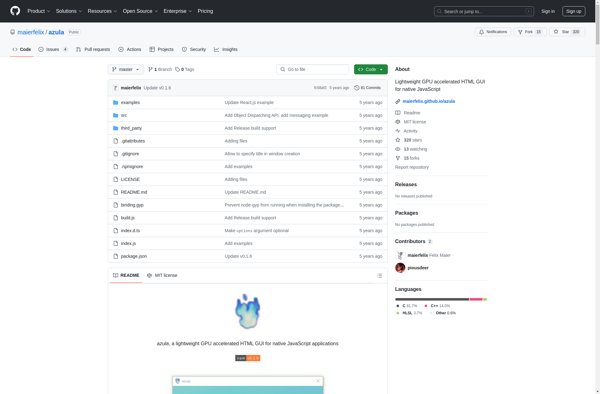
Azula is an open-source alternative to Jira for agile project management and bug tracking. It has a simple and intuitive interface allowing easy creation of projects, issues, sprints and more to plan and track work.
Azula is an open-source alternative to Jira for agile project management and bug tracking, featuring a simple and intuitive interface for easy project creation and issue tracking.
What is Azula?
Azula is an open-source project management and bug tracking software that can be used as an alternative to Atlassian's Jira. It has a wide range of features that help streamline agile development workflows, including:
User stories, epics, tasks and subtasks to break down work
Customizable workflows for different team processes
Real-time collaboration with comments and activity streams
Configurable boards to visualize work and track progress
Customizable reports and dashboards
Role-based access control for permissions
Native integration with version control systems like Git and SVN
APIs and third-party integrations
Some key advantages of Azula over Jira are its simple and intuitive interface, open-source codebase allowing full customization, lower cost of ownership since it is free, and community-driven development model. It can be self-hosted on your own infrastructure giving you full control and ownership over your data. The active open-source community also contributes plugins and improvements on a regular basis.
In summary, Azula is a feature-rich, open-source alternative to Jira bringing powerful agile project management capabilities in a more lightweight and customizable platform.
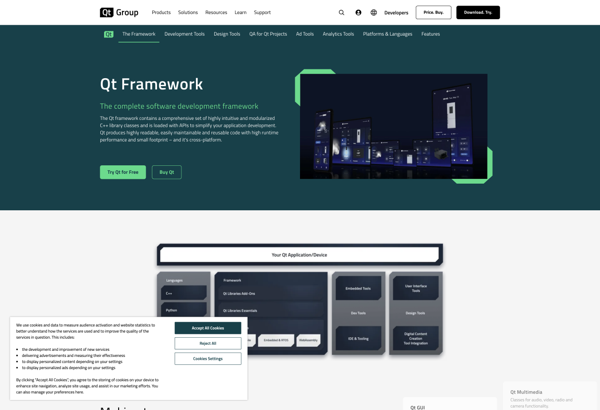
Qt is a popular cross-platform application development framework used for developing GUI (graphical user interface) and CLI (command-line interface) applications that can run on multiple operating systems such as Windows, macOS, Linux, and Unix platforms, as well as on mobile platforms like Android and iOS. It provides developers with a...
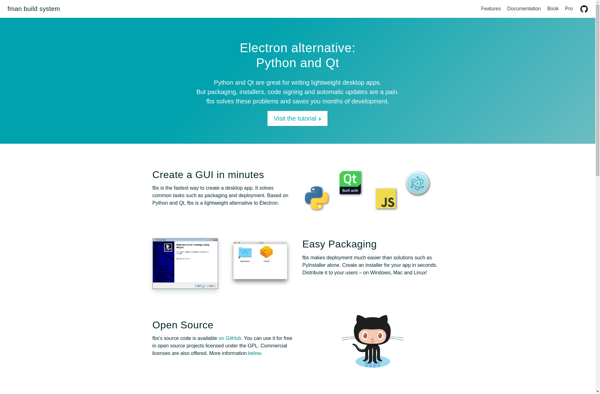
The fman build system is an open-source build system focused on providing a fast and lightweight way to build C and C++ projects. Some key features of fman include:Minimal configuration required - fman uses sensible defaults so you can get started quicklyBuilt-in support for compiling C and C++ code with...
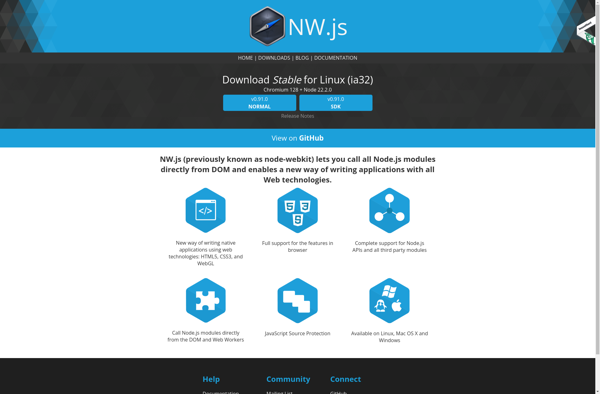
NW.js (formerly node-webkit) is an open source framework for creating desktop applications using web technologies. It lets developers build desktop applications using HTML, CSS and JavaScript. The framework bundles Chromium and Node.js into a single runtime so you can call Node.js modules directly from the DOM and enable native desktop...
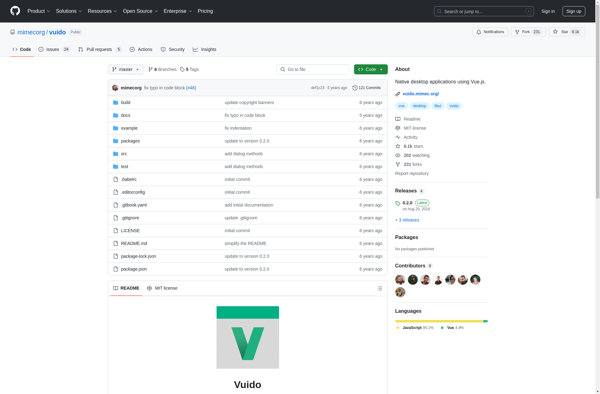
Vuido is an open-source framework for building native desktop applications using Vue.js components and JavaScript. It allows developers to reuse their knowledge of Vue for building cross-platform desktop apps that run on Windows, Mac and Linux.Some key features of Vuido:Use Vue.js single file components to build the UIAccess native OS...
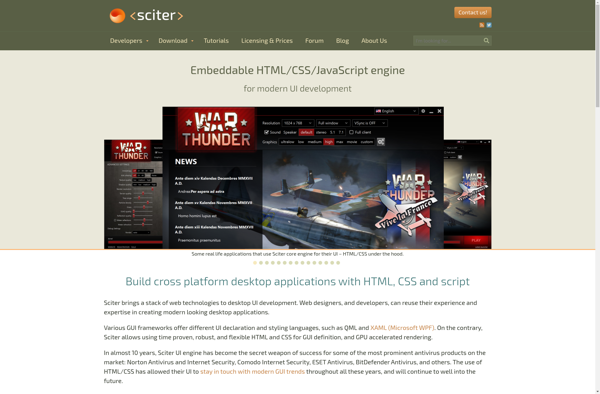
Sciter is an embeddable HTML/CSS/scripting engine aiming to create modern desktop applications. It allows developers to build lightweight cross-platform user interfaces using web technologies like HTML, CSS, and JavaScript without requiring a web browser.Some key features of Sciter include:Lightweight footprint - Sciter has a small memory and disk footprint compared...
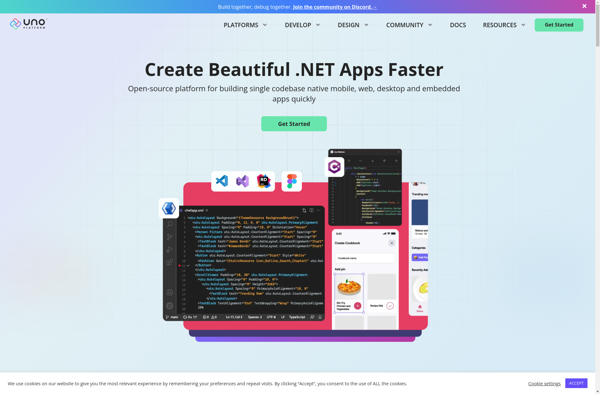
Uno Platform is an open-source UI framework that allows developers to build native mobile, desktop and web applications using C# and XAML from a single codebase.It provides a single API surface across iOS, Android, Windows, macOS and WebAssembly. Uno leverages XAML from existing Microsoft frameworks like WPF, UWP and Xamarin.Forms...
NeutralinoJS is an open source lightweight cross-platform desktop application framework that allows developers to build desktop apps using web technologies like HTML, CSS and JavaScript. It uses Chromium and Node.js under the hood to allow web developers to leverage their existing skills to create lightweight and performant desktop apps.Some key...
Ultimate++ is a free and open-source rapid application development suite focused on programmers' productivity. It includes a comprehensive set of C++ libraries and tools designed for building GUI applications cross-platform with native look and feel quickly.Some key features and highlights of Ultimate++ include:Lightweight, fast, and optimized for performance while providing...
pywebview is a lightweight Python library that provides a simple wrapper around a webview component to enable displaying HTML content in its own native GUI window. It works across different platforms like Windows, macOS, and Linux.Some key features of pywebview include:Lightweight and easy to integrate into Python applicationsUses native webview...
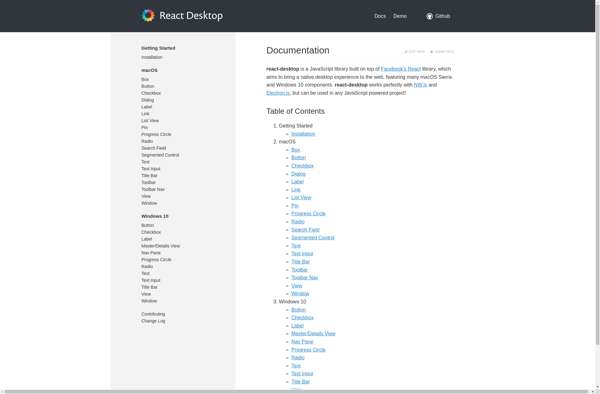
React Desktop is an open source library that enables developers to build cross-platform desktop applications using React and JavaScript. It is designed to work with Electron, a framework for building desktop apps using web technologies.Some key highlights of React Desktop:Provides native UI components like windows, menus, trays, notifications out of...
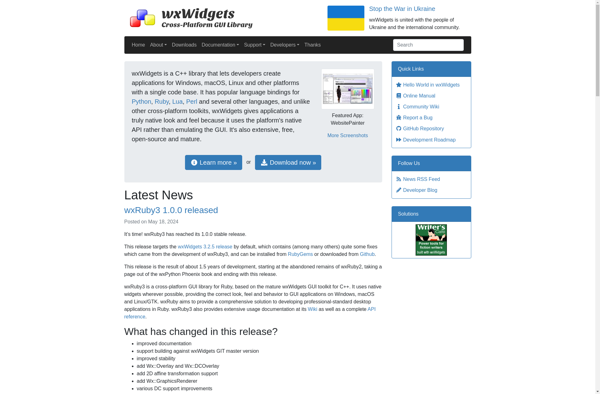
wxWidgets is an open source C++ library that lets developers create graphical user interfaces (GUIs) for cross-platform applications. It enables building desktop apps for Windows, Mac, Linux and other platforms with native look and feel.Some key features of wxWidgets include:Supports a variety of popular toolkits like GTK+, Qt, Win32/CE for...
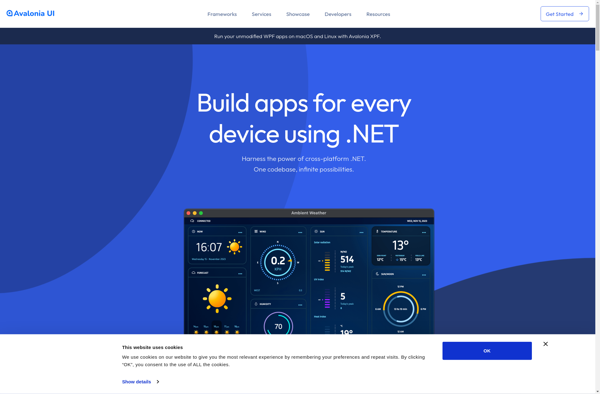
Avalonia UI is an open source cross-platform user interface framework for building .NET desktop applications. It allows developers to create graphical user interface (GUI) apps that can run on Windows, Linux and macOS platforms using .NET Standard 2.0 and .NET technologies like XAML.Avalonia aims to integrate easily with .NET frameworks...
Proton Native is an open-source framework built on top of React, Electron, and Node.js for creating cross-platform desktop applications using JavaScript, HTML and CSS.Some key capabilities and benefits of Proton Native include:Write code once and deploy to Windows, macOS and LinuxUse existing knowledge of web development (React, CSS, etc.)Access native...