Amazon DynamoDB
Amazon DynamoDB is a fully managed NoSQL database service provided by Amazon Web Services. It offers reliable performance at any scale, integrated security, and in-memory caching for internet-scale applications.

Amazon DynamoDB: Fully Managed NoSQL Database Service
Reliable performance at any scale, integrated security, and in-memory caching for internet-scale applications
What is Amazon DynamoDB?
Amazon DynamoDB is a fast, fully managed and serverless NoSQL database service provided by Amazon Web Services (AWS). It offers reliable performance at any scale, integrated security, and in-memory caching for internet-scale applications.
Some key features of DynamoDB include:
- High performance at any scale - It can handle more than 10 trillion requests per day and support peaks of more than 20 million requests per second.
- Serverless - It is fully managed by AWS so there are no servers to provision, configure or scale.
- High availability - Data is synchronously replicated across multiple AWS Availability Zones in a region to provide built-in high availability and data durability.
- Security - It offers encryption at rest and in transit, fine-grained access controls, and integration with AWS Identity and Access Management (IAM).
- Flexibility - It supports document and key-value data models, flexible schemas, and the ability to evolve schemas without downtime.
- In-memory caching - It has an in-memory cache for microsecond latency which helps deliver fast performance.
DynamoDB is a great choice for mobile, web, gaming, ad tech applications that need a flexible NoSQL database with seamless scalability and no downtime. Major users include Lyft, Airbnb, and Samsung SmartThings.
Amazon DynamoDB Features
Features
- Fully managed NoSQL database service
- Reliable performance at any scale
- Integrated security
- In-memory caching for internet-scale applications
- Automatic scaling of throughput and storage
- Flexible data model supporting key-value and document data structures
- Consistent, single-digit millisecond latency
- Durable and highly available with data replication across multiple data centers
Pricing
- Pay-As-You-Go
Pros
Scalability and high availability
Automatic scaling and provisioning
Ease of use and management
Integrated security features
Low latency and high performance
Flexible data model
Cons
Higher cost compared to self-managed databases
Limited query capabilities compared to SQL databases
Vendor lock-in with AWS
Limited support for complex transactions
Official Links
Reviews & Ratings
Login to ReviewThe Best Amazon DynamoDB Alternatives
View all Amazon DynamoDB alternatives with detailed comparison →
Top Ai Tools & Services and Databases and other similar apps like Amazon DynamoDB
Here are some alternatives to Amazon DynamoDB:
Suggest an alternative ❐
Redis
Redis is an open source, in-memory data structure store that can be used as a database, cache, and message broker. It provides high availability, performance, replication and supports data structures such as strings, hashes, lists, sets, sorted sets with range queries, bitmaps, hyperloglogs and geospatial indexes and streams.Some key features...

MongoDB
What Is MongoDB?MongoDB is a document-oriented NoSQL database that stores data in flexible, JSON-like documents instead of traditional rows and columns. It is one of the most popular databases for modern application development, particularly for applications that need flexible schemas and horizontal scaling.Key FeaturesMongoDB stores data as BSON (Binary JSON)...

PostgreSQL
PostgreSQL is a powerful, open source object-relational database system with over 30 years of active development. It has earned a strong reputation for its proven architecture, reliability, data integrity, robust feature set, extensibility, and the dedication of the open source community behind the software to consistently deliver performant and innovative...

MariaDB
MariaDB is an open source relational database management system, created as a drop-in replacement for MySQL. It is developed by some of the original developers of MySQL and is intended to remain free and open source software under the GNU GPL.After Oracle acquired MySQL in 2010, the founders of MySQL...

Apache Cassandra
Apache Cassandra is a free, open-source, distributed NoSQL database management system designed to handle large amounts of data across many commodity servers, providing high availability with no single point of failure.Key features of Cassandra include:Decentralized architecture with no single point of failureLinear scalability and proven fault-tolerance on commodity hardwareFlexible data...

CouchDB
CouchDB is an open-source NoSQL document-oriented database that focuses on ease of use and scalability. It uses a document-based data model that maps neatly to objects in web applications and fits better with object-oriented programming techniques compared to a relational database structure.Some key features and aspects of CouchDB include:JSON documents...

Nebula graph
Nebula Graph is an open-source, distributed graph database designed from the ground up to store and manage graph data at scale. Here are some key features of Nebula Graph:Distributed architecture that scales horizontally to handle large datasets and high throughputNative support for storing graph structures and running graph algorithmsHigh availability...

Google Cloud Bigtable
Google Cloud Bigtable is a fully managed, scalable NoSQL database service designed for large analytical and operational workloads that require consistent high throughput and low latency. It is built on Google's proprietary Bigtable technology and features native integration with Google Cloud Platform tools.Key features of Cloud Bigtable include:Scales to billions...

Neo4j
Neo4j is an open-source NoSQL graph database implemented in Java and Scala. Unlike traditional relational databases, Neo4j stores data structured as graphs consisting of nodes, edges, and properties that connect those node entities.At its core, Neo4j leverages graph structures rather than tables to represent and store data. This allows the...
NetworkX
NetworkX is an open-source Python package for creating, manipulating, and studying the structure, dynamics, and functions of complex networks. It enables users to represent many types of networks and analyze their properties and behavior. Some key features of NetworkX:Represents many real-world network types like social networks, biological networks, infrastructure networks,...
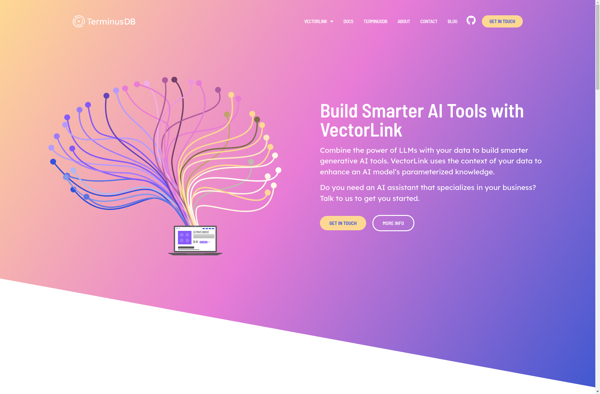
TerminusDB
TerminusDB is an open-source graph database optimized for collaboratively building interconnected knowledge graphs. It provides a flexible data modeling framework to capture the rich complexity of real-world systems and relationships.Key features of TerminusDB include:Collaborative knowledge graph construction enabling teams to build, extend, and refine shared data models over timeSupport for...

Azure Cosmos DB
Azure Cosmos DB is a globally distributed, multi-model database service designed to enable you to elastically and independently scale throughput and storage across any number of Azure regions worldwide. It offers throughput, latency, availability, and consistency guarantees with comprehensive service level agreements (SLAs), something no other database service offers.Key capabilities...


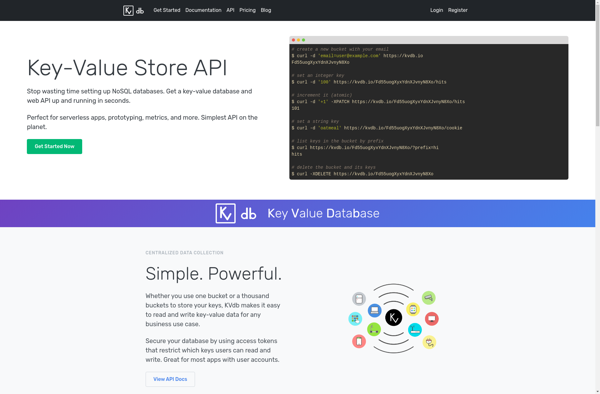
Kvdb.io
kvdb.io is a managed key-value database service designed specifically for serverless applications. It provides a simple key-value data model with support for multiple data structures like strings, lists, maps, and sets.Some key features of kvdb.io:High availability with replication and automatic failoverStrong data consistencyAuto scaling to handle large workloadsServerless architecture eliminates...

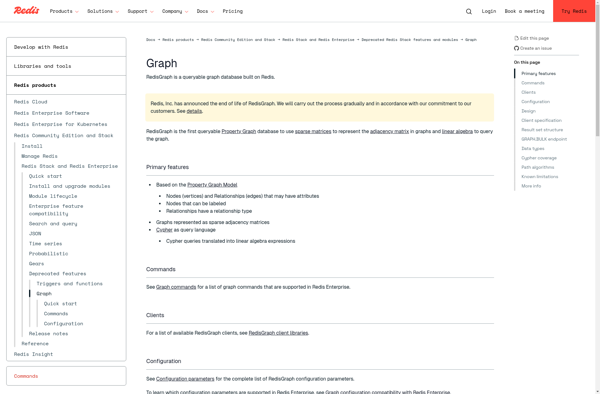
RedisGraph
RedisGraph is an open-source graph database developed by Redis Labs and built on top of Redis. It allows storing property graphs in Redis by extending it with custom data structures and commands optimized for graph operations.Key features of RedisGraph include:Native graph storage - Stores nodes and relationships as first-class citizens...

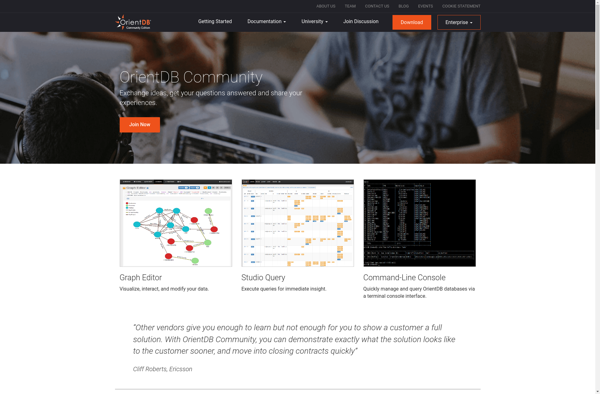
Orient DB
OrientDB is an open source multi-model NoSQL database management system written in Java. It supports graph, document, key/value, and object data models, allowing storage of relationships between data within the database.OrientDB uses a schema-less document graph data model that stores data in documents similar to MongoDB, but also allows you...

GraphStack.io
GraphStack.io is an open-source platform for building and querying knowledge graphs. It provides an intuitive interface for importing structured data from CSVs, databases, and other sources to create an integrated knowledge graph.Once the data is imported, GraphStack.io allows defining ontologies and relationships between entities. This allows exploring implicit connections in...

ArangoDB
ArangoDB is a native multi-model database system that supports multiple data models in one core engine and database system. The supported data models include graphs, documents (JSON documents), and key-value pairs. Using a single database system for multiple data models eliminates expensive data integration between systems and enables new graph...


Bluzelle Decentralized DB
Bluzelle is a decentralized, scalable database service optimized for managing blockchain data. It aims to solve the issues around performance and scaling that many blockchain-based applications face by providing a fast, reliable, and secure database solution that utilizes a global network of nodes.The Bluzelle database works by sharding and replicating...

LemonGraph
LemonGraph is an open-source, schema-free graph database optimized for complex network analysis and AI projects. It provides high performance for traversing and querying highly connected graph data through its native graph storage and query engine.Key features of LemonGraph include:Schema-free data model that allows flexible property graphsNative graph storage for faster...

Tarantool
Tarantool is an open-source NoSQL database and application server designed for real-time applications that require high performance and scalability. Some key features of Tarantool:In-memory NoSQL database for fast data access and real-time performance. Supports key-value, documents, timeseries and message queues.Lua application server for storing application logic and procedures inside the...


KeyDB
KeyDB is an open source, high performance fork of Redis that supports additional data structures like Sorted Sets and Streams. It is developed by the Equilbrium company and aims to be a faster, more modular alternative to Redis while maintaining compatibility with Redis clients and data types.Some of the key...

Trinity Graph Engine
Trinity Graph Engine is an open-source, distributed graph database purpose-built for machine learning and deep learning workloads. It allows storing massive-scale graph structured data and running high-performance graph algorithms at scale.Key capabilities and benefits of Trinity Graph Engine include:Distributed architecture for scalability and high availabilityNative support for common graph operations...

ThisDB
ThisDB is an open-source, document-oriented database that is optimized for storing, querying, and indexing JSON data. Unlike traditional relational databases, ThisDB stores data in flexible, JSON-like documents rather than rows and columns.Some key features and benefits of ThisDB include:Document-oriented storage: Flexible schema design allows developers to modify applications without migrations...


JanusGraph
JanusGraph is an open-source, distributed graph database designed to store and query very large graphs efficiently. It was originally developed by Expero and later became a Linux Foundation project under the JanusGraph branding.Some key features and capabilities of JanusGraph include:Scalability to billions of vertices and edgesSupport for a variety of...

Amazon Neptune
Amazon Neptune is a fast, highly available, fully managed graph database service that makes it easy to build and run applications that work with highly connected datasets. Neptune supports two popular graph models, Property Graph and W3C's Resource Description Framework (RDF), enabling you to easily build knowledge graphs using billions...