MongoDB
MongoDB — Document Database for Modern Applications (2026)
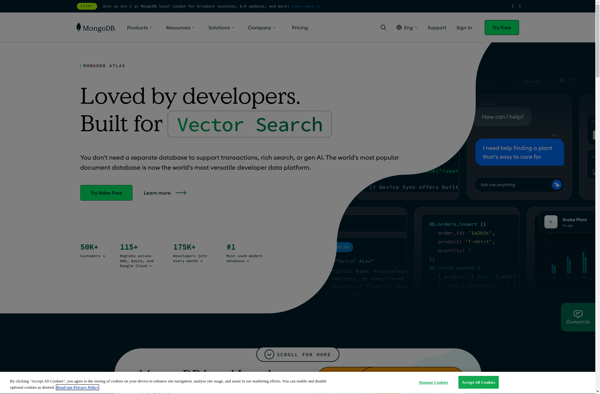
MongoDB is a NoSQL document database storing flexible JSON-like data. Free Community edition. Atlas cloud from free tier to enterprise. Scales horizontally.
What is MongoDB?
What Is MongoDB?
MongoDB is a document-oriented NoSQL database that stores data in flexible, JSON-like documents instead of traditional rows and columns. It is one of the most popular databases for modern application development, particularly for applications that need flexible schemas and horizontal scaling.
Key Features
MongoDB stores data as BSON (Binary JSON) documents, allowing nested objects, arrays, and dynamic schemas without migrations. It supports rich queries, secondary indexes, aggregation pipelines, full-text search, and geospatial queries.
The database scales horizontally through sharding (distributing data across multiple servers) and provides high availability through replica sets (automatic failover). MongoDB Atlas is the managed cloud service offering automated backups, monitoring, and global clusters.
Pricing
MongoDB Community Edition is free and open source. MongoDB Atlas (cloud) offers a free tier with 512MB storage, with paid tiers starting at approximately 57 dollars per month for dedicated clusters. Enterprise Server requires a commercial license.
MongoDB vs PostgreSQL
MongoDB excels with flexible schemas, rapid prototyping, and document-heavy workloads. PostgreSQL is stronger for complex queries, transactions, and relational data. Many modern applications use both — MongoDB for user-facing data and PostgreSQL for transactional data.
MongoDB Features
Features
- Document-oriented storage
- Automatic sharding
- Rich and expressive query language
- High availability
- Horizontal scalability
Pricing
- Open Source
- Subscription-Based
Pros
Cons
Official Links
Reviews & Ratings
Login to Review33 reviews
Rating Breakdown
Recent Reviews
Morgan Davis
May 19, 2026A Developer's Dream Database
Switching to MongoDB for our new project was a game-changer. Its flexible JSON-like document structure perfectly matched our evolving data models, eliminating rigid schema migrations. The scalability is fantastic—handling our rapid growth has been smooth, and the performance for both …
Sage Lopez
May 18, 2026Flexible and Scalable, a Go-To for Modern Apps
As a developer building a real-time analytics platform, MongoDB's document model has been a game-changer. Storing complex, nested data as JSON-like documents feels natural and eliminates the friction of complex joins. The scalability is seamless; adding new nodes to our …
Avery Smith
May 17, 2026Flexible and Scalable Database Solution
Switching from a traditional SQL database to MongoDB has been a game-changer for our development team. The JSON-like document structure makes it incredibly intuitive to work with, especially for our Node.js applications. We've easily scaled our cluster as our user …
Sophia Hall
May 14, 2026Powerful but sometimes frustrating transition from SQL
MongoDB's flexible document model is fantastic for our rapidly evolving data schemas, and its scalability is top-notch. However, the learning curve is steep if you're coming from a strong SQL background, and querying nested documents can get complex. The community …
Michael King
May 14, 2026Powerful but not for the faint of heart
MongoDB's flexible document model was a game-changer for our unstructured data, allowing us to iterate quickly without rigid schemas. However, we've struggled with complex queries that would be straightforward in SQL, and the learning curve for proper indexing and aggregation …
Rating Distribution
The Best MongoDB Alternatives
View all MongoDB alternatives with detailed comparison →
Top Development and Databases and other similar apps like MongoDB
Here are some alternatives to MongoDB:
Suggest an alternative ❐
SQLite
Redis

PostgreSQL
MySQL Community Edition
Apache Cassandra

CockroachDB

CouchDB
Sequel Pro


MariaDB

Firebase

Microsoft SQL Server

Amazon DynamoDB


PlanetScale


SAP HANA
RxDB
Oracle Database

IBM Lotus Approach

Google Cloud Bigtable

HSQLDB


Raven DB

H2 Database Engine


FaunaDB

Titan Database

RethinkDB


HyperDex

Datomic

Apache HBase


Lowdb


IBM DB2


Couchbase


UnQLite


Hazelcast

Sybase Advantage Database Server

Kvdb.io
Sqlite Page Explorer

MeshyDB

Orient DB
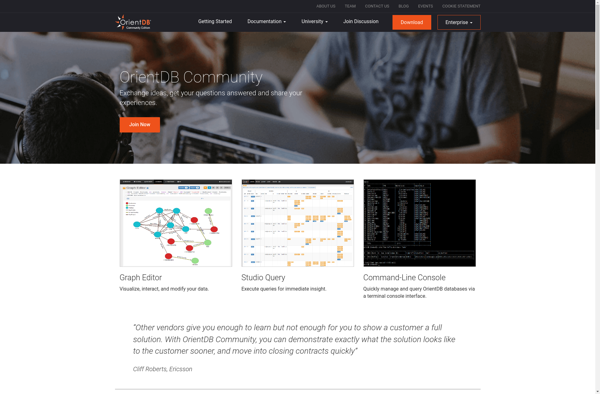

SQLGate


MarkLogic


ArangoDB


Bluzelle Decentralized DB

CrateDB

VoltDB


Mimer SQL


Tarantool


VistaDB

CUBRID Database


Amazon RDS


Enonic XP


GraphDB


Matisse

KeyDB

NuoDB


TayzGrid

Oracle TimesTen

Action PSQL


Polyhedra RDBMS


ScimoreDB

DeepDB

ThisDB


Postgres-XC


Database Labs


FleetDB

Starcounter


Orchestrate

OrbitDB


BigMemory

Clustrix


ScaleGrid

Amazon Neptune


DropConfig
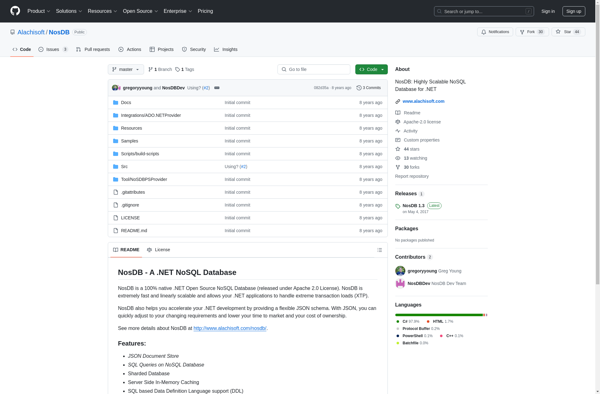
NosDB

EdgeDB


SAP MaxDB


Persevere

Frontbase


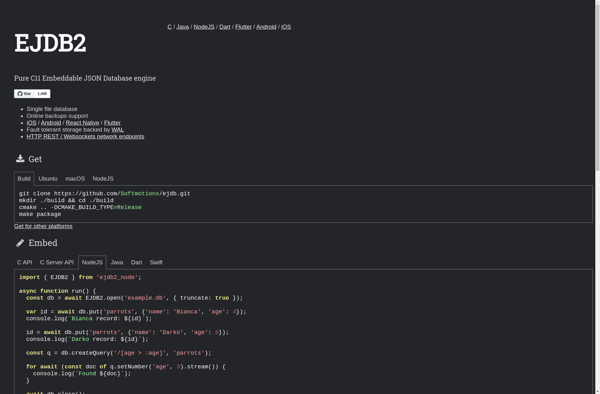
EJDB

ScaleOut