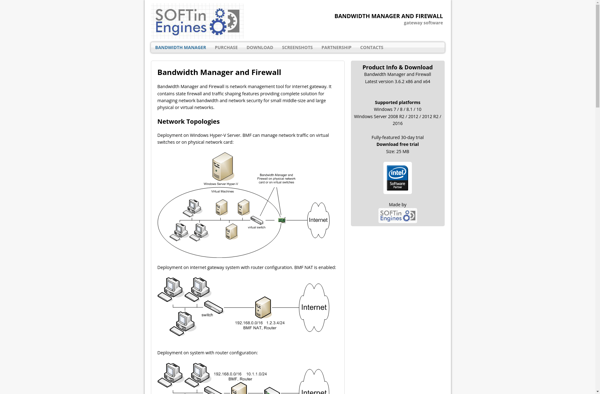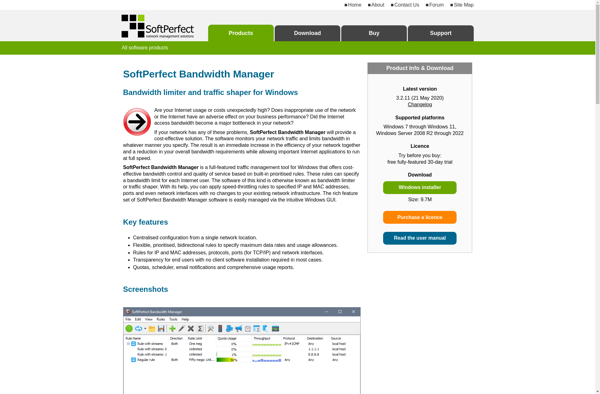
Bandwidth Manager is a network monitoring tool that provides visibility into bandwidth usage across an organization's network. It tracks bandwidth usage by IP address, protocol, domain, subnet, interface, and more to identify trends and heavy users.
What is Bandwidth Manager?
Bandwidth Manager is a comprehensive bandwidth monitoring and network traffic analytics solution designed to provide complete visibility into bandwidth usage across an organization's network. It gives network administrators powerful insights into how network bandwidth is being used, where potential bottlenecks exist, and how to optimize network efficiency.
Key features of Bandwidth Manager include:
Real-time and historical reporting of bandwidth usage by IP address, protocol, domain, subnet, interface, application, user, and more
Customizable dashboards and detailed drill-down reports to identify bandwidth trends, spikes, and heavy users
Alerting and traffic shaping policies to enforce bandwidth limits and prioritize mission-critical applications
Agentless monitoring that collects traffic statistics from SNMP-enabled network devices
Scalable architecture suitable for small businesses to large enterprises
Exportable reports for additional analysis and capacity planning
With its comprehensive monitoring capabilities and flexible reporting, Bandwidth Manager provides the visibility and control organizations need to analyze current bandwidth demands, anticipate future growth, and keep network usage aligned with business priorities.
Bandwidth Manager Features
Features
Real-time bandwidth monitoring
Customizable bandwidth usage reports
Bandwidth usage alerts and notifications
Bandwidth throttling and traffic shaping
Application-level bandwidth control
Network traffic analysis and reporting
User-based bandwidth prioritization
Bandwidth usage forecasting and capacity planning
Pricing
Subscription-Based
Pros
Provides detailed visibility into network bandwidth usage
Allows for effective bandwidth management and optimization
Helps identify and mitigate bandwidth-intensive applications
Supports multiple network protocols and interfaces
Offers advanced features for enterprise-level bandwidth management
Cons
Can be complex to set up and configure for larger networks
Requires ongoing maintenance and monitoring to be effective
May not be suitable for smaller networks with simpler bandwidth requirements
Can be expensive for organizations with limited IT budgets
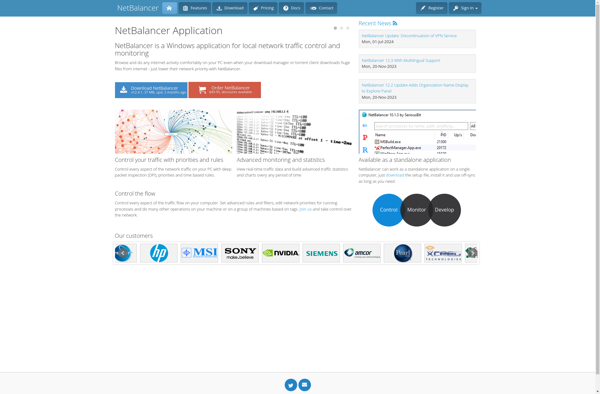
NetBalancer is a bandwidth manager software for Windows that gives users control over how applications use internet bandwidth. It provides a detailed breakdown of network usage and allows setting download/upload speed limits and traffic priority levels for applications and services.Some key features of NetBalancer include:Real-time monitoring of network traffic usage...
Speed Limiter is a software utility designed to control the internet bandwidth usage of a computer. It works by setting speed limits on internet traffic, preventing any application from using up all the available bandwidth.This type of software is useful in many situations. For example, if you share your internet...
Trickle is an open-source internet bandwidth shaper and throttler for Linux operating systems. It gives users control over their internet connection speed by allowing them to manually set maximum download and upload limits.Some key features of Trickle include:Lightweight and easy to use - Requires no configuration and integrates seamlessly into...
cFosSpeed is a network traffic shaping and optimization tool for Windows designed to improve network performance. It works by analyzing network traffic patterns and adapting configuration settings accordingly to reduce latency, stabilize connectivity, and increase available bandwidth.Some key features of cFosSpeed include:Traffic shaping - limits bandwidth usage of specified applications...
Nethogs is a free and open source software application for Linux that monitors network traffic usage in real-time and displays bandwidth usage per process. It enables users to see which processes on a system are using the most network bandwidth.Some key features of Nethogs include:Real-time visibility into bandwidth usage per...
Bandwidth management and firewall software is designed to monitor, control, and secure network traffic. Key features include:Bandwidth monitoring - Tracks network bandwidth usage and trends over time. Identifies heavy users and applications.Traffic shaping - Controls bandwidth rates and allocates capacity for critical apps and users.Quota management - Sets download/upload limits...
Throttled Pro is a powerful download manager and accelerator for Windows designed to help users maximize their internet bandwidth for faster downloads. Some of the key features include:Multithreading - Files are split into parts and downloaded using multiple connections simultaneously, helping utilize full bandwidth potential.Intelligent file splitting - Files are...
Traffic Shaper XP is a comprehensive bandwidth management and traffic shaping software solution for Windows. It gives you advanced tools to analyze, control, optimize, and improve the performance of your network.With Traffic Shaper XP, you can:Set bandwidth limits and guarantees for applications, users, and device groups to ensure critical services...
Entonnoir is an open-source customer data platform (CDP) designed to collect, analyze, and activate customer data across multiple touchpoints. It provides marketers with a unified, 360-degree view of their customers for targeted and personalized marketing campaigns.Key features of Entonnoir include:Data collection from multiple online and offline sources like websites, mobile...
L7 Filter is an open-source web application firewall (WAF) that provides mod_security-like content filtering for internet facing systems. It inspects all network packets at layer 7 of the OSI model, the application layer, and it uses regular expressions and other content analysis methods to block malicious code injections, cross-site scripting...