speedLinux is a lightweight Linux distribution optimized for speed and performance. It uses a customized Xfce desktop environment and includes performance tweaks for better responsiveness. Ideal for older hardware or resource-constrained systems.
speedLinux: Lightweight Linux for Speed and Performances
speedLinux is a lightweight Linux distribution optimized for speed and performance. It uses a customized Xfce desktop environment and includes performance tweaks for better responsiveness. Ideal for older hardware or resource-constrained systems.
What is SpeedLinux?
speedLinux is a lightweight Linux distribution based on Debian and focused on providing maximum performance and speed, especially on low-powered or aging hardware. It uses the Xfce desktop environment and optimizes the system for responsiveness over features.
Some key aspects of speedLinux include:
Uses a customized, streamlined Xfce desktop that removes unneeded GUI features for quicker loading
Employs kernel tweaks and optimizations for better resource utilization
Carefully configures system services to reduce overhead and improve boot times
Includes lighter apps chosen for speed - such as Firefox instead of Chromium
Supports modern hardware via continually updated software sources
Retains Debian package management for access to a vast repository of Linux software
speedLinux excels at breathing new life into dated computers and single-board devices like the Raspberry Pi by reducing lags and delays. The decreased interface clutter also appeals to minimalist users. It connects modern software capabilities with vintage hardware in an efficient blend focused squarely on faster responsiveness.
SpeedLinux Features
Features
Lightweight Linux distribution
Optimized for speed and performance
Customized Xfce desktop environment
Performance tweaks for better responsiveness
Suitable for older hardware or resource-constrained systems
Pricing
Open Source
Pros
Faster boot and application launch times
Efficient resource utilization
Customized for optimal performance
Suitable for low-end or older hardware
Cons
Limited software selection compared to mainstream Linux distributions
May lack some advanced features or customization options
Potential compatibility issues with certain hardware or software
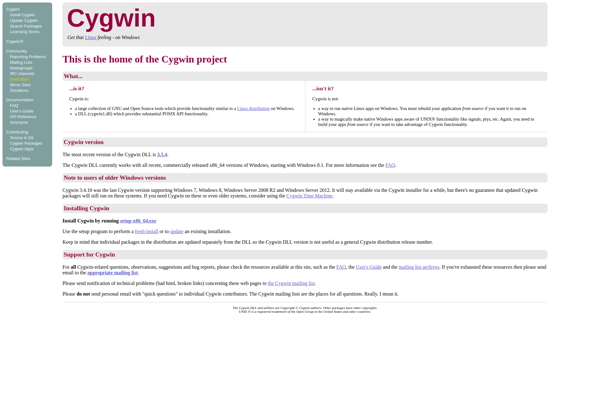
Cygwin is a large collection of GNU and Open Source tools which provide functionality similar to a Linux distribution on Windows. It provides a Unix-like API, command line tools (bash, ssh, rsync, etc.) and a large number of libraries to port software running on POSIX systems, such as Linux, BSD,...
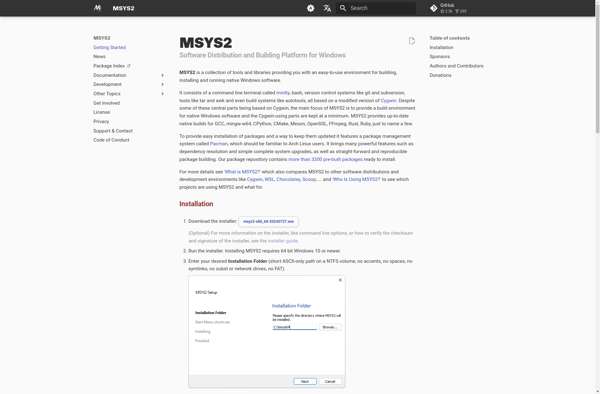
MSYS2 is a software distribution for Windows that provides a complete Unix-like environment on top of the Windows OS. It includes support for the bash shell, GNU compilers and build tools, and a pacman package manager for installing additional software.Key features of MSYS2 include:Bash shell and common Unix command line...
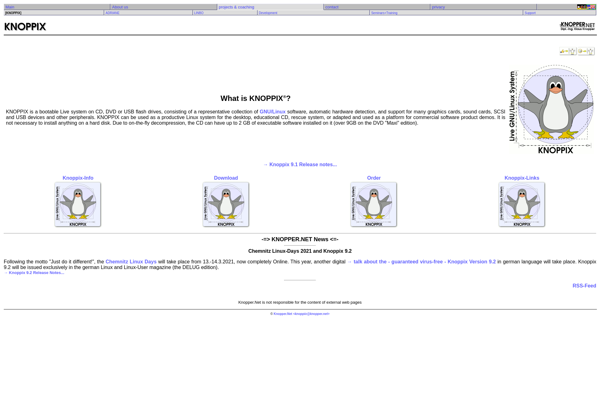
Knoppix is an operating system based on Debian GNU/Linux and optimized to run directly from CDs or DVDs. Unlike other Linux distributions, Knoppix does not need to be installed on a hard disk drive and can be used to test hardware, rescue data from failed systems, and more.Some key features...
andLinux is a complete Linux distribution that runs seamlessly within Windows. It allows you to install and run a fully functional Linux operating system without the need for a virtual machine or dual boot setup.andLinux is based on Ubuntu and uses the coLinux kernel to provide native Linux compatibility with...
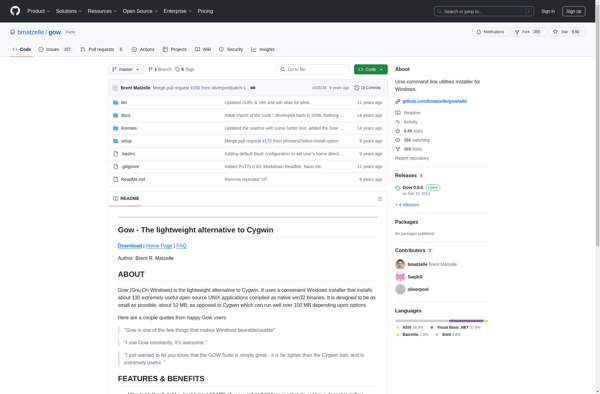
Gow is an open-source terminal emulator and multiplexer for Linux/UNIX systems. It is designed as an alternative to default terminal emulators like GNOME Terminal or Konsole, with more features and customization options.Some of the key features of Gow include:Multiple panes and split layouts - Gow allows splitting the terminal window...
Portable Ubuntu Remix is a tailored version of the popular Ubuntu Linux distribution designed to run as a portable application from a USB flash drive or external hard drive. It allows you to carry a complete Linux OS and applications suite that can boot and run on any PC without...
Cooperative Linux (CoLinux) is an open-source project that allows Linux to run as a Windows application or service. It enables Linux binaries to run natively on Windows without emulation or translation. This is achieved by using a custom Linux kernel module that translates Linux system calls into Windows system calls.By...
TCC/LE (Total Cost of Ownership/Lifecycle Estimator) is an open source software tool developed by the U.S. General Services Administration to help IT decision makers analyze the total cost of ownership of different types of software solutions. It calculates cost estimates over a multi-year lifecycle to help compare the long-term costs...