Minimal Linux Live is a very small Linux distribution that can run entirely from a USB flash drive or CD. It provides a basic Linux environment focused on web browsing, text editing, and system administration tools in a fast and lightweight package.
Minimal Linux Live: Small Linux Distribution for Web Browsing & Administration
A compact Linux distribution that runs from USB or CD, ideal for web browsing, text editing, and system admin tasks in a lightweight package.
What is Minimal Linux Live?
Minimal Linux Live is a Linux distribution designed to be extremely small and lightweight so that it can run entirely from removable media like a USB flash drive or CD. Despite its small size, it still provides a usable Linux environment focused on everyday tasks.
When booted, Minimal Linux Live loads entirely into RAM to minimize disk access and improve performance. It includes a Firefox web browser, Leafpad text editor, basic networking tools, and utilities for administering Linux systems. But it leaves out components that would increase size like LibreOffice, extensive drivers, heavy desktop environments like GNOME or KDE, and unnecessary applications.
The light footprint makes Minimal Linux Live a good tool for troubleshooting computer issues, securely browsing the web from untrusted machines, and even basic portable workstation needs. The RAM-only design also allows it to boot quickly and perform better than many larger Linux distributions. But the stripped-down nature means some devices or more advanced usage may not be supported out of the box.
Overall, Minimal Linux Live aims to provide just enough Linux functionality to be usable while remaining as small and fast as possible. Its compact size makes it easy to store and carry on a flash drive and boot from almost any computer when needed.
Minimal Linux Live Features
Features
Very small size - fits on a USB flash drive or CD
Runs entirely from removable media - no installation required
Includes basic Linux tools and applications
Web browser, text editor, system utilities included
Fast and lightweight performance
Portable Linux environment for any PC
Pricing
Free
Open Source
Pros
Easy to carry Linux OS on a flash drive
No installation or hard drive space needed
Good for troubleshooting computer issues
Allows web browsing on any computer
Lightweight and fast performance
Open source Linux environment
Cons
Limited software and features compared to full distros
Puppy Linux is a lightweight Linux distribution that is designed to run well on older computers with limited resources. Some key features of Puppy Linux include:Very small download size, usually under 300 MBCan run entirely from RAM for better performanceEasy to use graphical interface and toolsCompatible with Ubuntu software packagesMany...
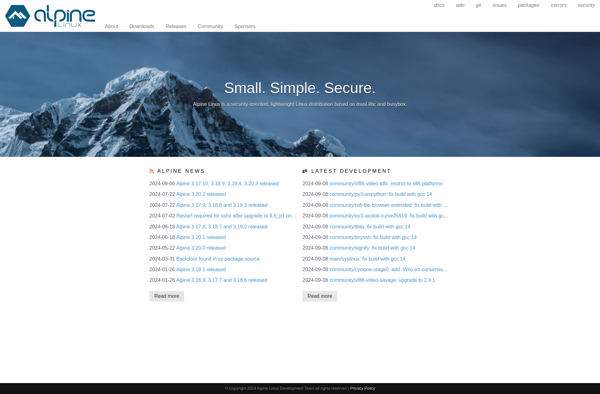
Alpine Linux is an independent, non-commercial, general purpose Linux distribution designed for power users who appreciate security, simplicity and resource efficiency.Some key features of Alpine Linux:It uses musl libc and BusyBox to provide a simple but fully functional base system.Very lightweight - the base install is under 5MB, making it...
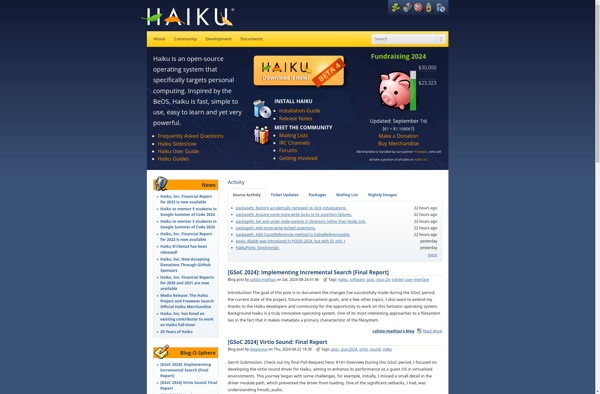
Haiku is an open source operating system designed to recreate the look and feel of the discontinued BeOS operating system. It first became publicly available in 2009 and has been in continual development ever since.Like BeOS, Haiku is optimized to be fast, lightweight, and responsive, prioritizing performance and usability over...
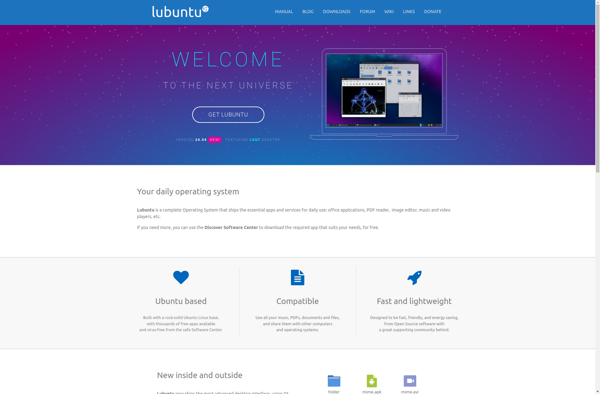
Lubuntu is a Linux distribution based on Ubuntu that uses the lightweight LXDE desktop environment. Some key facts about Lubuntu:It has lower system requirements than standard Ubuntu, making it a good choice for older computers or hardware with limited resources.Uses the LXDE desktop environment which is lightweight, fast, and energy-efficient.Includes...
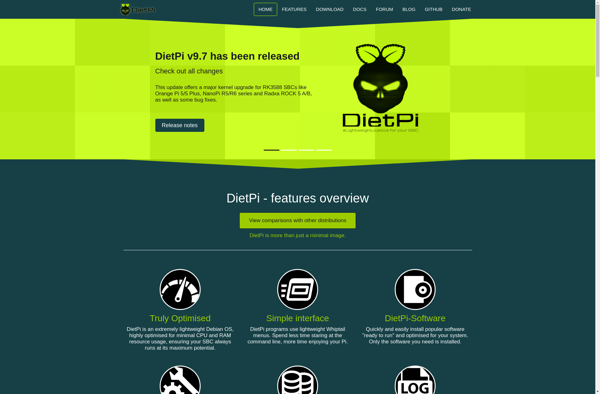
DietPi is a Debian-based Linux distribution optimized specifically for single-board computers like the Raspberry Pi. It focuses on being lightweight and having a small resource footprint, making it well-suited for low-powered devices.Some key features of DietPi include:Lightweight system: Uses optimized software packages and settings to reduce RAM and CPU usage....
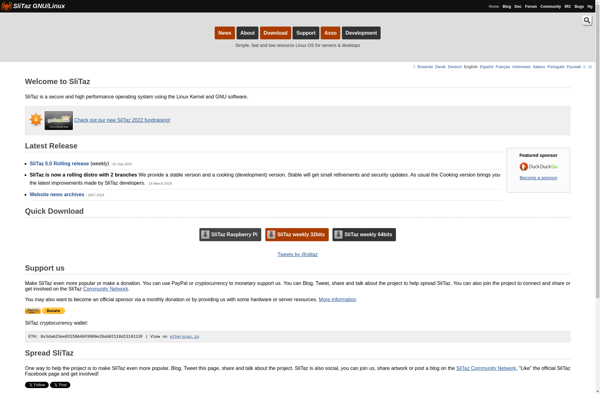
SliTaz is a very lightweight Linux distribution optimized for speed and low resource usage. The entire OS fits on a bootable live CD image of only about 30MB.Despite its small size, SliTaz provides a usable desktop experience thanks to the Openbox window manager and a carefully curated selection of lightweight...
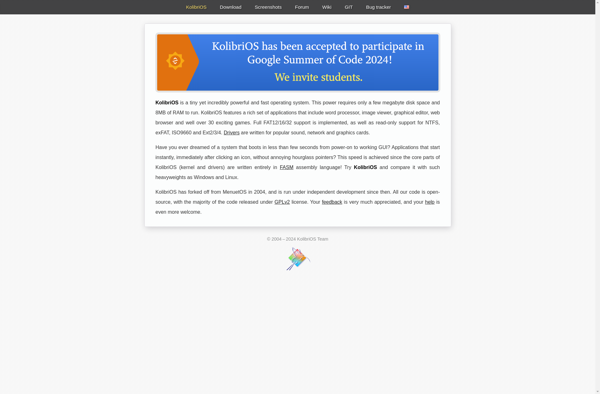
KolibriOS is a tiny open-source operating system for x86 computers. It is designed to be very lightweight and fast, enabling it to run well on older hardware that may struggle to run more resource-intensive operating systems.Some key features and characteristics of KolibriOS include:Very small disk and memory footprint - the...
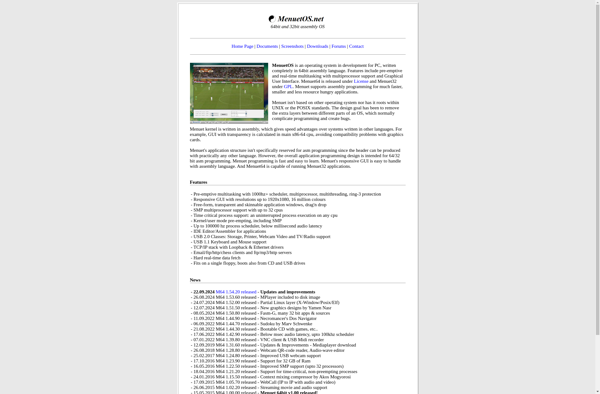
MenuetOS is an experimental open-source operating system for personal computers. It is written mostly in assembly language and designed to be fast, lightweight, and include a graphical user interface.Some key features of MenuetOS:Monolithic kernel architecture - All core OS functionality is handled by the kernel rather than separate processes.Very small...
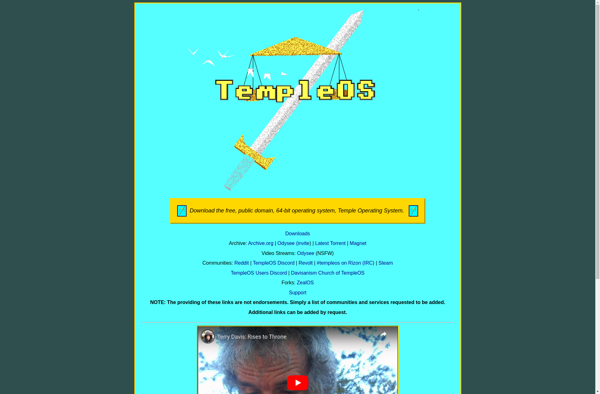
TempleOS is an open source operating system developed by Terry A. Davis starting in 2003. It was created as a hobby operating system using a homemade compiler and self-made programming language called HolyC. The OS and programming language incorporate elements of Davis's religious and spiritual beliefs, including many references to...
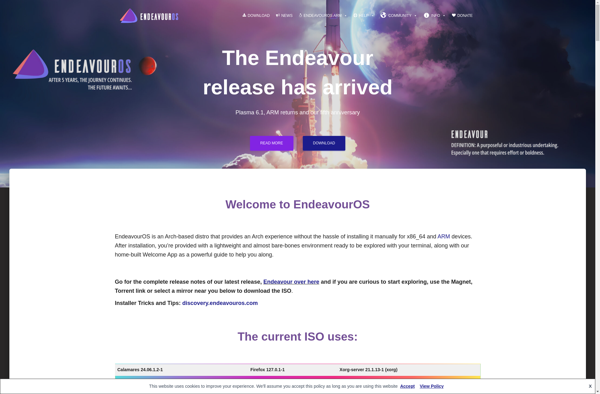
EndeavourOS is a rolling release Linux distribution based on Arch Linux. It aims to provide an easy-to-install system while still maintaining the DIY spirit of Arch. EndeavourOS features a graphical installer called Calamares that enables effortless installation compared to the complexity of installing vanilla Arch Linux.By default, EndeavourOS uses the...
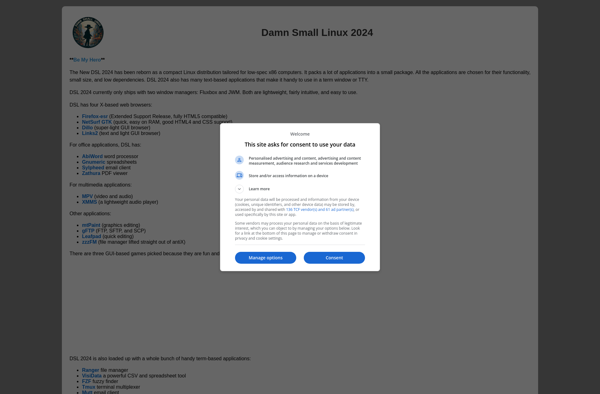
Damn Small Linux (DSL) is a compact yet fully-featured Linux operating system designed to run efficiently on minimal hardware resources. It has one of the smallest footprints among Linux distributions, requiring only 50MB of hard drive space and as little as 16MB of RAM to run the base system.Despite its...