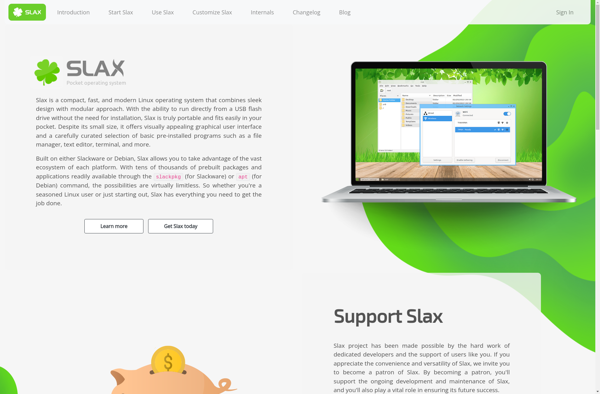
Slax is a lightweight Linux distribution based on Slackware that can run completely from a USB drive or CD. It is designed to be simple, small, fast and portable. Slax is optimized for ease of use and includes automatic hardware detection.
Slax is a lightweight Linux distribution based on Slackware that can run completely from a USB drive or CD, designed for simplicity, small size, fast performance and portability, optimized for ease of use with automatic hardware detection.
What is Slax?
Slax is a Linux distribution that is designed to run completely from a USB drive or CD, without needing to be installed to a hard drive. It is based on Slackware and aims to be simple, small, fast and portable.
Some key features and characteristics of Slax include:
Very lightweight - under 300MB ISO image that still includes a graphical desktop environment (KDE) and many applications
Modular architecture allows customizing by only including desired apps
Can save settings and data to the USB drive to have a persistent portable system
Easy to use with automatic hardware detection and configuration
Standard Linux features like package management and PPP internet connection
Supports both 32-bit and 64-bit systems
Active community provides many custom modules and scripts
Slax is a good option for having a portable Linux operating system for travel, privacy, or as a fallback system for fixing computer problems. It allows using a full graphical Linux distro on any computer from a bootable USB drive or CD/DVD without installing anything.
Slax Features
Features
Live USB/CD environment
Modular design with modules for additional functionality
Automatic hardware detection
Uses Slackware packages
Lightweight and fast
Easy to customize
Supports multiple desktop environments
Pricing
Free
Open Source
Pros
Portable and easy to run from USB or CD
Small size and fast performance
User-friendly and easy to use
Modular system allows customization
Active community support
Cons
Limited default software selection
Must download modules for additional functionality
Relies on Slackware packages which have infrequent updates
Windows 11 is the latest version of the Windows operating system released by Microsoft in 2021 as the successor to Windows 10. It introduces several visual changes including rounded corners, a new centered Start menu and taskbar, and revised app icons using soft pastel colors and the Fluent Design system.Under...
macOS is the operating system created and developed by Apple Inc. exclusively for its Macintosh computers and laptops. It was originally named Mac OS X until 2012 and then OS X until 2016, when Apple renamed it to macOS to bring it inline with the branding of its other operating...
Arch Linux is a lightweight, flexible Linux distribution designed for experienced Linux users who want control and customization of their system. Some key features of Arch Linux include:Rolling release model - Arch gets continuous updates rather than point releases, ensuring you always have the latest software.Uses Pacman package manager -...
Puppy Linux is a lightweight Linux distribution that is designed to run well on older computers with limited resources. Some key features of Puppy Linux include:Very small download size, usually under 300 MBCan run entirely from RAM for better performanceEasy to use graphical interface and toolsCompatible with Ubuntu software packagesMany...
Haiku is an open source operating system designed to recreate the look and feel of the discontinued BeOS operating system. It first became publicly available in 2009 and has been in continual development ever since.Like BeOS, Haiku is optimized to be fast, lightweight, and responsive, prioritizing performance and usability over...
Lubuntu is a Linux distribution based on Ubuntu that uses the lightweight LXDE desktop environment. Some key facts about Lubuntu:It has lower system requirements than standard Ubuntu, making it a good choice for older computers or hardware with limited resources.Uses the LXDE desktop environment which is lightweight, fast, and energy-efficient.Includes...
EndeavourOS is a rolling release Linux distribution based on Arch Linux. It aims to provide an easy-to-install system while still maintaining the DIY spirit of Arch. EndeavourOS features a graphical installer called Calamares that enables effortless installation compared to the complexity of installing vanilla Arch Linux.By default, EndeavourOS uses the...
Ubuntu MATE is a community-developed Linux distribution based on Ubuntu that uses the MATE desktop environment. MATE provides a more traditional desktop experience that resembles older versions of GNOME 2, making it a popular choice among Linux users who prefer a classic desktop layout and workflow.Some key features and highlights...
Damn Small Linux (DSL) is a compact yet fully-featured Linux operating system designed to run efficiently on minimal hardware resources. It has one of the smallest footprints among Linux distributions, requiring only 50MB of hard drive space and as little as 16MB of RAM to run the base system.Despite its...
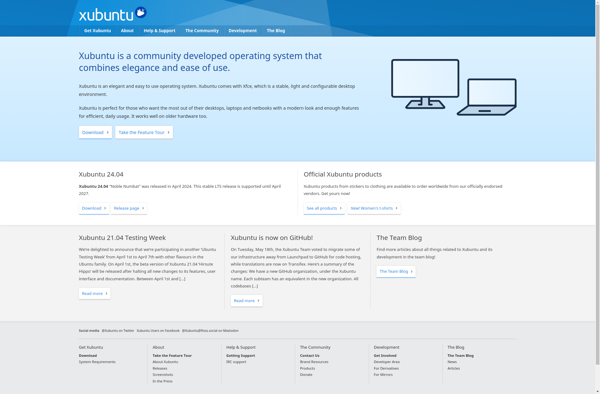
Xubuntu is an official community edition of the Ubuntu operating system that comes with the Xfce desktop environment preinstalled instead of Ubuntu's default GNOME desktop. Xubuntu uses the same software repositories as Ubuntu, so it is just as easy to use and provides a similar user experience, but it is...
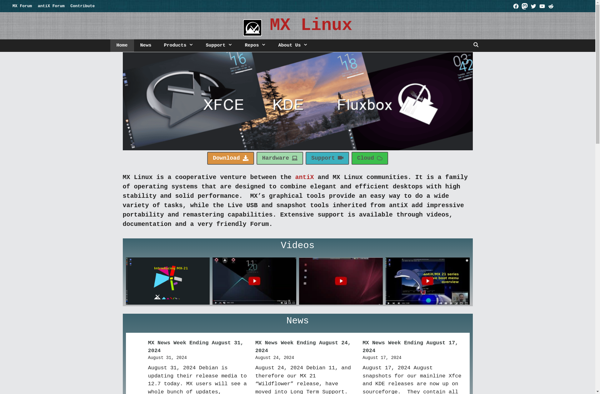
MX Linux is a user-friendly Linux distribution based on Debian Stable. It focuses on simplicity, efficiency, and stability.Some key features of MX Linux include:- Uses the lightweight and customizable Xfce desktop environment by default, but also offers a version with Fluxbox lightweight window manager for older systems.- Includes handy system...
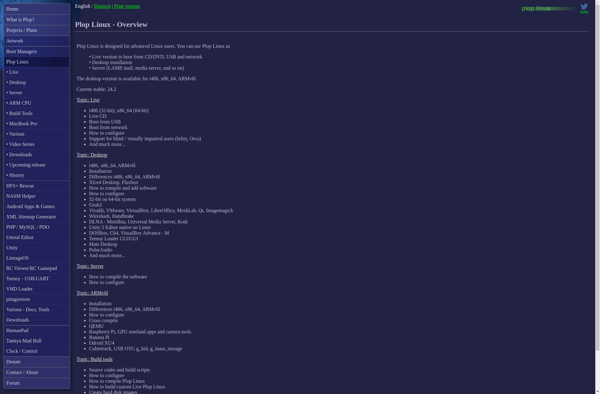
Plop Linux is a small, lightweight Linux distribution designed specifically for system rescue and data recovery. It boots from a CD, DVD, or USB drive and runs entirely in RAM, without needing access to local hard drives or file systems.This makes Plop ideal for recovering data from machines that won't...