
Torque (video game)

Torque: 3D Computer Game Engine
Cross-platform video game engine for Windows, Mac, Linux, iOS, Android, and game consoles with visual editors, scripting language, particle system, and networking support.
What is Torque (video game)?
Torque is a 3D computer game engine originally developed by Dynamix for the 2001 video game Tribes 2. The engine provides a complete development environment for creating cross-platform games for Windows, Mac, Linux, iOS, Android, and game consoles. In 2004, GarageGames acquired the Torque engine and continues development on it.
Some key features of the Torque engine include:
- Visual editors for terrains, GUI, and maps allow for rapid development without programming.
- Support for OpenGL and DirectX graphics.
- Built-in scripting language called TorqueScript for implementing game logic.
- Integrated physics engine powered by Bullet Physics.
- A particle effects system for visual effects like smoke, fire, and magic spells.
- Networking layer for multiplayer games.
- Cross-platform support allows developers to create games for multiple platforms from a single code base.
The Torque engine has been used by indie developers and studios to create commercial games across a variety of genres like arena shooters, MMOs, RPGs, racing games, and simulations. Example games powered by Torque include Tribes 2, Marble Blast games, GarageGames' own Demolition Derby games, and Instant Action by Irrational Games.
Torque (video game) Features
Features
- 3D graphics rendering
- Cross-platform support
- Visual editor tools
- Scripting language
- Particle system
- Networking capabilities
Pricing
- One-time Purchase
- Subscription-Based
Pros
Cons
Reviews & Ratings
Login to ReviewThe Best Torque (video game) Alternatives
View all Torque (video game) alternatives with detailed comparison →
Top Games and Game Engines and other similar apps like Torque (video game)
Here are some alternatives to Torque (video game):
Suggest an alternative ❐
Portal (Series)


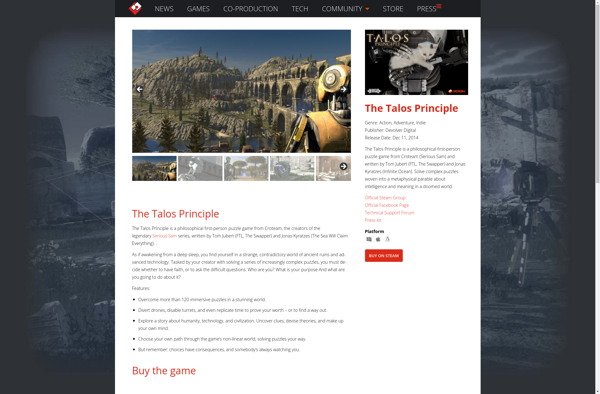
The Talos Principle

Magrunner: Dark Pulse


Quantum Conundrum