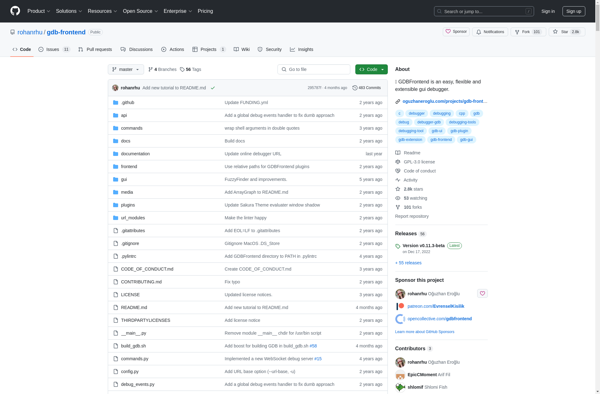
GDBFrontend is an open-source graphical user interface for the GNU Debugger (GDB). It provides a more user-friendly way to debug programs compared to GDB's command line interface.
An open-source graphical user interface for the GNU Debugger (GDB), offering a more user-friendly debugging experience compared to GDB's command line interface.
What is GDBFrontend?
GDBFrontend is an open-source graphical frontend for the GNU Debugger (GDB). It aims to make debugging programs easier by providing a more intuitive user interface compared to GDB's traditional command line interface.
Key features of GDBFrontend include:
Graphical interface with menus, buttons, and views for variables, breakpoints etc.
Easy to use, no need to learn GDB commands
Supports multiple programming languages like C, C++, Fortran, Java etc.
Available on Linux, Windows and macOS
Customizable interface and themes
Can debug multiple processes and threads
Integrated editors in some versions
GDBFrontend allows setting breakpoints, stepping through code line-by-line, inspecting variables and memory, and all normal debugging features without needing to type cryptic GDB commands. Its graphical interface is designed to be user-friendly for those who find GDB too complex. Advanced users can still access GDB's interface through GDBFrontend for more control.
Overall, GDBFrontend makes debugging less intimidating for beginners while retaining advanced functionality for power users. It aims to open up debugging for more developers on Linux and other platforms.
GDBFrontend Features
Features
Graphical user interface for GDB
Integrated debugging environment
Code editor with syntax highlighting
Variable watches
Breakpoint management
Memory viewer
Disassembly viewer
Multi-process and multi-thread debugging
Pricing
Open Source
Pros
More intuitive and user-friendly than GDB CLI
Code editor simplifies editing source code
Watches and breakpoint management simplify debugging
Memory and disassembly viewers provide low-level debugging
Support for multi-process and multi-thread debugging
Cons
Less flexible than GDB CLI for advanced users
Additional memory overhead compared to CLI-only GDB
May not support all GDB features and commands
Limited to debugging programs written in C, C++, Objective-C
WingDB is a feature-rich Python debugger optimized for ease of use and integrating smoothly into Python development workflows. It works with all major Python implementations including CPython, PyPy, IronPython, and Jython.Some key capabilities and benefits of WingDB include:Remote debugging allowing debugging applications running on remote hosts, Docker containers, and in...
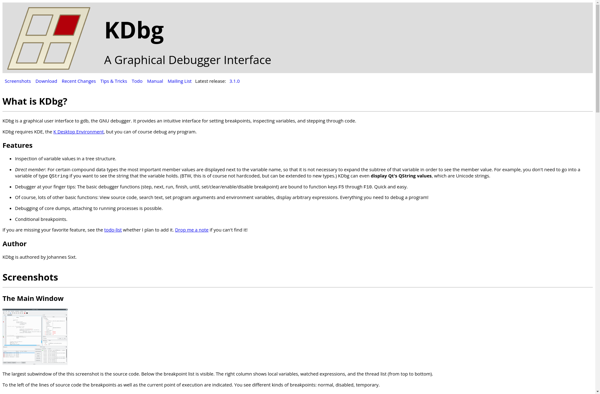
Kdbg is an open source graphical debugger interface for Linux. It provides a user-friendly interface for debugging applications and examining running programs.Some key features of Kdbg include:Setting breakpoints in code to pause executionStepping through code line-by-lineInspecting variables and memory to check program stateCustomizable interface with plugin supportIntegration with GDB for...
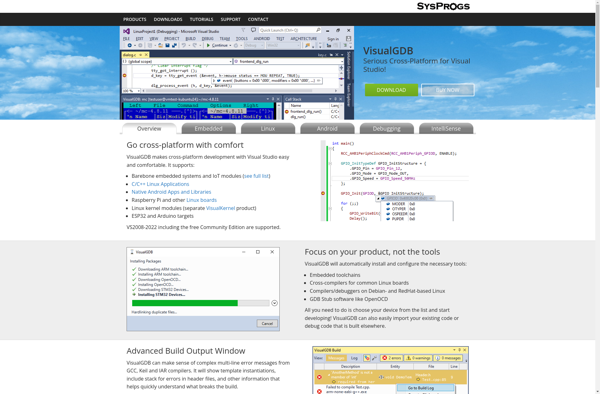
VisualGDB is an integrated development environment plugin for Microsoft Visual Studio designed specifically for developing, analyzing, and debugging embedded software systems written in C/C++. It aims to improve developer productivity by providing a seamless integration of advanced debugging and analysis capabilities within the familiar Visual Studio IDE.Key features of VisualGDB...
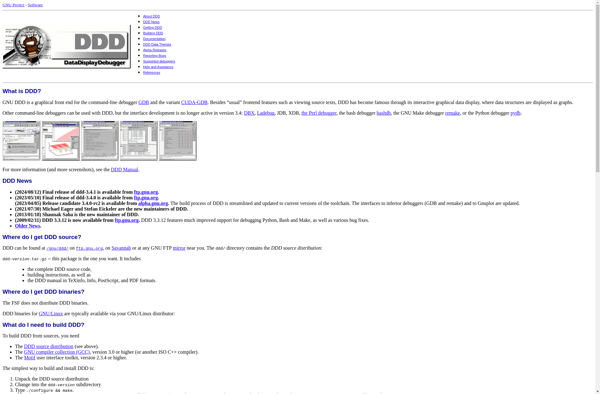
GNU Data Display Debugger (DDD) is a feature-rich graphical front-end to command-line debuggers such as GDB, DBX, WDB, Ladebug, JDB, XDB, the Perl debugger, the bash debugger, and the Python debugger. It is capable of visually debugging programs written in C, C++, Fortran, Go, Rust, Assembly, and other languages. Some...
Affinic Debugger GUI is a feature-rich graphical frontend for the Affinic command-line debugger. It provides developers with an intuitive way to debug their applications visually instead of working directly with debugging commands.Some key features of Affinic Debugger GUI include:Setting breakpoints with a simple click on the relevant lines of codeStepping...
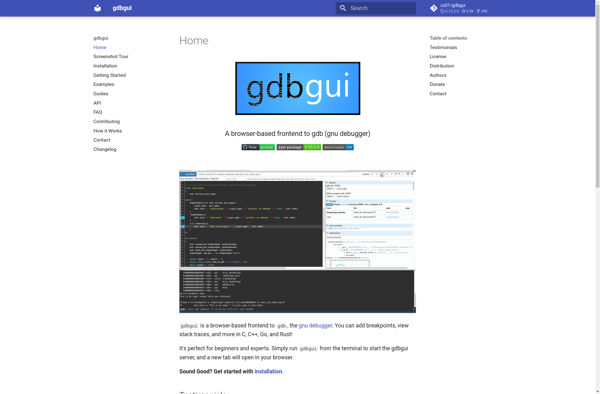
gdbgui is an open-source, browser-based graphical user interface for gdb - the GNU debugger. It allows debugging C, C++, Go, Rust, and other compiled programming languages through a user-friendly GUI, without needing to use gdb commands directly.Some key features of gdbgui include:Setting breakpoints visuallyInspecting variables and data structuresVisualizing the call...
Nemiver is an open-source, graphical debugger for debugging native C/C++ applications. It aims to provide a simple yet powerful user interface for debugging that integrates tightly with the GNU Debugger (GDB).Some key features of Nemiver include:Setting breakpointsStepping through code one line at a timeInspecting variables and expressionsExamining the call stack...