Thinfinity VirtualUI is a software that allows delivering Windows applications to any device with an HTML5 compatible web browser. It converts traditional Windows software into cloud-based, browser-accessible apps.
Thinfinity VirtualUI: Cloud-Based Windows Apps for Any Device
Thinfinity VirtualUI allows delivering Windows applications to any device with an HTML5 compatible web browser, converting traditional software into cloud-based, browser-accessible apps.
What is Thinfinity VirtualUI?
Thinfinity VirtualUI is a software solution that enables organizations to deliver Windows applications to any device with an HTML5 compatible web browser. It works by converting traditional Windows desktop software into cloud-hosted, browser-accessible applications.
Some key capabilities and benefits of Thinfinity VirtualUI include:
Transforms Windows desktop apps into web and mobile apps accessible from browsers on any device.
Requires no installation, plugins or downloads on end-user devices.
Centralizes app hosting, management, access control and security in the cloud.
Works with complex, data-intensive Windows apps like CAD, ERP or database apps.
Provides good performance even over low-bandwidth connections.
Requires minimal changes to existing apps during conversion process.
Integrates with Active Directory and other identity providers for access control.
VirtualUI is well-suited for use cases like securely delivering legacy Windows apps to remote, mobile and distributed workforces. It removes the need to develop native apps for different platforms or rewrite working legacy software.
Thinfinity VirtualUI Features
Features
Allows delivering Windows applications to any device with an HTML5 compatible web browser
Converts traditional Windows software into cloud-based, browser-accessible apps
Supports hosting apps on premises or in the cloud
Includes remote desktop protocol for full desktop access
Provides native experience on iOS and Android
Offers single sign-on and active directory integration
Pricing
Subscription-Based
Pros
Easy deployment to many devices and platforms
No need to rewrite or recompile existing Windows apps
Centralized app delivery and management
High performance even over low bandwidth
Strong security with encryption and access controls
Cons
Requires Windows apps to be virtualized first
Limitations of web vs native apps
Can be complex to set up and manage
Additional infrastructure required for cloud hosting
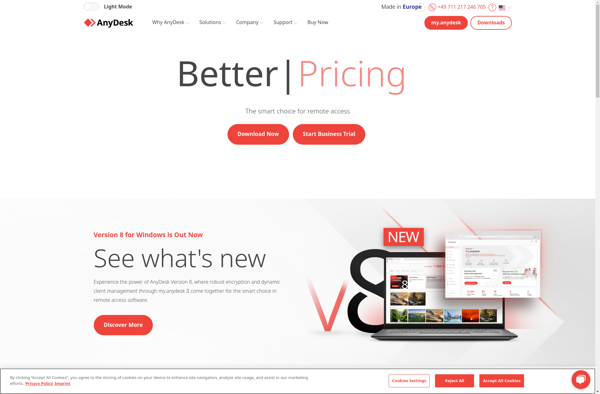
AnyDesk is a proprietary remote desktop software developed by the German software company AnyDesk Software GmbH. It enables users to access one computer from another computer or mobile device remotely. AnyDesk is lightweight, easy to use and works across multiple operating systems.Some key features of AnyDesk include:Remote control of computers...
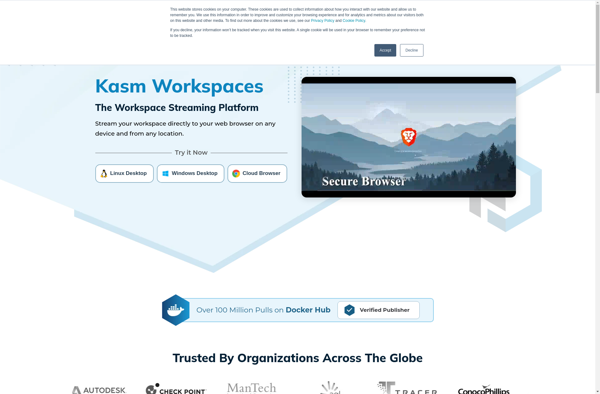
Kasm Workspaces is an open-source container management and workspace delivery platform that makes it easy for users to access browser-based, containerized workspaces. It leverages containers and web assembly to deliver performant and secure workspaces to any device with a modern web browser.Some key features of Kasm Workspaces include:Supports launching multiple...
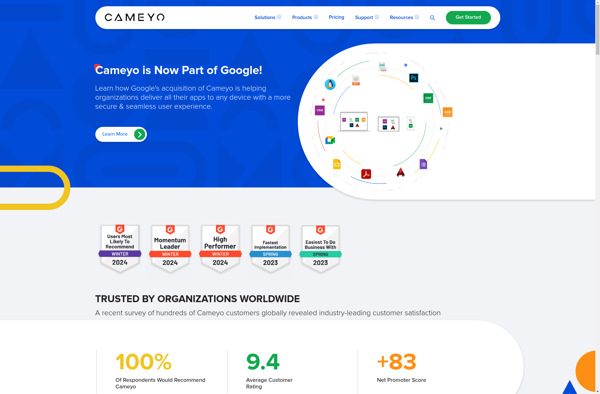
Cameyo is an application virtualization and portability solution that encapsulates Windows software into portable executable files. It allows you to package installed Windows applications into self-contained EXE files that can run on any Windows machine without needing a separate installation.Key features of Cameyo include:Encapsulates apps into standalone portable apps that...
VMware ThinApp is an application virtualization and portable application creation software developed by VMware. It captures an application along with all its dependencies into a single executable file called a ThinApp package. This package can then run on any Windows device without a complex installation.Key features of ThinApp include:Application isolation...
Enigma Virtual Box is an open-source and cross-platform virtualization software developed by Enigma Inc. It allows users to run multiple guest operating systems on a single host computer, enabling them to access different environments and applications on the same machine.Some key features of Enigma Virtual Box include:Hardware virtualization support for...
Zero Install is an open source software distribution system that allows applications to be run directly from network resources without needing local installation. It works by determining dependencies and downloading the latest software versions on-demand. Some key features of Zero Install include:Decentralized distribution - Apps can be run from anywhere...
Microsoft Application Virtualization (App-V) is a desktop virtualization technology that allows applications to be streamed in real-time to any client from a central server instead of installing them directly. It separates applications from the underlying operating system and decouples the application layer from the OS layer.Key features of App-V include:Streaming...
Parallels Access is a remote desktop software solution developed by Parallels. It allows users to securely access applications and data on their computers from any other Internet-connected device, including smartphones, tablets, and other computers.Some key features of Parallels Access include:Simple, intuitive interface makes it easy to connect to your PC...
Thincast is a virtual desktop infrastructure (VDI) solution developed by Thinlabs that allows organizations to deploy virtualized Windows desktop environments hosted in their data center to end users on any device. Some key features of Thincast include:Allows access to Windows desktops, applications, and data from any device with an HTML5...