BeagleBoard is an open-source single-board computer produced by Texas Instruments in association with Digi-Key and Newark element14. It is similar to Raspberry Pi and Arduino in that it is designed for hobbyists and prototyping electronic projects.
BeagleBoard is an open-source single-board computer produced by Texas Instruments in association with Digi-Key and Newark element14, designed for hobbyists and prototyping electronic projects similar to Raspberry Pi and Arduino.
What is BeagleBoard?
BeagleBoard is an open-source single-board computer produced by Texas Instruments in association with Digi-Key and Newark element14. It is similar to Raspberry Pi and Arduino in that it is designed for hobbyists and prototyping electronic projects.
The BeagleBoard features an ARM Cortex-A8 processor, 256MB or 512MB of RAM depending on the model, USB ports, Ethernet, SD card slot, and HDMI output. It runs Linux distributions such as Ångström, Ubuntu, Android, etc.
Some key features and applications of BeagleBoard include:
Powerful processor capable of running full Linux distributions and carrying out complex computations
Community support for developing applications with C/C++, Python, JavaScript/Node.js and more
Ideal for IoT and embedded systems prototyping
Used in applications such as small home servers, media streaming devices, robotics and automation controllers
Expandable through add-on boards called capes that provide additional interfaces
In summary, BeagleBoard is a versatile open-source SBC aimed at hobbyists, hackers, makers, and developers who want a low-cost platform for building electronics prototypes and devices.
BeagleBoard Features
Features
Open-source single-board computer
Designed for hobbyists and prototyping electronic projects
Similar to Raspberry Pi and Arduino
Produced by Texas Instruments in association with Digi-Key and Newark element14
Pricing
Open Source
Pros
Open-source and customizable
Powerful processing capabilities
Extensive community support and resources
Versatile and suitable for a wide range of projects
Cons
Relatively higher cost compared to some other single-board computers
Steeper learning curve for beginners
Limited availability and distribution in certain regions
Orange Pi is a series of low-cost, open-source single-board computers and development boards produced by Shenzhen Xunlong Software Co. in China. The boards are based on the Allwinner System-on-Chip (SoC), which utilizes ARM processor technology, and are designed to compete with the popular Raspberry Pi boards.The original Orange Pi launched...
UDOO is an open-source, compact computer platform aimed at makers, hobbyists, students, and developers. It integrates a quad-core ARM Cortex-A9 processor with an Arduino-compatible microcontroller in a small single-board computer format.Some key features of UDOO include:A 1GHz Freescale iMX6 ARM Cortex-A9 CPU with Vivante GC2000 GPUHDMI and LVDS connectors for...
The PandaBoard is an open-source hardware single-board computer built around the Texas Instruments OMAP4430 system-on-a-chip. It was developed as an affordable platform for developing custom embedded and IoT solutions based on the ARM Cortex-A9 dual-core processor.Some key features of the PandaBoard include:OMAP4430 SoC with 1GHz dual-core ARM Cortex-A9 CPU1GB of...
The Minnow Board is an open-source, hacker-friendly single-board computer originally released in 2013 by MinnowBoard.org and the MinnowBoard foundation. It features an Intel Atom processor (originally an Atom E640 but upgraded in later versions) and is designed to be a low-cost development board for projects needing modest processing power.The Minnow...
The Cubieboard is a low-cost, single board computer first released in 2012 as an open source hardware platform. Similar to the popular Raspberry Pi, the Cubieboard is designed to promote computer science and engineering education, and support hobbyist and DIY computing projects.At the heart of the Cubieboard is an ARM-based...
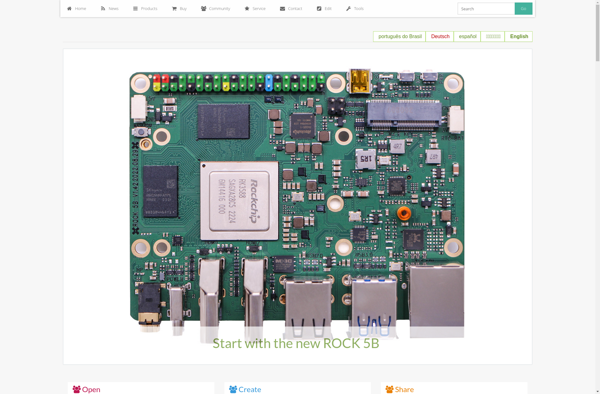
The Radxa Rock is a single-board computer built around a Rockchip RK3328 quad-core ARM Cortex-A53 processor running at up to 1.5GHz. It features 2GB of DDR4 RAM and 16GB of eMMC flash storage. The board has a variety of connectivity options including Gigabit Ethernet, 802.11ac WiFi, Bluetooth 4.0, USB 3.0...
The Banana Pi is a series of low-cost credit card-sized single-board computers produced by the Chinese company SinoVoip. It is an open-source hardware platform that is intended as an alternative to the popular Raspberry Pi.Some key features of the Banana Pi include:Allwinner quad-core ARM Cortex-A7 or dual-core Cortex-A53 processors, which...
HummingBoard is a series of small, low-cost single-board computers made by SolidRun. It is designed to provide an affordable platform for software and hardware development and prototyping.The HummingBoard hardware is designed around ARM processors like the Freescale i.MX6. Models include the HummingBoard Base, HummingBoard Pro, and HummingBoard Gate that have...
OLinuXino is an open-source, Linux-powered single-board microcomputer created and sold by Olimex. It is hardware and software compatible with Arduino, allowing users to develop DIY electronics projects with the flexibility of Linux and the ease of the Arduino IDE.OLinuXino boards feature an Allwinner ARM processor (either A10, A13, A20 or...