Gumby is an open-source, flexible front-end framework built on top of Sass and Compass. It uses responsive grid systems, stylized elements, and templates to help developers quickly build websites and apps that work on any device.
Gumby Framework: Open-Source Front-end Framework for Responsive Web Development
Gumby is an open-source, flexible front-end framework built on top of Sass and Compass. It uses responsive grid systems, stylized elements, and templates to help developers quickly build websites and apps that work on any device.
What is Gumby Framework?
The Gumby Framework is an open-source, flexible front-end framework for developing responsive web projects. Built on top of Sass and Compass, Gumby uses a grid system based on percentages rather than pixels to enable responsive design across devices. It includes stylized UI elements like buttons, menus, and forms that are easy to customize.
Key features of Gumby include:
Responsive grid with nesting, alignment, reordering, and more
Default stylized elements like buttons, tabs, accordions
Good documentation and getting started guide
Customizable using variables, maps, mixins
Works with most JavaScript libraries
Active community and updates
Gumby simplifies and speeds up front-end coding with its flexible components. Developers can use it as a starting point and customize elements using the Sass environment. The responsive grid and UI components help in prototyping and building cross-device websites and applications quickly.
Gumby Framework Features
Features
Responsive grid system
Sass-powered stylesheets
Built-in components like buttons, menus, etc
Modular and customizable
Cross-browser support
Mobile-first approach
Lightweight
Pricing
Open Source
Pros
Easy to get started
Active community support
Well-documented
Flexible and customizable
Works well for rapid prototyping
Supports modern web development workflows
Cons
Less features than larger frameworks like Bootstrap
Less themes/templates available
Smaller user base than more popular options
Not as beginner-friendly as some frameworks
Requires Sass knowledge for advanced customization
Materialize is an open-source front-end framework that helps web developers build responsive and mobile-first websites quickly. It is based on Google's Material Design principles and provides many user interface components out of the box to construct web pages, including:ButtonsCardsChipsFormsNavbarsGrid systemTablesModalsToastsAnd more...Developers can simply include the Materialize CSS and JavaScript files...
Material UI is an open-source React component library that implements Google's Material Design guidelines. It provides developers with a collection of reusable UI components that can be used to quickly build high-quality, responsive web applications.Some key features of Material UI include:Over 60 ready-made components like buttons, cards, menus, lists, etc.Responsive...
jQuery UI is a lightweight, customizable, cross-browser JavaScript library of user interface interactions, effects, widgets, and themes. It is designed to work seamlessly with jQuery, making web development faster and easier.Some of the key features of jQuery UI include:Interactions - Draggable, Droppable, Resizable, Selectable, Sortable and more for building highly...
UIkit is an open-source web framework for developing fast and powerful web interfaces. It provides a collection of reusable HTML, CSS, and JavaScript components that can be used to build responsive, mobile-first websites and applications.Some key features of UIkit include:An extensive library of pre-built components like typography, forms, tables, tabs,...
w2ui is an open-source JavaScript UI library for developing web applications. It provides a wide range of UI components like grids, forms, charts, tabs and more to help developers build modern, interactive user interfaces quickly.Some key features of w2ui include:Lightweight and fast performanceExtensive set of UI widgets including grids, forms,...
Purecss is an open-source CSS framework designed for quickly building lightweight, responsive web interfaces. Here are some key details about Purecss:Created and maintained by Yahoo/Verizon Media.Very lightweight at 4.5KB minified and gzipped.Follows a modular approach, allowing developers to include only the CSS for components they need.Provides layout modules like grids,...
Skeleton is an open source, lightweight front-end framework for developing responsive web pages and apps. It's designed to be a starting point rather than a UI library like Bootstrap or Foundation.Here are some key features of Skeleton:Lightweight at just 400 lines of CSSFully responsive grid down to mobile devicesSyntax highlighting...
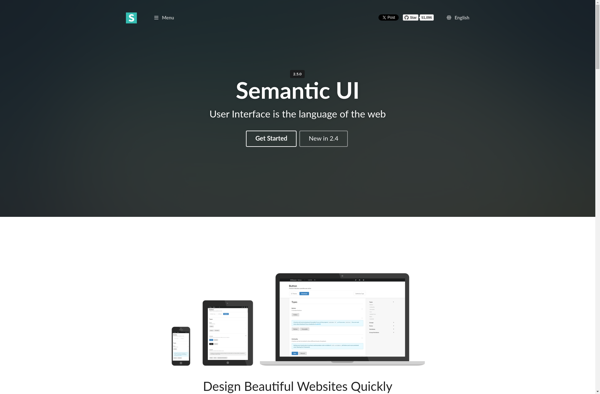
Semantic UI is an open-source front-end development framework that helps web developers build consistent, responsive web pages and web applications. It provides theming capabilities, templates, and reusable UI components to quickly build modern interfaces.Some key features of Semantic UI:Responsive grid system for building responsive layoutsprebuilt UI components like buttons, menus,...
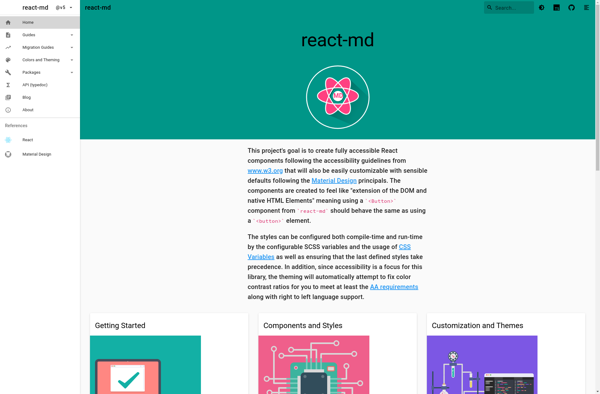
react-md is an open-source React component library that implements Google's Material Design specification. It provides a set of reusable UI components like buttons, cards, menus, dialogs, etc. that allow developers to quickly build web applications with a Material Design look and feel.Some key features of react-md include:Components follow Material Design...