The Windows Subsystem for Android allows you to run Android apps on Windows 11. It provides an Android environment that runs natively within Windows, so you can use your favorite Android apps for productivity, communication, entertainment, and more without dual booting or emulati
The Windows Subsystem for Android allows you to run Android apps on Windows 11. It provides an Android environment that runs natively within Windows, so you can use your favorite Android apps for productivity, communication, entertainment, and more without dual booting or emulation.
What is Windows Subsystem for Android?
The Windows Subsystem for Android is a feature introduced in Windows 11 that allows users to run Android apps natively on Windows. It provides an entire Android environment that runs inside Windows, bridging the gap between the Windows and Android ecosystems.
Some key things to know about the Windows Subsystem for Android:
It does not require emulator software or dual booting into Android. The Android runtime environment runs directly within Windows.
It uses virtualization technology like Hyper-V to run the Android OS behind the scenes.
Users can access the Google Play Store and Amazon Appstore to download Android apps. Many apps work seamlessly like any other Windows program.
It allows Android notifications to appear in the Windows Action Center alongside native notifications.
Android apps can run simultaneously alongside Windows programs and be accessed like any other application.
It provides storage persistence so files created in Android apps are retained.
The Windows Subsystem for Android offers convenience and flexibility for accessing Android apps. It opens up Windows to over 1 million Android apps that can help with productivity, communication, entertainment, development, and more. As the feature expands, it aims to provide deeper integration between Android and Windows ecosystems.
Windows Subsystem for Android Features
Features
Runs Android apps natively on Windows
Provides full Android environment without emulation
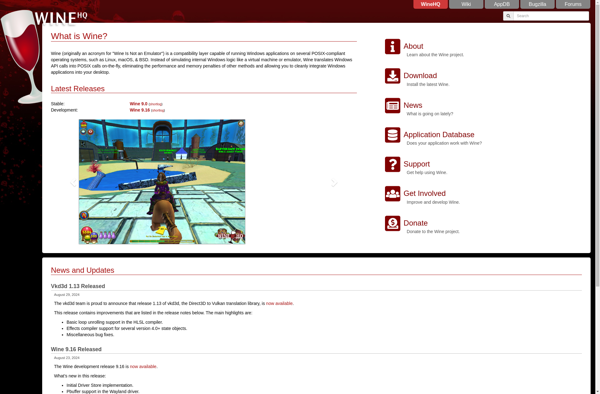
Wine is an open source software application that aims to allow Unix-like operating systems, such as Linux, macOS, & BSD, to execute programs written for the Microsoft Windows architecture. Wine functions as a compatibility layer, providing alternative implementations of the Windows API that applications can call upon during execution.Essentially, Wine...
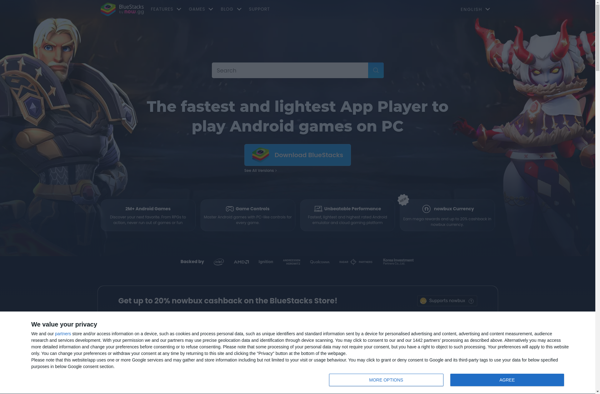
BlueStacks is a popular Android emulator for Windows and Mac that allows users to run Android apps on their computers. It provides a complete virtual Android environment, including the ability to install apps from the Google Play store directly within BlueStacks.Some key features of BlueStacks include:Full access to the Google...
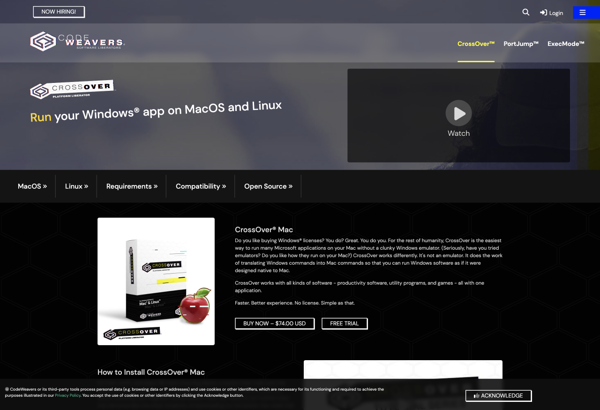
CrossOver is a compatibility layer and commercial front-end for Wine. It allows you to install Windows applications and games on Linux, macOS, and Chrome OS. CrossOver uses Wine to translate Windows API calls into POSIX calls that Linux and macOS understand, enabling Windows programs to run without needing a dedicated...
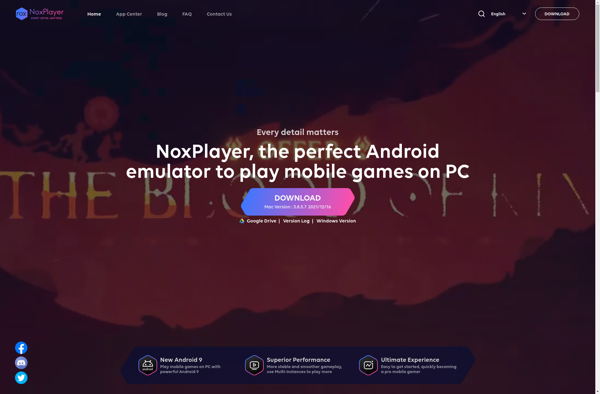
Nox App Player is a free Android emulator designed for Windows and Mac. It allows users to run Android apps and games on their computers by providing a virtual Android device and environment.Some key features of Nox App Player include:Ability to customize the virtual device configuration (CPU cores, RAM, resolution,...
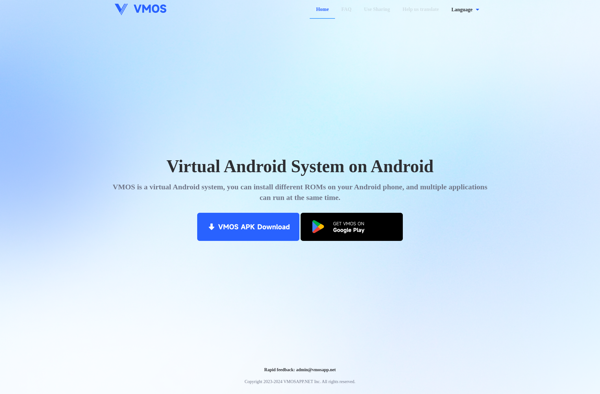
VMOS is an advanced Android emulator for Windows that allows users to run multiple instances of Android on their computers. It creates a virtual machine-like environment on the Windows device to provide a seamless Android experience.Some key features of VMOS include:Ability to run multiple Android instances simultaneouslySupport for running most...
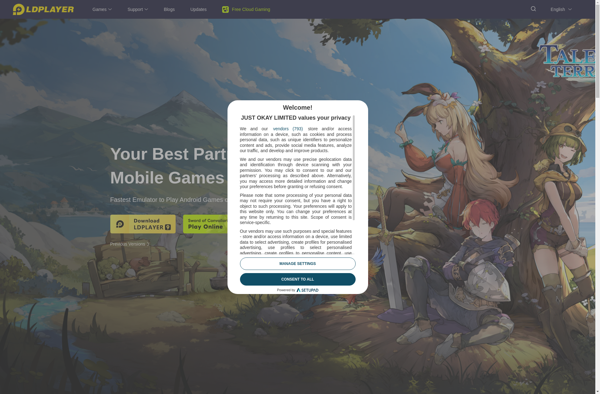
LDPlayer is a popular and free Android emulator for Windows and Mac OS. It allows users to run Android apps and games on their computers by virtually emulating an Android device environment and operating system.Some key features and highlights of LDPlayer:Optimized for mobile gaming with features like keyboard mapping, script...
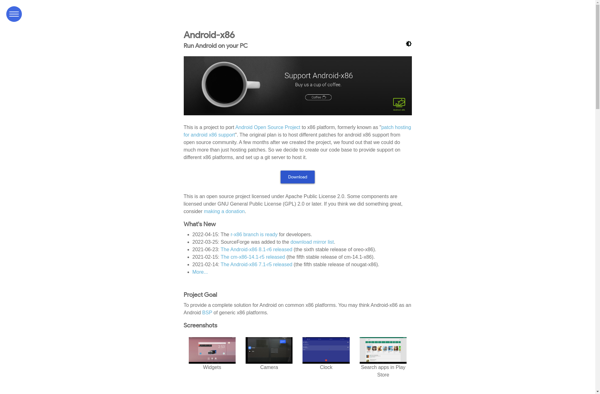
Android-x86 is an open source project that ports the Android operating system to run on devices with x86 processors, allowing Android to be installed on regular PCs and laptops. It provides key functionality for supporting standard hardware like USB ports, networking, storage, graphics, touchscreens, and more.By porting Android to the...
MEmu is a popular Android emulator that allows you to run Android apps and games on your Windows PC. Some key features of MEmu include:Fast performance - MEmu utilizes advanced virtualization technology for faster app performance than native Android devices.Good compatibility - It runs most apps and games without issues....
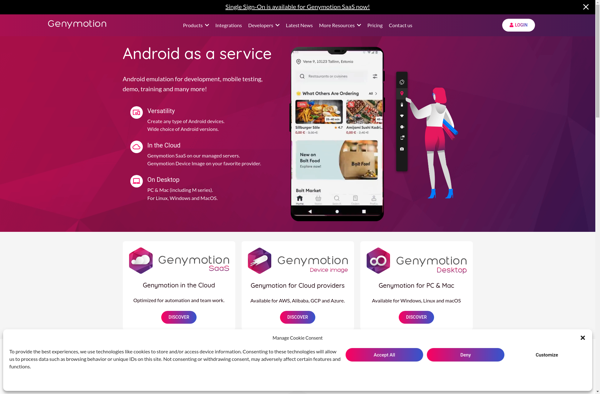
Genymotion is a fast third-party Android emulator that is an alternative to the default Android emulator. Some key features and benefits of Genymotion include:Speed - Genymotion is much faster than the default Android emulator, with boot times of under 10 seconds in many cases. This improves testing efficiency.Hardware Configuration -...
PlayOnLinux and its sister software PlayOnMac are open source compatibility layers that allow users to install and run Windows games and applications on Linux and macOS operating systems. They are based on Wine, an implementation of the Windows API that translates Windows system calls into POSIX calls that Linux and...
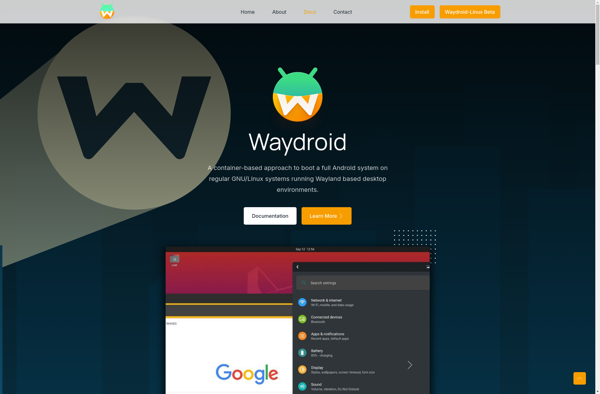
WayDroid is an open source Android emulator for Linux that allows users to run Android apps on their Linux desktop without having to reboot or use virtualization. It integrates the Android runtime environment into a Wayland compositor and leverages Linux technologies like namespaces, cgroups, and seccomp to contain Android within...
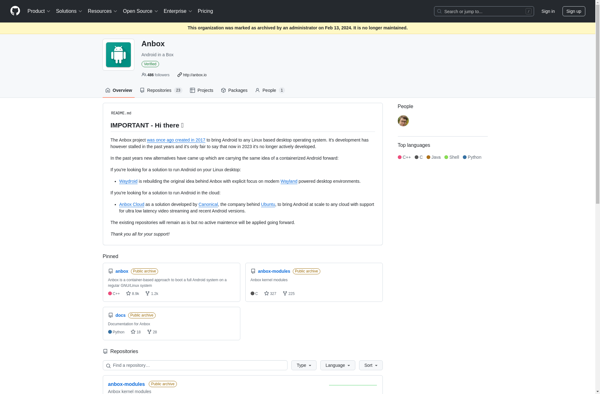
Anbox is an open source project that allows Android apps to run on regular Linux distributions. It uses Linux containers (LXC) to bootstrap a full Android system on a GNU/Linux operating system such as Ubuntu.The key advantages of Anbox over traditional Android emulators like Bluestacks are:It has minimal resource overhead...
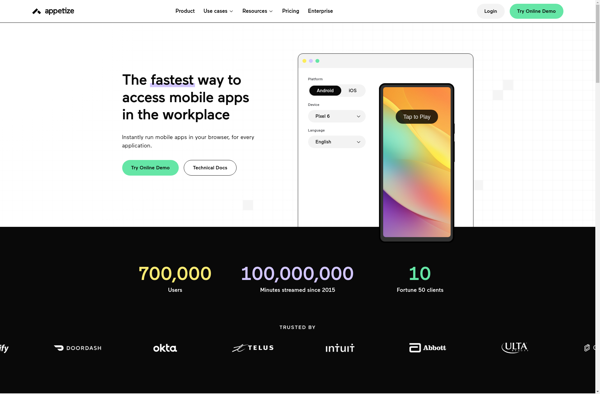
Appetize.io is a cloud-based mobile app testing platform that allows developers to test their iOS and Android apps on real devices without having to set up complex device labs. Here are some key things to know about Appetize.io:Provides access to a library of over 400 live iOS and Android devices...
Whisky is an open-source test automation framework built with Python and Selenium for testing web applications. It allows you to write reusable test scripts and abstracts away much of the boilerplate code required when using Selenium directly.Some key features of Whisky include:Page Object Model support to represent web pages and...
Mumu App Player is a popular Android emulator for Windows that allows users to run Android apps and games on their PCs. Some key features of Mumu App Player include:Fast performance - Uses CPU and GPU acceleration to provide a smooth experience running mobile apps and games.Good compatibility - Supports...
LeapDroid is a fast and user-friendly Android emulator for Windows. It allows you to install and run Android apps and games on your Windows computer as if you were running them on an Android device.Some key features of LeapDroid include:Good performance and speed - It utilizes virtualization technology for faster...
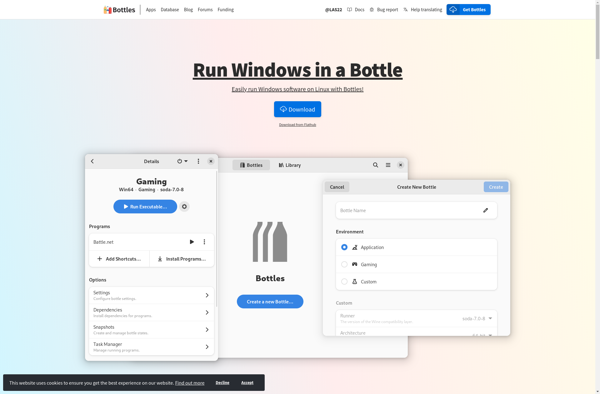
Bottles is an open-source application designed to integrate Windows software into Linux, macOS, and other desktop operating systems that do not natively support Windows programs. It is essentially a graphical front-end and wrapper for Wine, making it easier to install and configure Windows applications on non-Windows platforms.One of the key...
YouWave is an Android emulator designed specifically for Windows that allows you to run Android apps on your PC. Some key features of YouWave include:Provides a virtual Android device on your Windows PC to test Android apps during development or simply use Android apps on your computer.Emulates both Android smartphones...
KOPlayer is a popular Android emulator for Windows and Mac that allows users to run Android apps and games on their desktop computers. Some key things to know about KOPlayer:It is based on Android 5.1.1 Lollipop, so it provides good compatibility with most Android apps and games currently available.It uses...
Droid4X is a popular Android emulator for Windows that provides a full Android experience on a desktop computer. Some key features of Droid4X include:Fast and smooth performance - It utilizes Windows Hypervisor Virtualization technology for better speed and stability.Full Google Play Store access - Download and install apps from the...
Shashlik is an open-source software project that enables users to run Android applications and games on regular Linux distributions and other desktop operating systems like Windows and macOS. It works by providing a compatibility layer and runtime environment that emulates the Android frameworks and APIs that Android apps rely on.Here...
XePlayer is a popular Android emulator for Windows that allows users to run Android apps and games on their PC. It aims to provide a smooth experience and good compatibility with many different apps and games available on the Google Play Store.Some key features of XePlayer include:Uses virtualization technology for...
Xamarin Android Player is an emulator designed specifically for building and testing Xamarin.Android apps. It allows developers to test their Android applications right on their Windows machines without needing to set up an actual Android device.Some key features of Xamarin Android Player include:Fast boot times and optimized performance for app...
MSI App Player is an Android emulator designed and optimized for gaming performance. Developed by Micro-Star International (MSI), App Player aims to provide a smooth experience for running Android apps and games on Windows.Some key features of MSI App Player include:Good hardware support - Makes use of virtualization technologies like...
Darling is an open-source compatibility layer that aims to recreate the macOS system libraries, frameworks, and runtime environment on Linux. It allows you to run unmodified macOS executables on Linux just as if you were running them on a Mac.The Darling project uses Wine and QEMU components to provide macOS...