GeniusGIS is an open-source geographic information system (GIS) software for working with maps and geographic data. It provides tools for creating maps, analyzing spatial data, and managing geospatial databases.
What is GeniusGIS?
GeniusGIS is an open-source geographic information system (GIS) software application used for creating, editing, visualizing, analyzing and publishing geospatial data. It provides a user-friendly interface and powerful tools for working with maps and geographic information.
Some key features of GeniusGIS include:
Interactive map creation and editing
Advanced geospatial analysis and modeling tools
Support for various data formats and databases
Automated geoprocessing workflows and scripting
Publishing and sharing of maps and data online
Extendable architecture with plugins and customization
GeniusGIS has an active user and developer community. It can be used for a wide range of GIS applications including land surveying, asset management, environmental modeling, transportation planning, and more. The open-source nature provides flexibility to customize and extend the software to meet specific needs.
Overall, GeniusGIS is a versatile, user-friendly GIS platform for working with digital maps and location-based data across various industries and use cases.
GeniusGIS Features
Features
Desktop GIS with standard GIS capabilities
Support for various data formats like Shapefile, GeoJSON, KML, PostGIS
Spatial analysis and geoprocessing tools
Map creation and cartography
Scripting and automation using Python plugins
Cross-platform - runs on Windows, Mac and Linux
Pricing
Open Source
Pros
Free and open source
Active development community
Extendable through Python plugins
Runs on multiple platforms
Cons
Limited user support compared to proprietary options
QGIS is a professional open-source Geographic Information System (GIS) software for working with maps and geospatial data. It is licensed under the GNU Public License. QGIS allows you to view, edit, analyze, process, and visualize spatial data in various formats including shapefiles, GeoTIFFs, PostGIS, SpatiaLite, GPX, and more. It supports...
GeoServer is an open source server for sharing geospatial data. It is the reference implementation of the Open Geospatial Consortium (OGC) Web Feature Service (WFS) and Web Coverage Service (WCS) standards, as well as a high performance certified compliant Web Map Service (WMS). GeoServer forms a core component of the...
what3words is a geocoding system that has divided the world into 3 meter squares and assigned each square a unique 3 word identifier. For example, the square that contains the front door of 10 Downing Street in London has been assigned the 3 word address ///slurs.this.shark.This system allows people to...
GeoNode is a free and open source platform built with Django that facilitates the creation, sharing, and collaborative use of geospatial data. It provides a standardized way to publish spatial datasets and metadata, allowing researchers, organizations, and citizens to easily share maps, data, and stories online.Some key features of GeoNode...
Equator is a cloud-based digital asset management (DAM) and brand management platform used by global companies to easily manage their digital assets. It enables teams to efficiently organize, distribute, collaborate on, and track usage of brand assets from one central place.Key features of Equator include:Cloud-based storage for all digital assetsPowerful...
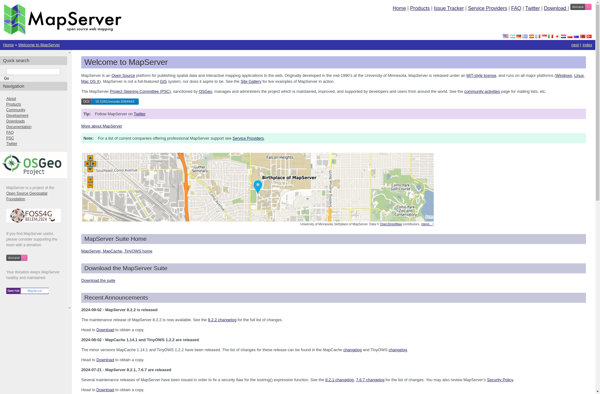
Mapserver is an open source geographic data rendering engine written in C. It allows users to publish spatial data and build interactive web mapping applications without the need for desktop GIS software. Mapserver excels at rendering spatial data and creating high-performance interactive maps that can be accessed via web browsers.Some...
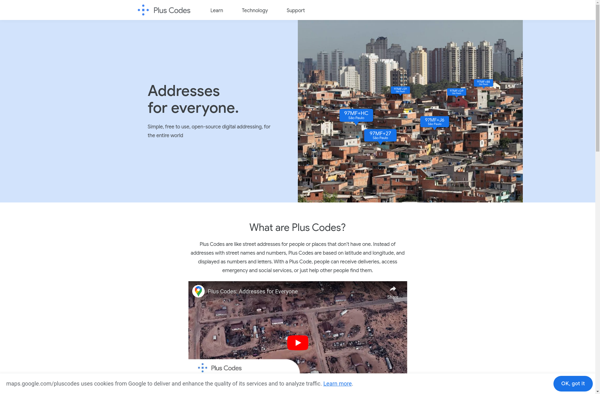
plus.codes is an open-source addressing system developed by Google that assigns a short alphanumeric code to any location on earth. It can be used for addressing and navigation purposes.Some key features of plus.codes:Easy to use, remember and communicate - plus codes are much shorter and simpler than street addressesWorks offline...
ESRI Geoportal Server is an open source software application used to stand up geospatial clearinghouse portals for managing and discovering metadata and associated geospatial resources. It provides a standards-based metadata catalog that allows users to publish, search, and access geospatial resources such as datasets, rasters, and web services.Key features of...
ZoneSavvy is a user-friendly DNS management platform designed to help individuals and businesses easily manage their DNS records and settings without needing expert technical knowledge. It is a cloud-based solution that provides an intuitive graphical interface to add, edit and organize DNS records.Some key features and benefits of ZoneSavvy include:Automatic...
Spatial Feature Server (SFS) is an open-source web mapping software designed for publishing, editing and visualizing spatial data. It is built on open standards like WFS and WMS published by the Open Geospatial Consortium (OGC).Key capabilities and benefits of Spatial Feature Server include:Publishing vector and raster data as web servicesSupport...